
On a rainy Tuesday in Boston, inside a clinic that still carries a faint mix of disinfectant and coffee, a nurse gently removes a small white sensor from a patient’s arm. The woman has lived with type 1 diabetes since she was eleven. She checks her phone, bracing herself for the usual red spikes. Instead, she sees a smooth, almost uneventful line. Overnight, her insulin pump and sensor quietly communicated, correcting every fluctuation while she slept.
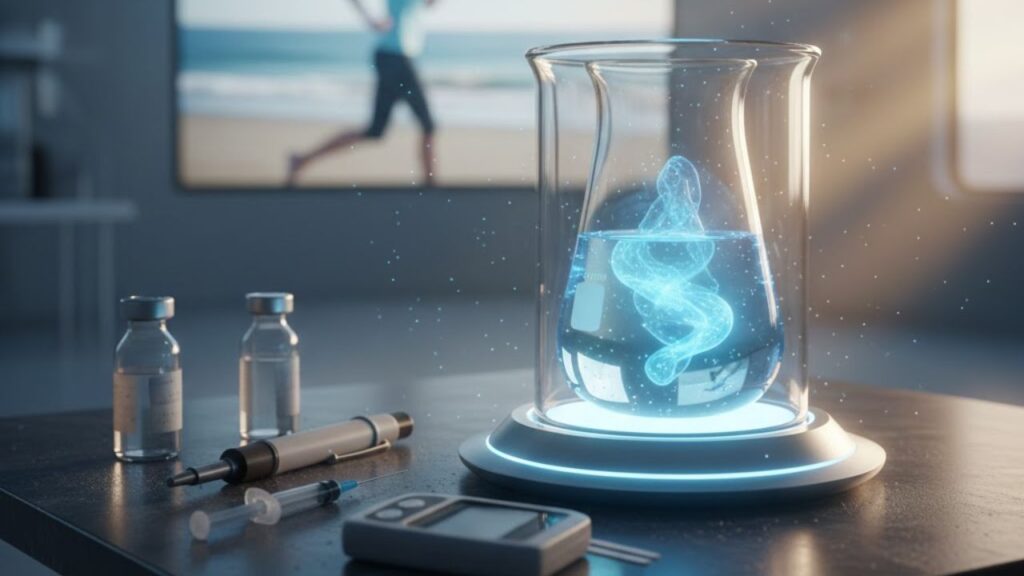
She pauses, surprised. Could my body really stay that stable on its own? Outside, commuters hurry through puddles, unaware that inside this modest exam room, the long-standing rules of diabetes care are being quietly rewritten. The nurse smiles and says, almost offhandedly, “This is just the beginning.”
The silent transformation behind a single glucose line
If you haven’t kept up with diabetes developments, it’s easy to assume daily life still revolves around finger pricks, carb calculations, and the familiar anxiety of overnight highs. Those basics remain, but the tools have evolved so quickly that some clinicians admit they struggle to keep pace.

Step into a modern diabetes clinic and you’re more likely to find apps, continuous sensors, and algorithm reports than handwritten logbooks. Pumps sync with phones, phones upload to the cloud, and the cloud returns personalized insights showing how your body reacts to pizza nights or stressful Mondays.

Behind these charts, a deeper change is underway. The constant mental effort of diabetes management is gradually being shifted from people to machines.
When automation becomes everyday care
Not long ago, terms like “closed-loop” or “artificial pancreas” sounded like distant science fiction. Today, these systems are prescribed to teenagers who scroll social media while their pump adjusts micro-doses of insulin every few minutes.
A 17-year-old described waking up without a headache for the first time in years. His overnight glucose stayed in range. He hadn’t done anything differently. He simply slept.
Clinical trial data supports these stories. People using hybrid closed-loop systems spend significantly more time within healthy glucose ranges. Severe lows decrease. Dangerous highs flatten. For many parents, the biggest change isn’t seen on a graph, but felt at night. They finally sleep.
Why this change feels so different
The shift comes from a careful mix of more accurate sensors, smarter algorithms, and gentler hardware. Continuous glucose monitors now read levels through the skin every few minutes, reducing the need for constant finger sticks. Modern pumps deliver precise, predictive doses based on trends, not just reactions.
This isn’t just about better gadgets. It’s about returning mental space to the person living with diabetes. When machines handle the minute-by-minute math, your mind stops acting like a full-time pancreas and gets to be a brain again.
It’s not magic. Not yet. But compared to the era of syringes and guesswork, today already feels like a different century.
Beyond management: the push toward lasting solutions
Until recently, diabetes care focused on living better with a lifelong condition. Now, researchers are openly discussing something far more disruptive: approaches that could remove the need for daily treatment altogether.
Across labs from Cambridge to California, scientists are developing beta cell replacement therapies. The goal is to provide new insulin-producing cells that survive safely inside the body. Some are created from stem cells, trained to act like pancreatic cells. Others are protected inside tiny capsules designed to shield them from immune attack.
Early results that turned heads
An early trial involving a biotech partner of Vertex Pharmaceuticals drew attention when a participant with long-standing type 1 diabetes reduced insulin use by over 90% after receiving stem-cell-derived islet cells. His C-peptide levels, a marker of insulin production, began to resemble those of someone without diabetes.
Another strategy uses an implantable pouch filled with insulin-producing cells, acting like a small internal pancreas. Roughly the size of a credit card, it’s designed to sit quietly under the skin, doing the work the body once did on its own.
These results come with careful language. Terms like “partial remission” and “long-term durability unknown” still apply. Yet for people who’ve tracked every carb since childhood, a dramatic insulin reduction feels less like a statistic and more like a glimpse of another life.
Changing the logic of diabetes care
What makes these therapies so transformative is their approach. Instead of endlessly correcting blood sugar from the outside, they aim to restore the internal system that failed in the first place. That represents a complete shift from improved management to potential restoration.
 Washing a Beard With Regular Hair Shampoo Can Cause Dry Skin and Intense Itching, Experts Warn
At the same time, tools like CRISPR gene editing are being explored in metabolic and immune conditions, suggesting future paths where the immune response itself could be retrained. Researchers are also studying vaccines designed to delay or prevent type 1 diabetes in high-risk children by calming immune activity early.
If even part of this research succeeds, today’s insulin bottles, pens, and pumps could begin to look unexpectedly outdated, much like dial-up internet in a fiber-optic world.
Living in the space between today and tomorrow
For those managing diabetes right now, life exists in an in-between phase. Specialists often suggest a simple mindset shift: treat technology as a teammate, not a taskmaster.
If you use continuous monitoring or smart dosing tools, focus on patterns rather than perfection. A recurring mid-afternoon spike might reflect stress, not failure. Adjust one variable, observe for a few days, and adjust again.
This approach builds understanding and prepares you for more advanced tools as they arrive.
Letting go of unrealistic pressure
Breakthrough headlines can sting. Many people quietly feel they should use every feature flawlessly. In reality, sensors fall off, alarms interrupt meetings, and sometimes you just eat the cake.
Not using every option perfectly isn’t failure. Progress exists to support your life, not control it. Simplifying your setup for a week isn’t regression. It’s being human. The future of diabetes isn’t only smarter systems, but gentler expectations.
Practical ways to stay grounded
- Stay informed, not overwhelmed: Check trusted updates occasionally instead of chasing every headline.
- Ask one honest question: “If I were your family, what new option should I watch?”
- Think in timelines: What helps now, in a few years, and over the next decade.
- Protect your emotional energy: It’s okay to step back from hype.
- Share responsibility: Make sure someone close understands your tools and emergency plan.
When “chronic” starts to mean something new
Health news has promised miracles before and delivered modest gains. Diabetes has seen its share of disappointment. This moment feels different.
Daily care is steadily being automated, reducing the constant mental burden. Meanwhile, cell-based and immune-focused therapies are moving closer to reality, hinting that lifelong treatment may not always be the default.
This doesn’t erase present challenges. Costs, insurance barriers, and unequal access remain serious issues. A breakthrough only matters if it becomes accessible, not exclusive.
Still, the shift is tangible. Children diagnosed in the coming years may one day describe today’s devices the way older generations talk about glass syringes and boiling needles.
The story of diabetes has always been written in small adjustments. Now, the question is changing from “How do I manage this better?” to “How long will I need to manage it at all?”
No one can promise timelines. Science rarely moves on demand. But for the first time, the idea that today’s standard care could become obsolete feels less like fantasy and more like work in progress.
Perhaps the real turning point is this: people with diabetes are beginning to imagine a future where the condition no longer dominates every decision. What happens to all that reclaimed time and attention is something no trial can measure, and it may be the change that matters most.

| Key point | Detail | Value for the reader |
|---|---|---|
| Automation of daily management | Closed-loop systems and smart sensors reduce constant decision-making and stabilize glucose | Less mental load, better sleep, and more predictable days |
| Emerging cell-based therapies | Stem-cell–derived islet cells and implantable “mini pancreases” in early human trials | Realistic hope that long-term insulin use could be sharply reduced |
| Preparing for a shifting future | Using today’s tools as “training wheels” while staying informed about future options | A sense of control and direction instead of passive waiting |
