At the salon, everything sounds simple: “something easy that grows out nicely.” You nod, the stylist agrees, scissors start moving… and then appointments stretch out, roots show up, bangs puff, and that famous transition phase turns into a long hair limbo. We blame our face shape, our hair texture, sometimes even bad timing. Rarely do we question the conversation we had in the chair.
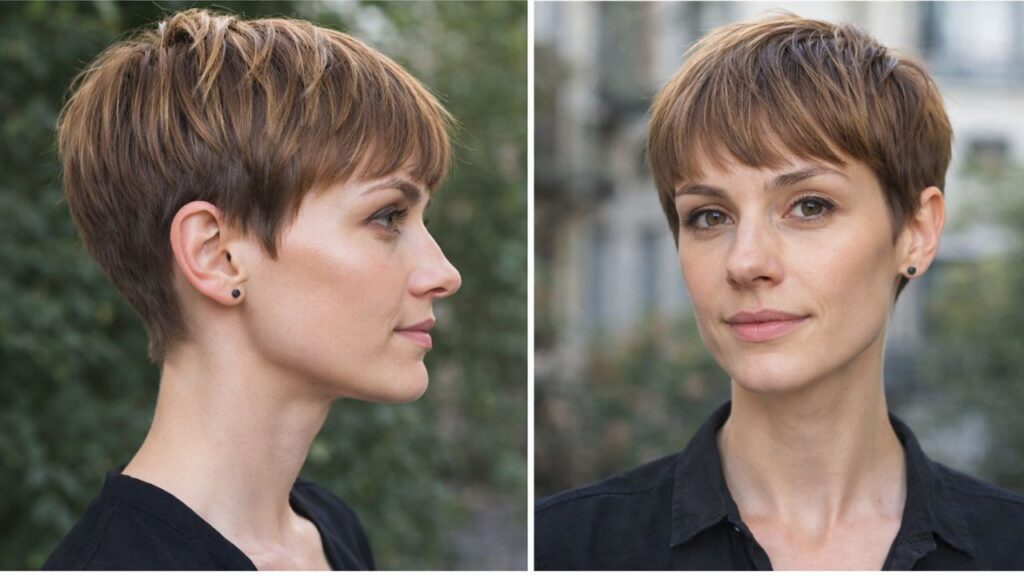
A haircut that truly grows out well begins before the shampoo bowl, in the words you choose—and in the ones you don’t say.
Why “Just a Trim” Rarely Means the Same Thing
When you sit down and say “just a trim, low maintenance,” your hairdresser hears something very different. To them, low maintenance might mean a textured bob that still needs mousse and styling. To you, it might mean wash, air-dry, tie it up, done. That gap is where the awkward grow-out phase is born.

The cut itself is rarely the full issue. The real problem is the unspoken expectations hidden inside vague phrases and polite nods.

Stylists are trained to see shapes, density, and patterns. You live with alarms, commutes, kids, workouts, and real mornings. Both realities matter. When you say “I never have time,” they might imagine ten minutes. You mean ninety seconds while the kettle boils. If you don’t give real numbers and real examples, your stylist fills the gaps with their own version of “busy.”
That’s how you leave with a cut that looks great in the salon… and starts falling apart by Tuesday.
The Grow-Out Problem No One Talks About
Think of someone who asked for curtain bangs, loved them for six days, then spent four months pinning them back. That’s what happens when the conversation focuses on the trend, not the effort tolerance.
Many salon surveys show clients rarely complain in week one. Dissatisfaction usually appears between weeks four and six, when layers shift awkwardly and necklines bulk up. That’s exactly when a well-planned grow-out could have created soft movement instead of an accidental mullet.
The difference isn’t luck or magic. It’s clear communication about what your hair should realistically look like in week six.
Designing a Cut With an Exit Plan
Hair that ages gracefully is built with future shapes in mind. A bob that becomes a lob. Bangs that melt into face-framing. A fade that softens instead of turning blocky.
Your stylist already thinks in shapes over time—if you invite them to. Tell them how often you truly come back: every eight weeks, every six months, or once a year when guilt kicks in. That timing determines where weight sits, how blunt the ends are, and how short the neckline goes.
Say nothing, and you get a four-week haircut. Speak clearly, and you get a three-month plan.
The Exact Words That Change Everything in the Chair
Skip “Do whatever you think.” Start with three concrete facts: how often you book appointments, how much time you style on workdays, and what you refuse to do.
For example: “I come every three months, I spend two minutes drying the front, and I don’t use round brushes.” That gives your stylist a clear reality check.
Mention your climate and lifestyle too. Cycling to work, living in humidity, morning gym sessions—all of it affects how hair behaves. A cut that survives rain and ponytails is very different from one designed for air-conditioned offices.
Photos help, but only when you point to specific details. Say “I like how the ends sit on the collarbone” or “I like that there’s no harsh line at the back.” If the model’s hair texture is different, be honest about what you’re chasing: movement, looseness, softness.
And be real: almost no one does a perfect round-brush blowout every day. Say it out loud. “I want this to look okay air-dried, even if it looks amazing only when styled.” That sentence alone can completely reshape the cut.
Designing for Week Six, Not Just Day One
There’s a phrase that works like a quiet signal: “I want this to look intentional at every stage.” It tells your stylist you care about month three as much as week one.
Ask questions like “Where will the bulk sit in six weeks?” or “What happens when the fringe reaches my cheekbones?” This encourages soft, adaptable shapes instead of sharp lines that demand constant upkeep.
You can even say “I want edges that grow fluffy, not corners that flip out.” Small words, big impact.

Building a Cut That Survives Real Life
A truly low-maintenance haircut isn’t about length. It’s about balance. Tell your stylist where your problem areas are: the cowlick, the heavy back, the side that always flips.
Ask them to release weight instead of just cutting shorter. Invisible layering, softer undercuts, or a slightly longer nape can help hair settle naturally as it grows instead of ballooning outward.
Be honest about your laziest habits. Sleeping on wet hair. Twisting it into a claw clip. Always tucking one side behind your ear. Those daily moves reshape your haircut over weeks.
Say things like “I always tuck this side—can you leave it a bit longer?” or “I wear low buns a lot—can you keep length at the nape?” Your stylist can quietly future-proof the cut if they know your real habits.
A Simple Salon Trick Most People Skip
One underrated move: ask for a rough dry before the final detailing. No round brush, no polished styling—just how you’d dry it at home.
This shows how the cut behaves in real life, not under salon-perfect tension. If something flips or collapses, it can be fixed immediately. Think of it as test-driving the haircut outside the showroom.
As one stylist put it: “The best cuts happen when clients stop pretending they’ll wake up earlier to style.”
Common Mistakes That Sabotage a Good Cut
Avoid saying “Do what you want” when you’re actually nervous. Don’t say “not too short”—show where you want the ends to hit on your body.
Talk about past disasters. Say “Face layers felt too piecey” or “I hated when my fringe split.” That history matters. Stylists aren’t offended by it—they’re grateful.
Helpful phrase: “If I don’t come back for three months, can this still look intentional?”
Clear boundary: “I’m okay with volume, but I don’t want to need heat tools.”
Honest reality: “On busy days, I just shake it out and use dry shampoo.”
Letting the Conversation Grow With Your Hair
The appointment doesn’t end when you leave the salon. What happens in your mirror over the next eight weeks is part of the process.
Notice when things start bothering you. Week five bulk. Bangs hitting lashes. Volume disappearing. Remember the timing.
Next visit, say “I loved it until week five, then it felt heavy here,” and point. That feedback turns your haircut into an ongoing collaboration, not a one-time gamble.
Accepting Imperfection—and Why It Helps
No haircut looks perfect every single day. Hair reacts to humidity, seasons, and mood. The goal isn’t total control—it’s a shape that still feels like you when it misbehaves.
Some days it flips, some days it falls flat. When the structure is designed around your lifestyle, those variations feel intentional, not like failure.
You’re no longer trapped in an awkward in-between phase. You’re just in another chapter of the same story.
Why Sharing These Lessons Matters
Talking about what worked, what failed, and what small changes made a difference helps others escape endless grow-out cycles. A simple photo caption like “air-dried, week seven, still okay” can say it all.
A good haircut isn’t a single moment after a blow-dry. It’s a long, honest conversation between your hair, your life, and the person holding the scissors.

Key Takeaways
- Clarify “low maintenance”: Share real time limits, appointment gaps, and non-negotiables.
- Talk about the future: Ask how the cut will look between weeks four and eight.
- Test it realistically: Rough-dry before final touches to see true behavior.