Across France and many parts of Europe, wooden pallets are quietly replacing traditional logs and pellets in domestic stoves and fireplaces. At first glance, it seems like a clever, low-cost solution, but this frugal approach comes with strict conditions to avoid toxic smoke, neighbour complaints, and hefty fines.
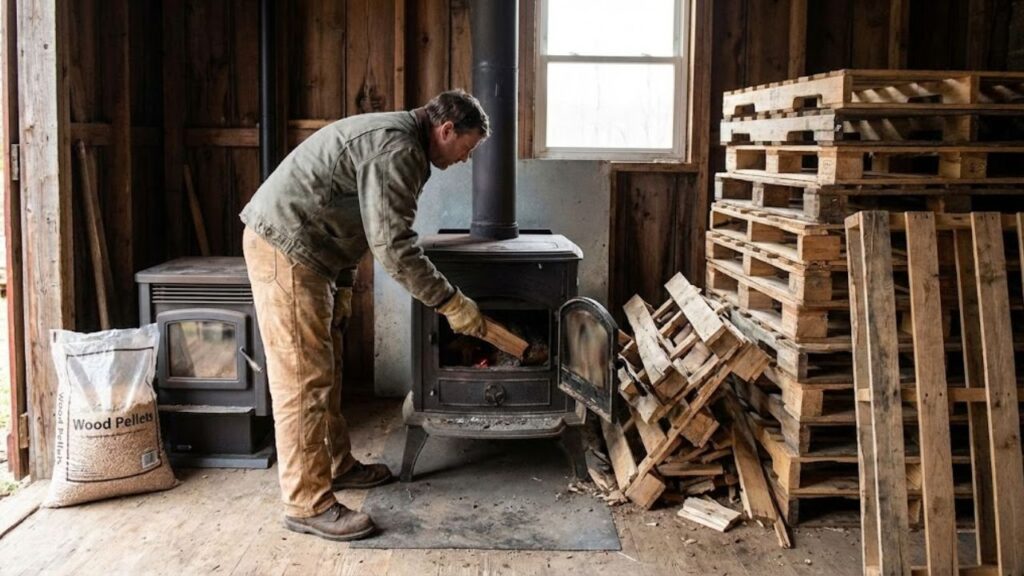
From Pellets to Pallets: A New Alternative for Heating
Pellet stoves were once celebrated for being efficient, clean, and relatively affordable. The energy crisis changed that. Prices for pellets surged, stocks dwindled, and homeowners started eyeing industrial zones and supermarket yards for something cheaper to burn: discarded shipping pallets.
Using pallets can cut heating costs and reduce waste — but only if the right pallets make it into the stove. Pallets are everywhere: transporting food, furniture, building materials, and online orders. Many companies discard or give them away. For households struggling with rising gas or electricity bills, free wood stacked outside a warehouse can seem like a godsend.

The reality is more complex. Some pallets are untreated and burn like soft firewood. Others have chemical treatments, paint, or contamination from transported goods. Burning the wrong pallets can release toxic fumes, damage chimneys, and violate local laws.

Reading Pallets: Codes, Colours, and Hidden Dangers
Safe Pallets for Domestic Fires
Check the markings stamped or branded on the side of a pallet. Safe options include:
- “DB” (debarked) pallets: untreated wood with bark removed, no chemical treatment.
- Unmarked pallets from small local suppliers, clean and bare.
- EPAL or EUR pallets, typically heat-treated rather than chemically fumigated, provided no paint or suspicious stains are present.
These pallets are usually softwood, ignite quickly, dry easily under cover, and can supplement traditional logs in a closed stove or insert. Always use clean, unpainted, untreated wood for domestic heating.
Pallets to Avoid
Some pallets are unsafe. Brightly coloured pallets — blue, green, orange, or red — often belong to rental companies and may be coated or chemically treated. Older pallets may contain fumigants like methyl bromide (MB), which is highly toxic when burned. Codes and warning signs to avoid include:
- MB: indicates methyl bromide fumigation.
- Unfamiliar codes with paint or varnish.
- Logos from pallet pooling firms combined with bright colours.
Contamination is another concern. Pallets used for chemicals, oils, or industrial goods may carry residues. Even without visible codes, pallets that smell unusual, look oily, or show dark stains should never be burned.
Finding Pallets and Legal Considerations
Common sources of free pallets include:
- Construction sites with material deliveries on wooden supports.
- Supermarkets and retail parks.
- DIY and garden centres.
- Logistics depots and warehouses.
Businesses may give away surplus pallets, but some use returnable systems, and taking them without permission can constitute theft. Always ask before taking pallets and verify that local rules allow burning them.

Local Regulations on Burning Wood
Even clean pallets may be restricted by local laws. Many European regions limit domestic wood burning to reduce fine particle pollution. In some municipalities, only certified firewood is permitted. Elsewhere, burning “waste wood,” including pallets, is legally considered waste incineration, with potential fines.
Check town hall regulations or local environmental rules to see if pallet burning is allowed, restricted, or banned. Insurance policies may also specify approved fuel types.
Environmental Considerations: Recycling vs Pollution
Pallet heating can reduce bills and divert wood from landfills, but the environmental benefit disappears when chemically treated pallets are burned. These release toxic compounds, heavy metals, and fine particles. Responsible pallet heating requires careful selection and modern, well-maintained stoves.
Certified, closed stoves burn wood more completely than old open fireplaces, keeping chimneys cleaner, emissions lower, and heat output higher. Mixing safe pallet wood with high-quality logs in moderation can be a practical compromise.
Comparing Fuel Types
| Fuel Type | Cost | Energy Content | Convenience | Main Risk |
|---|---|---|---|---|
| Pellets | Variable, sometimes high | High, very efficient | Easy to store and feed | Price volatility, supply shortages |
| Seasoned logs | Moderate | Good if well dried | Requires storage space | Moist wood causing smoke/creosote |
| Untreated pallet wood | Often free or cheap | Lower than hardwoods | Needs cutting, sorting, handling | Toxic fumes if selection is poor |
Pallet boards burn faster than dense logs and produce more ash. Many households reserve them for kindling or short bursts of heat, keeping hardwood logs for long winter evenings.
Safe Preparation and Use of Pallets
Once suitable pallets are identified and legal to burn:
- Dismantle carefully to avoid splinters and wood waste.
- Remove nails and metal parts to protect stoves and chimneys.
- Cut boards to fit the stove or fireplace properly.
- Dry under cover for several months if damp.
- Mix small amounts of pallet wood with logs for stable flames and moderate temperatures.
Warning Signs During Use
- Thick, dark smoke from the chimney.
- Chemical or plastic-like odours indoors or outside.
- Rapid soot accumulation on stove glass.
If any appear, stop burning, ventilate, and consult a professional. Annual chimney sweeps are essential with varied or recycled fuels.
Key Terms for Homeowners
- HT (Heat Treated): Heated to kill pests, safe for burning if clean and unpainted.
- MB (Methyl Bromide): Fumigated with toxic gas, never burn.
Mixing a small portion of clean, HT or DB pallets with quality logs can lower heating costs while keeping emissions manageable. In dense urban areas or valleys, excessive pallet use can impact neighbours, so consider insulation, heat pumps, or district heating as primary solutions, with pallets reserved for cold snaps or power outages.