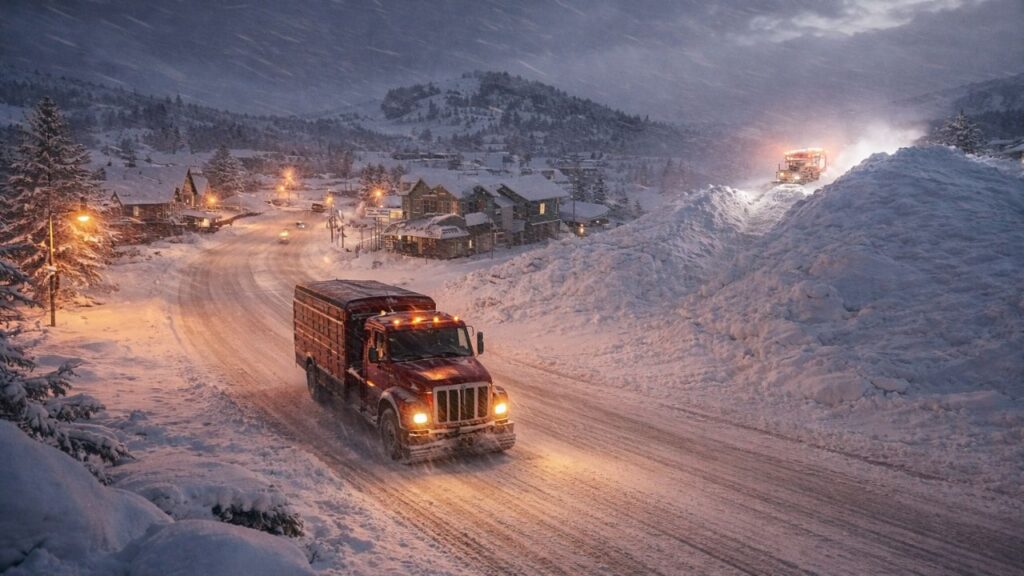
The first sign wasn’t the snow itself, but the **unnerving silence** that came with it. Not the gentle quiet people associate with winter scenes, but a dense, heavy stillness that swallowed traffic sounds and everyday noise. Streetlights glowed through a milky haze, while snow fell in **thick, wind-driven sheets**, wiping away tire tracks almost as quickly as they appeared. On local radio, the DJ abandoned small talk and calmly read out alerts: “This is not a normal storm.” Across the region, grocery aisles filled fast, with people gripping bread, batteries, and the last carton of milk as if it mattered more than usual. On the interstate, plow drivers adjusted their gloves and stared at radar screens turning into a solid block of white. Something uncommon was taking shape.
When Winter Weather Stops Feeling Routine
There’s a cold that freezes your eyelashes, and another that makes you rethink every decision that brought you outside. Communities across the Mountain West and parts of the Great Lakes are bracing for both as a **winter storm warning** blankets areas familiar with snow, but not on this scale. Forecasters are discussing totals of up to 70 inches in some high-elevation locations — nearly six feet from one system. Even longtime residents, who usually joke about snow shovels being “exercise with a purpose,” hesitate when they hear those numbers. In snow country, people know the difference between an ordinary storm and one that can **shut life down for days**. This system is pushing hard against that boundary.
Early Signs Along the High Roads
On a narrow mountain road near a busy ski town, the shift was obvious by mid-afternoon. Snow piled along the shoulders, leaving reflective markers poking out like half-buried stakes. A school bus crawled forward, chains rattling, while children inside watched familiar scenery dissolve into a white blur. At a gas station near the pass, pickup trucks with plows attached idled in a loose line, drivers exchanging brief looks that said everything. Meteorologists warned that some ridges could see snowfall rates of 2 to 4 inches per hour, fast enough to turn a clear driveway into knee-deep snow in the time it takes to finish an episode of TV. One sheriff’s office summed it up plainly: “If you don’t have to drive, don’t.”

Why Storm Totals Can Reach Extreme Levels
When forecasts start mentioning 50, 60, or even 70 inches from a single winter event, it isn’t hype. It usually points to a specific mix of conditions: deeply entrenched cold air, a strong low-pressure system pulling in Pacific moisture, and terrain that forces that moisture upward and wrings it out as snow. Upper-level winds and sharp temperature contrasts keep the system energized, while lake-effect bands near the Great Lakes or orographic lift in the Rockies and Sierra act like nonstop snow producers. While many imagine one massive dump, these totals often come from **days of relentless accumulation**. That persistence is what slowly exhausts communities.

Enduring Six Feet of Snow, One Choice at a Time
Living through a major snow event rarely looks cinematic. It’s not about dramatic rescues, but about **small, sensible decisions made early**. People who manage best usually prepare before the first flakes stick: keeping the car fueled, charging phones, refilling prescriptions, setting shovels by the door, and testing the snowblower ahead of time. They clear gutters to prevent ice dams, move vehicles away from heavy branches, and place a simple bin of water and snacks in an easy-to-reach spot. These actions don’t feel impressive. They feel routine and dull. Yet they’re exactly what creates a sense of control when the wind begins to howl.
Most people recognize the moment when a forecast shifts from “a few inches” to “historic totals” and every unfinished task suddenly feels urgent. Thoughts jump to half-charged devices, empty cupboards, and winter gear buried in closets. Panic-shopping or endless scrolling is tempting, but storms of this scale reward **quiet, practical steps** instead. Check on a neighbor who lives alone. Bring the snow shovel inside so it doesn’t freeze under a drift. Back into the driveway so leaving later is easier. No one does all of this perfectly every time. Still, in weeks like these, those overlooked habits are what separate manageable stress from real disorder.
 Goodbye Hair Dye for Grey Hair: The Conditioner Add-In That Gradually Restores Natural Colour
A Lesson Repeated in Every Big Blizzard
During a major blizzard years ago, a rural emergency manager offered a line that still circulates whenever forecasts look grim:
“Snow doesn’t just fall on roads. It falls on every weak point in your routine.”
The meaning is clear. Small oversights turn costly at night: cars parked the wrong way on a slope, flashlights with dead batteries, pets unable to move through deep drifts. Even minor mistakes can compound when several feet of snow and whiteout conditions arrive together.
- Keep a grab-and-go kit near the door with boots, gloves, a headlamp, and an ice scraper.
- Fully charge a battery pack and store it where you can find it in the dark.
- Clear outdoor vents and exhaust pipes to reduce carbon monoxide risk.
- Set a check-in plan with family or neighbors before conditions worsen.
- Choose one low-tech activity, like a book or board game, in case the internet drops.
What Record Snow Changes During and After the Storm
Aiming for 70 inches of snow affects more than just travel. That volume of frozen water reshapes daily life in ways that linger. Plowing becomes a layered challenge, with towering banks blocking visibility at intersections. School closures ripple into work schedules, child-care arrangements, and small businesses forced to stay closed. Those dependent on medical deliveries or in-home care feel each added inch as another layer of uncertainty. And when the clouds finally part, the real work is only beginning.

- Storm scale: Up to 70 inches possible in elevated and lake-effect areas — showing why this goes beyond routine winter weather.
- Preparation: Early, simple actions reduce danger when roads become hazardous.
- Aftermath: Roofs, roads, and routines remain under strain long after snowfall ends.