
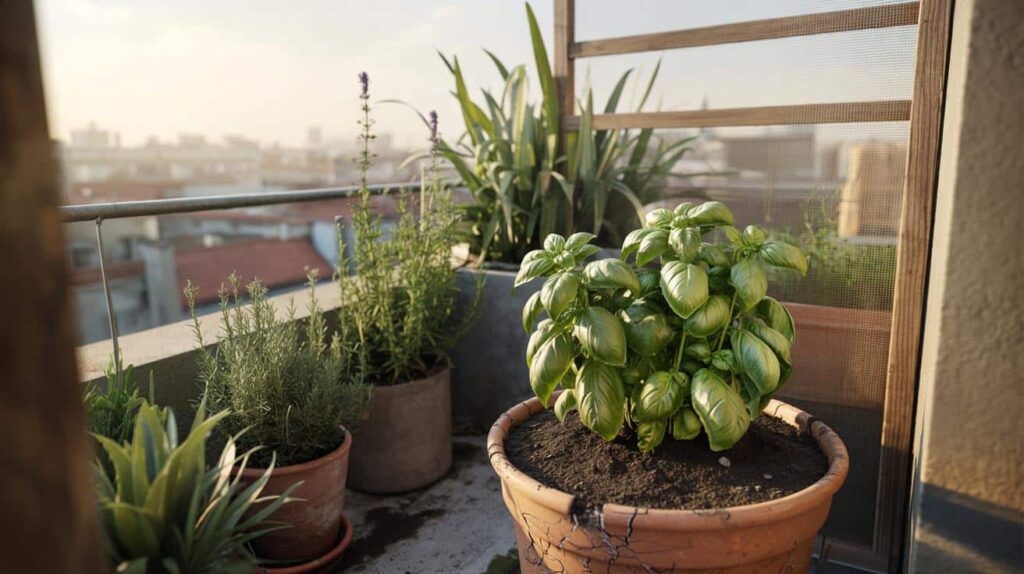
Late afternoon, small city balcony, tired basil in a cracked terracotta pot. The sky is hazy, heat is fading, and yet the leaves look more droopy now than at midday. You water them, as usual, and walk away feeling vaguely guilty, as if you’ve missed some invisible sign.
Next morning, same story. Soil still damp, but the edges of the leaves are crisp, curled, thirsty.
The only thing that’s really changed since spring is the wind.
And that’s the part most people underestimate.

When wind turns a healthy plant into a thirsty one
Spend five minutes watching plants on a windy day and you see it: constant fluttering, stems flexing, leaves shaking like tiny flags. From a distance, it looks almost joyful. Up close, though, you start to notice the toll.

The leaves look matte instead of glossy. The soil dries faster on the exposed side of the pot. The foliage facing the breeze always seems a bit more tired, as if it’s been up all night.
Wind doesn’t just “ruffle” plants. It drinks from them.
Go stand in front of a seaside garden after two days of strong gusts. The lavender looks greyed-out, the roses are singed at the edges, and the new tomato plants have leaves that feel like paper. Yet the soil underneath can still be dark and moist.
Gardeners often react the same way: “But I watered yesterday, how can they be dehydrated?”
A landscaper in Brittany told me she can spot a windy plot before even feeling the breeze, just by the look of the shrubs: shorter, denser, almost hunched over the direction of the prevailing wind.
The plants aren’t starving for water in the ground. They’re losing it in the air.
Wind strips the thin layer of moist air that usually clings to a leaf’s surface. That “micro-climate” around the leaf slows evaporation on calm days. When the air moves fast, that shield is torn away again and again. Each gust pulls more water out through the tiny stomata on the leaves.
The plant tries to cope by closing those stomata, but that also slows photosynthesis. Less growth, more stress, and a constant tug-of-war between staying hydrated and staying alive.
It’s not just about how much you water. It’s about how fast the wind is stealing it.
Small changes that protect plants from drying winds
The most effective trick isn’t glamorous: break the wind before it hits the plant. That can be a low fence of slatted wood, a row of tall pots, or even a simple mesh screen clipped to a balcony railing. The goal is not to stop air completely, but to soften its punch, like putting a diffuser on a harsh lamp.
On exposed terraces, gardeners who rotate pots weekly see fewer “burnt” leaves on the windward side. A quarter turn, once a week, spreads the stress and gives each side of the plant a chance to recover.

*Tiny barriers, small rotations, big difference in hydration.*
Most people react to wind-battered plants by doing just one thing: more water. Bigger watering can, more frequent sessions, same sad leaves two days later. The soil gets soggy, the roots get lazy, and fungal problems quietly move in.
We’ve all been there, that moment when you stare at a wilted plant thinking, “But I gave you everything.”
The real fix often lies higher up, above the pot, where leaves are being blasted all afternoon. Thirsty plants in windy spots don’t always need more water. They need more calm.
Let’s be honest: nobody really does this every single day.
The growers who live with strong winds year-round often talk less about watering and more about shelter. One urban farmer in Lisbon told me:
“On a rooftop, wind is my main irrigation system. Not because it waters, but because it decides how fast everything dries out.”
They tend to repeat a few simple habits:
- Place the thirstiest plants in the most sheltered corners.
- Use taller, tougher species as living shields for delicate ones.
- Switch to heavier pots so they don’t tip or crack in gusts.
- Water early morning, so plants can drink before the wind picks up.
- Mulch the soil surface to slow evaporation from below while the wind works above.
These aren’t fancy techniques. They’re just quiet, practical ways of saying “no” to unnecessary dehydration.
Rethinking what “thirsty” really means in a windy world
Once you start noticing wind exposure, you see it everywhere. The hedge on one side of the street that’s shorter than the other. The houseplants that only struggle on the windowsill that opens. The balcony herbs that do better tucked beside the door than on the railing with the view.
It changes your questions. Instead of “Did I water enough?” you start asking “How much water is this plant losing right now?”
You begin to read the leaves differently, not just as signs of neglect, but as little weather reports.
The truth is, most plants don’t die from one missed watering. They fade from weeks of subtle imbalance between what’s in the soil and what’s being stolen by the air. When you adjust that balance with a bit of shelter, some shade at the right hour, or a relocated pot, hydration suddenly feels less mysterious.
And that moment when a plant that’s always struggled finally holds its leaves high on a windy day? That’s when you realise the breeze was part of the story all along, you just hadn’t been listening.

| Key point | Detail | Value for the reader |
|---|---|---|
| Wind speeds up evaporation | Moving air strips the moist layer around leaves and soil | Helps explain why plants look thirsty even in damp soil |
| Shelter beats overwatering | Using screens, hedges, and smart placement reduces stress | Prevents root rot and wasted water while keeping plants hydrated |
| Timing and habits matter | Morning watering, rotation of pots, and mulching | Gives simple daily actions to protect plants on windy sites |
FAQ:
- Question 1Why do my plants wilt on windy days even when the soil is wet?
- Answer 1Wind increases transpiration, so leaves lose water faster than roots can replace it, creating a temporary “top-side” drought.
- Question 2Are some plants naturally better at handling wind?
- Answer 2Yes, plants with small, thick, or waxy leaves (like rosemary, lavender, many coastal species) usually cope better with constant wind.
- Question 3Does wind always harm plants, or can it be useful?
- Answer 3Gentle air movement can strengthen stems and reduce fungal disease, the problems start when gusts are frequent or strong.
- Question 4Is a solid fence the best windbreak for my garden?
- Answer 4A semi-open barrier (slats, mesh, hedge) works better, as it slows wind instead of creating harsh turbulence behind it.
- Question 5How can I protect balcony plants from drying winds?
- Answer 5Group pots together, place taller ones on the windward side, use screens or fabric on railings, and add mulch to every container.
