Inside, you’re wrapped in blankets, teeth chattering in a 20°C living room.
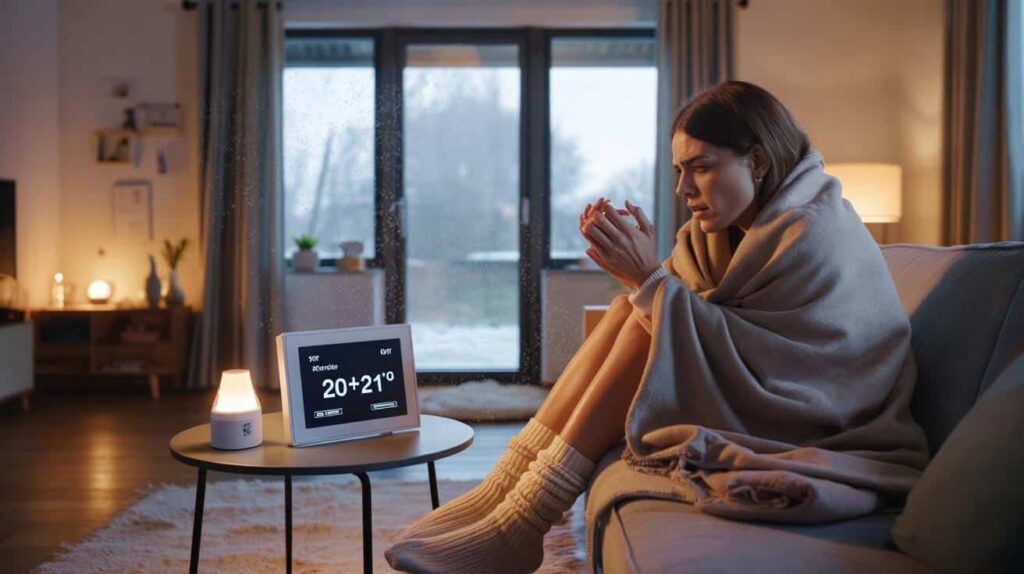
Many people quietly wonder if they’re “just being sensitive” when they feel cold indoors while the thermostat displays a perfectly respectable 20°C. Yet this mismatch between the number on the wall and what your body feels is rooted in physics, physiology and even psychology, not in imagination.
When 20°C doesn’t feel like 20°C
Indoor comfort isn’t decided by a single thermometer reading. Our bodies evaluate a whole set of conditions at once: the air, the walls, air movement, humidity, what we’re wearing and what we’re doing.

Thermal comfort is less about one temperature and more about a balance between your body and your surroundings.

So two people in the same room at the same time can have completely different impressions: one lounging in a T‑shirt, the other hunting for a second jumper. Both are reacting rationally to how their bodies interpret that environment.
The hidden role of radiant temperature
We tend to focus on air temperature because that’s what thermostats show. Yet our skin also senses the temperature of surfaces around us through radiation. Cold walls, windows and floors can “steal” heat from your body even if the air is mild.
Imagine sitting next to a single‑glazed window in January. The thermostat reads 21°C, but the glass might be closer to 8 or 10°C. Your body radiates heat towards that cold surface, and you feel chilled on the side facing the window.
When walls, floors or windows are cold, your body loses heat to them, and the whole room feels cooler than the thermometer suggests.
Mean radiant temperature, simply explained
Engineers talk about “mean radiant temperature”: an average of the temperature of all nearby surfaces. Your comfort depends on the mix of air temperature and this radiant temperature.
- Warm air + warm walls → cosy, stable comfort
- Warm air + cold walls → persistent feeling of chill
- Cool air + warm walls (like underfloor heating) → often still comfortable
This is why underfloor heating can feel pleasant at 19°C, while a poorly insulated flat feels icy at 21°C.
Draughts and air movement: the invisible thief of heat
Even a slight breeze indoors changes how you feel. Moving air boosts heat loss from the skin, much like a car journey feels colder with the window cracked open.
Common sources of cold air movement include:
- Gaps around windows and doors
- Chimneys and poorly sealed vents
- Badly balanced mechanical ventilation systems
- Cold air sinking from large glazed areas
That’s why some people feel cold only when they sit near a particular window or hallway, even though the room temperature is technically the same.
Humidity: friend, foe, and dry skin
Humidity is another quiet player in this story. In winter, central heating often dries the air. Very dry air makes moisture evaporate quickly from your skin and mucous membranes, which can leave you feeling chilly and uncomfortable.
On the flip side, very humid air indoors, especially in older or poorly ventilated buildings, can make the environment feel clammy and heavy. Cold and damp is a classic combination for discomfort.
A relative humidity between about 40% and 60% generally supports thermal comfort, as well as healthier airways.
How humidity alters your perception of cold
At low humidity, your skin loses moisture faster. That evaporation cools you, just like sweat does in summer, but now it works against you. Hands and feet can feel particularly icy.
At high humidity, damp surfaces and fabrics stay cold. The body struggles to warm the surrounding air because moisture conducts heat more efficiently, making rooms feel cooler than the thermostat reading.
| Relative humidity | Typical sensation |
|---|---|
| Below 30% | Dry throat, chapped lips, chilly sensation despite heating |
| 40–60% | Generally comfortable for most people |
| Above 60% | Cool and clammy, risk of condensation and mould |
Why some people are always colder than others
Even in a perfectly adjusted home, not everyone will feel the same. Biology has a lot to say about why you are shivering while someone else is perfectly fine in shorts.
Age, hormones and body composition
As we age, our metabolism tends to slow. Older adults often produce less body heat at rest and may have reduced circulation in extremities, particularly hands and feet. This makes them more sensitive to small drops in temperature.
Hormones matter as well. Oestrogen affects how blood vessels dilate and constrict, which can partly explain why many women report being colder than men in the same room. Certain phases of the menstrual cycle, pregnancy or menopause can also change heat perception.

Two people in the same room can experience a 2–3°C difference in “comfort temperature” purely due to biology.
Body fat and muscle mass contribute too. Muscle generates heat when it works, even quietly. People with more muscle often feel warmer at rest. Very lean individuals, or those with certain medical conditions affecting circulation or thyroid function, may feel cold more easily.
Lifestyle and daily habits
Someone who works outdoors year‑round adapts over time. Their body becomes better at maintaining warmth in cooler conditions. A person sitting for long hours at a desk, especially in front of a large cold window, will not adapt in the same way and often feels cold more quickly.
Sleep, food intake and stress also modulate your thermal comfort. Lack of sleep or under‑eating can reduce metabolic heat, while chronic stress can cause blood vessels in the skin to constrict, leaving fingers and toes icy.
Practical checks if you’re cold at 20°C
If you constantly feel chilled indoors, a quick home “thermal audit” can be revealing. Without specialist tools, you can still spot likely culprits.
- Stand near each window and door: do you feel air moving or a sudden cold patch?
- Touch external walls: do they feel much colder than interior walls?
- Look for condensation on windows: this hints at high humidity and cold surfaces.
- Note where you sit most: close to a window, on a tiled floor, or near an uninsulated wall?
- Check your thermostat location: is it in a warm corridor while you work in a cooler corner?
A cheap digital thermometer and hygrometer can show both air temperature and humidity. Using two of them in different rooms can expose larger differences than you might expect in the same home.
When feeling cold may signal a health issue
Persistent intolerance to cold isn’t always about the house. Certain medical conditions can heighten sensitivity, even in relatively warm rooms.
Doctors often check for:
- Thyroid disorders, especially hypothyroidism
- Anaemia, where low iron or low red blood cell counts reduce oxygen delivery
- Certain circulatory problems such as Raynaud’s phenomenon
- Undernutrition or rapid weight loss
Cold intolerance combined with fatigue, hair loss, unexplained weight change or paleness justifies a medical discussion. The fix may involve blood tests rather than a new radiator.
Concrete scenarios: two identical homes, two very different winters
Picture two flats, both heated to 20°C. In the first, walls are insulated, windows are double‑glazed, humidity sits at 45%, and rugs cover the floor. People move around regularly.
In the second, the building is old and poorly insulated, windows are draughty, humidity lingers at 65%, and the occupant works all day at a desk against an external wall.
Objectively, the temperature is the same. Subjectively, the second flat can feel like it’s 3–4°C colder.
That difference shapes habits: more layers, higher energy bills, or simply enduring discomfort. Adjusting surface temperatures and air leakage in the second flat can raise comfort without necessarily cranking up the thermostat.
Why small changes can warm you more than a big jumper
Improving perceived warmth isn’t only about thicker clothing. Strategic tweaks target the very mechanisms that make 20°C feel icy.
- Blocking draughts at doors and windows limits convective heat loss.
- Adding rugs or carpets reduces heat loss through cold floors.
- Closing curtains at night warms the radiant temperature near windows.
- Using a humidifier in very dry homes can make the same temperature feel more comfortable.
- Taking short movement breaks during desk work boosts circulation and body heat.
These simple actions change the mix of air temperature, radiant temperature, air movement and humidity. They address the reasons your body complains, not just the number on the thermostat.
Key terms that help make sense of your shivers
Two concepts are particularly useful when you’re trying to decode why you’re cold at 20°C.
Thermoception is the scientific term for your body’s sense of temperature. It combines signals from nerve endings in the skin, internal organs and the brain itself. Past experiences, expectations and mood can tweak how your brain interprets those signals, which is one reason some people swear they’re freezing while others insist the room is fine.
Thermal comfort is the state in which you feel neither too hot nor too cold and don’t feel a need to change your clothing or environment. Engineers use it to design buildings, but for individuals it’s more than a calculation: it’s the everyday sense of ease that lets you focus on work, rest or family life without constant distraction from the cold.
Understanding these ideas can change how you think about that stubborn “I’m always cold” feeling. Instead of doubting your perception, you can start to identify which piece of the puzzle—surfaces, air, humidity, lifestyle or health—needs attention in your own home.