
The first time you truly hear an owl, it feels as if the entire night pauses. You step outside to take out the trash or walk the dog, and a soft, echoing hoot drifts down from the dark canopy above. For a brief moment, you stop moving—half curious, half childlike in awe—that a wild nocturnal hunter is perched only a short distance from your everyday world.
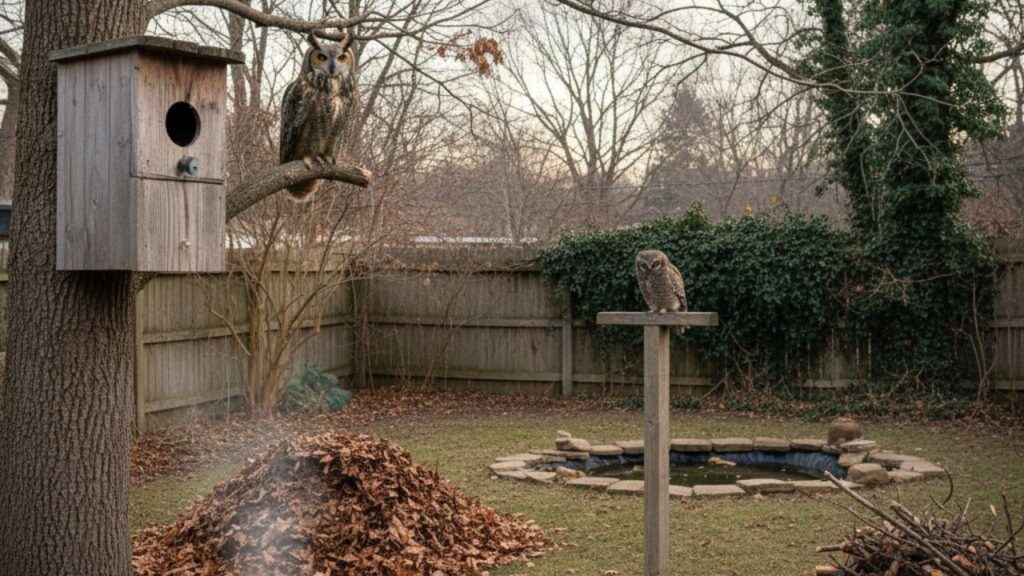
Most people imagine owls as creatures of distant forests and nature films. Yet increasingly, they are quietly moving into suburbs, small towns, and city edges, attracted by something as ordinary as an overgrown corner of a yard or a streetlight buzzing with moths.
This is the time of year when those silent wings begin choosing where to settle. The real question is whether your yard will make the cut.

Why Owls Are Appearing in Ordinary Backyards
If your evenings have felt unusually alive lately, you’re not imagining it. From late fall through early spring, many owl species begin scouting territories, hunting more actively, and in some regions, pairing up and calling loudly after dark. As leaves thin and nights lengthen, those glowing disk-shaped eyes finally emerge from the shadows.
 The plant that perfumes the home and repels mosquitoes : here’s why everyone wants it in spring
From barn owls gliding over open land to small screech owls weaving through neighborhood maples, this is their busiest season. Rodents are moving, young owls are searching for their first true home range, and the quiet edges of our gardens suddenly look inviting. An owl may already be passing over your roof without you ever noticing—unless you give it a reason to stay.
The Moment a Yard Becomes a Home
Anyone who has installed an owl box at just the right time tells a similar story. Weeks or even months of nothing, and then one cold, clear evening in late winter, a shadow appears and lands on the box as if it has always belonged there.
One family in Pennsylvania put up a simple screech owl box at the back of their yard in January. By early March, a pair of owls was roosting there daily, peering out at dusk like grumpy tenants. They hadn’t transformed their yard—no elaborate landscaping or wildlife garden. Just a quiet corner, mature trees nearby, and a safe cavity placed at the right height.
This same pattern shows up again and again. Where hunting space, perches, and secure hollows exist together, owls stop feeling mythical and start becoming neighbors you only meet after dark.
Why This Season Is Your Best Opportunity
There’s a very practical reason this time of year matters. Many owls synchronize nesting with spring’s surge in prey, which means they begin searching and defending nesting sites much earlier than most people expect. If suitable shelter isn’t available when they look, they simply move on.
Shorter days also work in your favor. More darkness creates more hunting hours, drawing owls closer to light-spilling backyards where insects and rodents gather. Bare branches give them clearer sightlines and safer flight paths, making winter landscapes surprisingly appealing.
- According to psychology, people raised by strict parents tend to develop certain habits later in life
- Seven signals a cat sends when it is quietly asking for help
- Airbus reaches a historic aviation milestone by guiding two commercial jets to the same point in the sky without collision
- Psychology explains which specific colours can make people look noticeably older without realising it
- Psychology suggests that certain forms of silence can act as a survival strategy
- Psychology identifies eight phrases deeply selfish people often use without realising how revealing they are
- The longest solar eclipse of the century will turn day into night, astonishing scientists with its duration
- Daylight will slowly fade during the longest total solar eclipse of the century across several regions
Taken together, these factors create a narrow, golden window when even a small change in your yard can suddenly matter to a passing owl. Miss it, and you may have to wait another year.
Simple Changes That Quietly Welcome Owls
Begin with the least glamorous advice: allow a little mess. Owls follow their food, and for them that usually means mice, voles, and other small animals hiding in tall grass, brush piles, or weedy fence lines. A perfectly trimmed lawn offers almost nothing.
Let one strip along the edge of your yard stay slightly wild. Leave a fallen branch or two instead of clearing every twig. If it’s safe, keep a small brush pile where rodents can live, which in turn attracts the hunters that feed on them. You’re not neglecting your yard—you’re building a small food web that comes alive after sunset.
Many people rush to buy an owl box and then feel disappointed when nothing moves in. The box is only one piece of the puzzle. If it’s too exposed, hung too low, facing harsh weather, or painted brightly, owls often ignore it entirely.

Choose a solid wooden box suited to your local species and mount it 10 to 30 feet high, tucked against a tree trunk or barn wall. Aim the entrance away from strong winds and heavy rain. Avoid glossy paint or metal trim; rough, plain wood blends in and feels safer. A quick annual check for wasp nests or loose screws can make the difference between a potential home and a definite rejection.
“Sometimes the best owl habitat looks, to human eyes, like unfinished yard work,” says urban wildlife biologist Carla Ruiz. “A dark corner, older trees, and less nighttime noise are what tell an owl it can relax.”
- Leave hunting space: Open patches allow owls to swoop low for prey.
- Keep mature trees: High branches make perfect silent perches.
- Reduce nighttime noise: Loud sounds at dusk can drive owls away.
- Dim harsh lighting: Gentle, shielded lights feel safer to nocturnal hunters.
- Avoid rodent poisons: Poisoned prey often leads to poisoned owls.
Sharing Your Space Once Owls Arrive
If you’re fortunate, one evening a low, questioning hoot will sound above your driveway. From that moment, you’re no longer just attracting owls—you’re sharing routines with them. Late-night walks, porch phone calls, and quiet chores all become part of their mental map of your home.
This is when small habit changes matter most. Keep dogs on a leash at night, especially near known perches or boxes. Move slowly if you spot an owl and resist shining bright lights toward it. The less attention you give them, the faster they relax.
Excitement can make people careless. Playing owl calls, crowding under nest boxes, or flooding the yard with lights may feel harmless, but to an owl it can feel like living above a nonstop café.
Follow a simple rule: observe, don’t pursue. Use warm, low lighting aimed at the ground. Teach children to whisper and treat owls as guests, not pets. If a nesting branch becomes risky, seek expert help rather than trimming aggressively during breeding season.
When Young Owls Appear
During nesting season, your role shifts again. You may be hosting a family raising chicks entirely out of sight, often returning to the same spot year after year. Seeing a fluffy youngster on the lawn can trigger the urge to intervene.
Wildlife rehabilitators offer the same guidance for a reason. If a young owl on the ground looks healthy and alert, its parents are likely nearby and still feeding it. Keep pets indoors, give the bird space, and watch from a distance. Many fledglings climb back up on their own.
The reality is that most owl families need fewer rescues and more quiet patience. Stepping back at the right time allows them to learn the night the way they always have—by trial and error, right above your yard.
The Quiet Reward of Welcoming Owls
Over time, the hoot outside stops feeling rare. It becomes part of your sense of place, like wind through the trees or distant traffic. Your yard is no longer just something you mow and decorate.
You begin noticing cycles that run on owl time: winter nights filled with calling, the early spring hush while eggs are kept warm, and the first awkward flights of young birds between rooftops. Neighbors may wonder why mice seem to disappear from their sheds. You’ll know the silent shapes overhead played a role.
By leaving one corner wild, hanging a simple box, and dimming a few lights, you’ve opened a quiet door between daily life and the wild still clinging to it. Not a spectacle, not a display—just a thin, shared border where your late-night tea overlaps with an owl’s ancient nightly patrol.

Key Takeaways
- Seasonal timing matters: Owls scout nesting sites from late fall to early spring, giving you a clear setup window.
- Messy corners support owls: Brush piles, tall grass, and older trees create food and perches.
- Low disturbance keeps them safe: Quiet nights, gentle lighting, and no poisons protect owls long term.
