Consumer group UFC-Que Choisir has now taken a hard look at this booming kefir trend, accusing some brands of selling expensive illusions rather than genuine fermented health drinks.
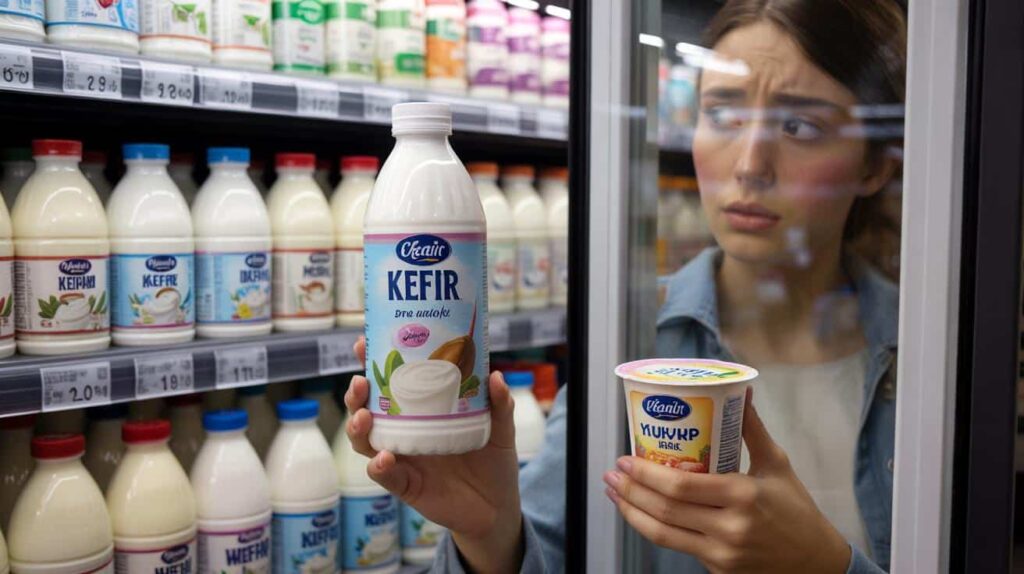
What UFC-Que Choisir is warning about
Yogurt and fermented milk products are usually seen as safe bets: simple ingredients, live cultures, and a decent dose of calcium and protein.
In theory, a classic yogurt needs only two things: milk and lactic ferments. Anything more is optional. Long ingredient lists, added sugars, colourings and preservatives usually raise questions.

Into this landscape has stepped kefir, a fermented milk drink marketed as a kind of “super yogurt” with extra probiotic power. In France and across Europe, kefir has become fashionable, often presented as a solution for bloating, fragile digestion and general wellbeing.

UFC-Que Choisir says some so‑called “kefir” yogurts can cost up to three times more than standard products, without offering the composition or benefits suggested on the label.
After testing several drinks sold as kefir, the consumer group concludes that many of them resemble ordinary fermented milk far more than the traditional drink they claim to be.
What real kefir is supposed to be
Kefir is a fermented milk originating from the Caucasus. Traditionally, it is made by adding “kefir grains” to milk. These grains are not cereals but small gelatinous clusters made up of bacteria and yeasts living together.
This mix of micro-organisms produces a particular fermentation:
- A rich range of probiotics (different strains of bacteria and yeasts)
- A slight natural effervescence due to gas formation
- Tiny amounts of alcohol, similar to what you find in kombucha
- A tangy taste, more complex than standard yogurt
According to the international Codex Alimentarius, which sets food standards, authentic milk kefir must contain a minimum level of yeasts: at least 10,000 per gram. That threshold is part of what makes kefir distinct from simple fermented milk using only lactic bacteria.
Without kefir grains and a sufficient yeast count, the drink drifts away from traditional kefir and edges closer to basic yogurt or buttermilk.
Nutritionally, genuine kefir is rich in proteins, calcium, vitamin D and vitamin K2, nutrients linked to bone health and the prevention of osteoporosis, especially in ageing populations.
The practices UFC-Que Choisir calls misleading
The group’s investigation found that many “kefir” products on sale do not use kefir grains at all. Instead, manufacturers rely only on lactic bacteria strains, similar to those used for standard yogurt production.
Several companies acknowledged to UFC-Que Choisir that they do not employ the specific ferments required for traditional kefir. The result is a product that behaves and tastes much like ordinary drinking yogurt, but carries a more fashionable name and a much higher price.
According to UFC-Que Choisir, many “kefir” drinks are, from a microbiological standpoint, comparable to regular fermented milk such as buttermilk or leben, which usually cost far less.
Despite this, prices can reach up to €7 per litre in French supermarkets. For a family buying fermented dairy every week, the extra cost can quickly add up without clear added value.
A marketing opportunity, not a revolution
UFC-Que Choisir argues that what is happening looks less like innovation and more like a clever marketing strategy: rebranding classic fermented milk as a premium health drink.

Manufacturers offer several justifications for their approach. One Breton producer, cited by the group, explains that working with defined bacterial strains rather than live kefir grains gives a more stable product and simplifies microbiological risk management. In other words, the process is easier to control on an industrial scale.
Danone, another major player, reportedly highlights a different argument: limiting or avoiding alcohol production. Traditional kefir – like fruit kefir and kombucha – generates small amounts of ethanol during fermentation, something some brands prefer not to deal with on products aimed at children or marketed as strictly alcohol-free.
Another producer notes that using real kefir grains often makes the drink slightly fizzy, because of the gas produced during fermentation. Many consumers, they argue, do not want a sparkling texture in dairy drinks, which pushes brands towards more conventional ferments.
A legal grey area around the “kefir” name
Manufacturers also point out that, in France, no specific regulation strictly defines what can or cannot be sold under the name “kefir”.
That legal vacuum makes the term attractive: it suggests tradition and health, but leaves a lot of room for interpretation.
French consumer law still requires that labels must not mislead shoppers about a product’s composition or manufacturing process, even when no detailed product standard exists.
This tension between vague product names and general rules against deception sits at the core of UFC-Que Choisir’s criticism. The group is not only targeting kefir; it is warning about a broader trend where fashionable health buzzwords are used on labels with little scientific backing.
How to spot real value in the dairy aisle
For shoppers trying to protect their wallets and their health, a few cues can help sort genuine products from marketing talk:
- Check the ingredient list: short lists with basic ingredients are usually preferable.
- Look for mentions of kefir grains or mixed bacteria and yeasts, not just “lactic ferments”.
- Compare prices with plain yogurt, buttermilk or leben; similar compositions should not cost triple.
- Ignore vague promises like “boosts immunity” unless backed by precise claims and context.
- Pay attention to sugar content, which can erase much of the benefit of a “healthy” fermented drink.
For anyone keen on genuine kefir, home fermentation is another avenue. Many people buy real kefir grains online or from communities and prepare their own drink with milk at home. This requires basic hygiene rules and patience, but gives full control over ingredients and fermentation time.
Understanding a few key terms
Two expressions often appear on these products and on health blogs: “probiotics” and “microbiota”. They sound technical but refer to straightforward concepts.
| Term | What it means | Why it matters |
|---|---|---|
| Probiotics | Live micro-organisms that, in adequate amounts, can provide health benefits | Some strains help digestion, reduce certain infections or modulate the immune system |
| Microbiota | All the bacteria, yeasts and other microbes living in our body, especially in the gut | They influence digestion, metabolism and even aspects of mood and immunity |
| Fermented milk | Milk transformed by bacteria or yeasts that consume sugars and produce acids or gas | Can extend shelf life and change taste and texture, often improving digestibility |
Not every fermented dairy product qualifies as a probiotic food. To be considered probiotic, the drink must contain enough live micro-organisms with proven benefits, in forms that survive storage and a trip through the digestive system.
What this means for your daily habits
Imagine a family buying two litres of premium “kefir” a week at triple the price of ordinary yogurt drinks. Over a year, that difference can easily reach a few hundred euros, spent on products that may not be much more than rebranded fermented milk.
For people with digestive troubles, expectations can be even higher: they may hope this trendy drink will solve long-standing issues. When the product is closer to standard yogurt than to real kefir, disappointment can follow, leaving consumers both out of pocket and still uncomfortable.
Fermented dairy can still be part of a balanced diet. Yogurt, buttermilk, traditional kefir and even some plant-based ferments each have their place. The key is matching the price and promises to what is actually inside the bottle, rather than to the buzzword printed on the front label.