
After a long day, you slam the car door, only to face the stubborn stains on your seats. A brownish coffee halo, a sticky juice box mark, or the faint outline of a ketchup mishap. Despite your best efforts with scrubbing, store-bought cleaners, and even the widely recommended vinegar and baking soda combo, your car seats still look worn and tired.
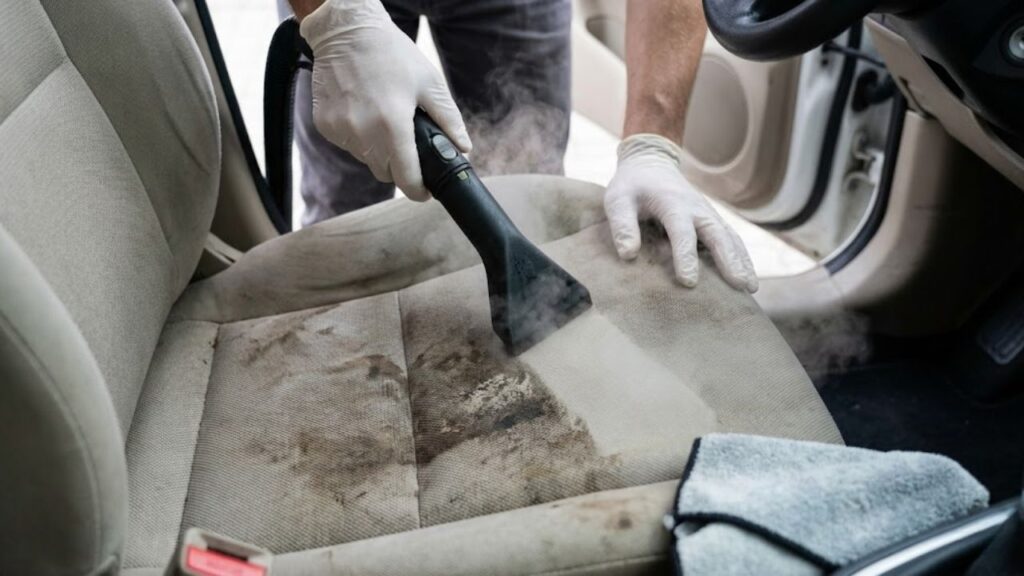
It’s easy to think the seats will never look clean again. But perhaps you’re overlooking a much simpler method.
The Power of Patience: No Vinegar or Baking Soda Needed
Car seats bear the marks of everyday life—coffee spills, muddy shoes, chocolate stains, and fast-food crumbs. These small incidents accumulate until the upholstery looks aged beyond its years.

While many rush to extreme cleaning solutions, such as vinegar baths or baking soda piles, these can often make the problem worse. The stains persist, and now your car smells like a strange salad dressing. Instead, a quieter, more patient approach can bring those seats back to life.

A car detailer shared the story of a client whose beige seats seemed beyond saving after a toddler’s grape juice disaster. The typical vinegar and baking soda mix only left behind a stiff, darkened patch. But with the right method—lukewarm water, a mild detergent, and a microfiber cloth—the stain gradually faded away. The seats, which once seemed hopeless, looked like new after just a few passes.
Here’s the truth: harsh cleaners like vinegar and baking soda can weaken upholstery, strip protective coatings, and embed residues in the fabric. A gentle detergent with mild surfactants is the key to lifting stains without harming the fabric. It’s about slow, controlled cleaning rather than using harsh chemicals to scrub away the issue.
The Quiet, Step-by-Step Method for Cleaning
Start by vacuuming thoroughly with a soft brush attachment to remove crumbs and dirt. This prevents further grinding of debris into the fabric while cleaning.
Next, fill a bowl with lukewarm water and add a few drops of mild liquid detergent or baby shampoo. You’re looking for slightly soapy water, not foam. Dampen a microfiber cloth and gently rub the stains in small areas, using short, patient strokes. Rinse the cloth often to lift dirt without spreading it.
For tougher stains like old coffee or food grease, mix water with a bit of clear dish soap and a tiny pinch of salt. The salt provides a gentle abrasive action without scratching the fabric. Apply it with a soft brush, moving from the edges of the stain toward the center.
Afterward, blot the area with a dry microfiber cloth—press and lift, press and lift. Repeat this process two to three times, allowing the fabric to rest between passes. This is a slow, layered approach that professionals use to restore car seats, and it’s far more effective than rushing or soaking the fabric.
Avoiding Common Cleaning Mistakes
Impatience is the biggest trap when cleaning car seats. Over-wetting the fabric can cause a ring to form as it dries, or worse, it can soak into the foam underneath, leading to lingering smells and longer drying times.
Think of car seat cleaning like caring for delicate clothing. Less water, more passes. After cleaning, allow the fabric to dry naturally with a little warm air—an open window or the car’s ventilation system on low works perfectly. Avoid using a hairdryer or excessive heat, as it can shock the fabric and weaken its structure.
Helpful Tips for Success
- Test products on a hidden area of the seat before use.
- Use microfiber cloths instead of cotton rags to avoid lint and scratches.
- Work in small sections, finishing one area before moving to the next.
- Always blot stains from the edges toward the center to prevent spreading.
- Ensure the car is fully aired out after cleaning to avoid trapped moisture.
Living with Clean Seats: A Practical, Everyday Approach
There’s something satisfying about knowing your car seats don’t need a cabinet full of aggressive cleaners to stay presentable. Instead, they only need a consistent routine—a quick vacuum, a soapy cloth when a spill happens, and a microfiber towel for surprise moments.
After a coffee spill, you’ll no longer have to panic. A quick clean-up with your trusty method will leave your seats looking fine. Over time, cleaning becomes an easy habit, and your car’s interior remains fresh with little effort. The key is to treat the car like a tool, not a showroom, and give it consistent care.
As your seats age, they’ll soften, but without the crusty feel or permanent stains. When it’s time to sell or take a friend for a ride, you won’t be apologizing for the condition of the seats. You’ll simply open the door and let them speak for themselves.

Key Takeaways
- Gentle cleaning mix: Lukewarm water + mild detergent or baby shampoo protects the fabric while removing stains.
- Method over force: Vacuum first, work in small sections, and blot instead of scrubbing to prevent damage.
- Realistic routine: Short, regular clean-ups reduce effort and keep seats fresher with less stress.
