
Before even stepping inside Tokyo’s Don Quijote store, you’re greeted by a cacophony of neon signs, J-pop tunes spilling from the speakers, and the sound of baskets rattling across the floor. As you wander through the aisles, you turn the corner into the home section and are met with a modest shelf, a soft blue logo, and a curious crowd staring at… toilet paper.
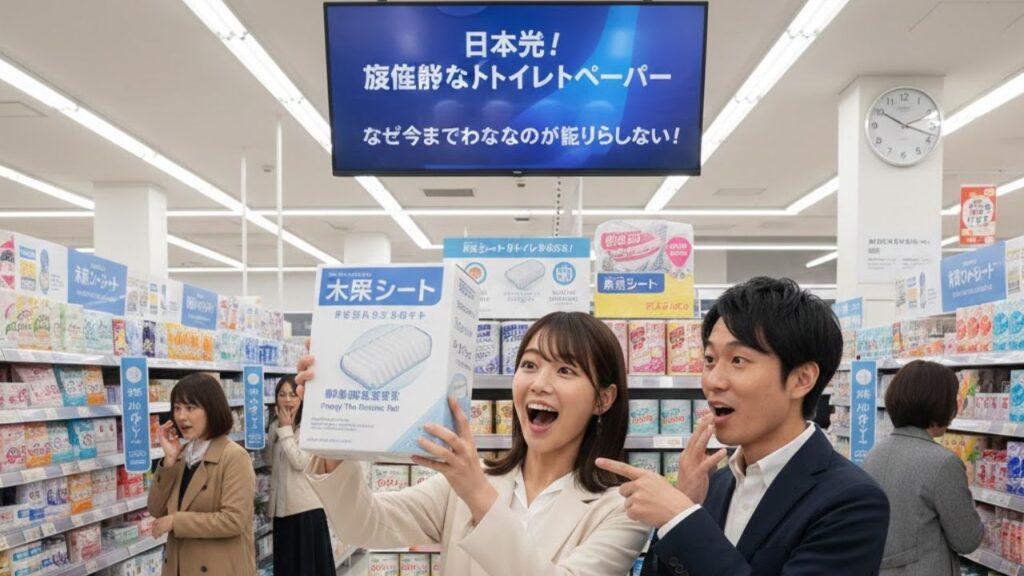
No flashy gadgets, no AI robots. Just a new roll that seems almost ordinary—until a store clerk calmly explains how this roll solves three common bathroom problems in one simple design.
Shoppers laugh, film, and poke at it like it’s some tiny UFO that has landed among the cleaning supplies. You overhear someone repeating the same phrase in both Japanese and English:

“Why didn’t anyone invent this sooner?”

Japan’s Hidden Bathroom Innovation: A Smart Solution in Plain Sight
This roll doesn’t scream for attention. It’s slightly shorter, a bit denser, and wrapped in a soft, discreet sleeve that feels more like packaging than plastic. The real twist, however, lies in its core: a flexible, reinforced tube with tiny inner ridges, allowing the roll to securely fit into nearly any holder—old or new.
No more wobbling, no rolls slipping onto the floor, and no more desperate grabs mid-wipe. The paper itself is more compact, so one roll quietly replaces two standard ones—meaning fewer bulky packs lugged home on trains and bicycles.
On the shelf, it just seems… sensible.
At one supermarket in Setagaya, Tokyo, a hand-written sign reads, “One pack per customer, please.” An older woman in a beige coat laughs as she tells the cashier she’s buying it for her daughter in Osaka “before it goes viral and sells out.” The cashier, accustomed to this conversation, smiles tiredly.
A young man in office attire films a TikTok, comparing the old roll sliding off a loose bar with the new Japanese roll locking into place with a soft click. His comment section fills quickly: “Where can I buy this?” “Genius idea!” “Why don’t we have this in Europe?”
Everyday Problems Solved with Japanese Precision
The logic behind the design is quintessentially Japanese. Homes are small, storage space is limited, and daily routines are optimized like a well-ordered puzzle. A product that takes up half the space, won’t fall apart during use, and fits most holders solves three major problems in one go.
Japan’s quiet obsession with cleanliness and respect for shared spaces is evident here. The design reduces waste, avoids torn cardboard, and eliminates half-used rolls rolling around the bathroom. The product feels like someone finally took those minor, private annoyances seriously.
It’s not futuristic or flashy. It’s simply practical, and practical solutions are deeply ingrained in Japan’s daily design philosophy.
How This Simple Idea Works in Everyday Life
The magic begins with the core. Unlike the flimsy cardboard tube found in standard rolls, the Japanese roll uses a thin, flexible composite material that bends just enough to click into place on the holder. As you slide it on, you feel a gentle resistance, like a soft handshake grip. Once in place, it stays put—even if the bar is slightly thinner or not perfectly straight.
This small yet significant detail transforms the experience, especially for renters with wobbly wall fixtures or families with kids who yank the roll like they’re starting a lawnmower. No more toilet paper flying across the floor at the worst possible moment.
It behaves the way you’ve always wished toilet paper would.
Then there’s the compact size. Each roll is shorter but tightly wound, so a pack of six looks like a neat brick rather than a balloon. On crowded trains, office workers can slip a pack into their tote bag without the awkward “everyone knows I bought toilet paper” moment.
A Tokyo dad shared his experience outside a drugstore, explaining that his family of four used to stack large toilet paper packs in the hallway “like a soft sculpture we had to walk around.” Now, the smaller pack fits neatly under the sink. He laughed and shrugged, saying, “We’re not saving the world, but my entrance looks less like a warehouse.”
 Neither boiled nor raw : the best way to cook broccoli to preserve maximum antioxidant vitamins
This subtle sense of relief is a hallmark of Japan’s everyday design innovations.
Solving the Humidity Problem with Clever Engineering
The reinforced inner tube addresses another mundane but very real issue: humidity. In small bathrooms with no windows, standard cardboard cores can sag, warp, and start to collapse, causing rolls to drag, rip unevenly, or fail to spin smoothly.
The new core maintains its shape, ensuring that the roll turns smoothly until the very last sheet. Less waste, fewer annoying half-stuck layers. One chain even claims customers use up to 15% more paper from traditional rolls due to tearing and jamming issues.
While we don’t usually count toilet paper sheets, this small innovation subtly nudges you to use just what you need—no more, no less—making the roll’s performance as efficient as its design.
What This Design Says About Japanese Innovation (and Our Own Habits)
The easiest way to understand this toilet paper tweak is to view it as a classic example of Japanese “small fixes” that solve bigger patterns. Start with one minor annoyance—like the roll slipping, storage problems, or messy cardboard—and ask, “What if the design could be better?”
From there, engineers iterate, testing different cores, densities, and packaging solutions that stack neatly in tiny apartments. Shaving off a few millimeters here, adding subtle grips there—changes so small you barely notice them individually, but when everything “just works,” you feel it. It’s the quiet art of Japanese everyday design.
If you’ve ever lived in a small space, you understand the mental energy it takes to store awkward items. Bulky toilet paper packs, oversized detergent bottles, and plastic wrapping that never quite fits into any cupboard.
This new roll doesn’t preach perfection, nor does it market itself as an eco-solution. It simply takes up less room, reduces packaging, and makes life a bit easier. You carry fewer bags, climb fewer stairs with toilet paper under your arm, and finally free up that one shelf that always looked like it was overflowing.
Emotional and Practical Impact
We’ve all had that moment when you open a closet, and a tower of toilet paper rolls comes tumbling down like a soft avalanche. The emotional effect of this new roll is subtle but real. The bathroom feels less cluttered, the holder no longer screams “broken rental fixture,” and you can stop that awkward one-handed dance to catch a roll mid-fall.
It’s not dramatic, but it’s intimate. It respects a part of life we rarely discuss or post on Instagram.
“Japan has this way of treating tiny daily frustrations as worthy of real engineering,” says Kanae, a 32-year-old UX designer who bought the rolls “just to see” and then returned for more. “It’s like they’re saying, ‘Your comfort matters, even in those private 5 minutes of your day.’ That feels oddly caring.”
Key Features of the New Roll:
- Compact Roll: Same usage time, fewer bulky packs to store and carry.
- Reinforced Flexible Core: No more slipping, collapsing, or chasing the roll across the floor.
- Multi-Fit Design: Fits most holders without the need for DIY adjustments.
- Smoother Last Sheets: Less waste from torn, stuck, or unusable paper.
- Quieter Bathroom Setup: Less visual clutter and daily frustration.
A Tiny Roll That Asks a Bigger Question
Standing in that Tokyo aisle, watching people film, laugh, and stock up, it becomes clear that this simple toilet-paper tweak isn’t just a novelty. It’s a reminder that even the mundane objects we interact with daily can be redesigned, even if they’ve stayed the same for decades.
The Japanese roll doesn’t promise a smarter home or digital innovations. It simply respects your time, space, and the frustrating moment when a flimsy cardboard tube lets you down. In its own understated way, it suggests that everyday comfort comes not from screens or apps, but from small, almost invisible engineering improvements.
Perhaps that’s why shoppers keep repeating the same line when they see it for the first time: “Why didn’t we have this already?”
Quick Breakdown:
- Smarter Roll Core: Flexible, reinforced tube grips a wide range of holders, reducing slipping and roll-on-the-floor moments.
- Compact Design: Shorter, denser rolls with lighter packaging that frees up storage space and makes it easier to carry.
- Humble Innovation: Focuses on fixing everyday frustrations, encouraging you to rethink other objects in daily life.
