
On a dusty afternoon in Jeddah, the cranes look almost delicate against the desert sky. From the ground, the emerging concrete core of the future Jeddah Tower already feels surreal, like somebody pressed “zoom” on a normal skyscraper and forgot to stop. Taxi drivers slow down to point at it. Construction workers take selfies on their breaks. On social media, people zoom in and out of the renders: a needle of glass, one kilometer high, puncturing the clouds.
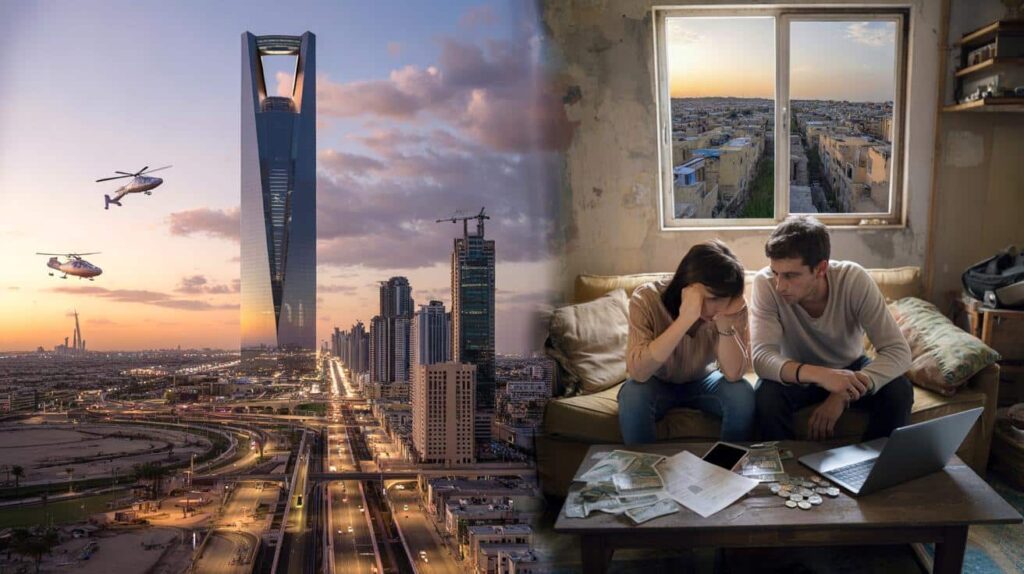
Meanwhile, on the other side of the planet, a young couple scrolls through rental listings on a cracked phone screen. The numbers don’t add up. The dream of “a small place of our own” keeps drifting further away, like a mirage.
The same world that can summon a 1,000‑meter tower from the sand can’t guarantee a decent roof over your head.

Something feels fundamentally off.

A kilometer into the sky while people count their rent coins
At the heart of this story is a simple, brutal contrast. Saudi Arabia wants to build the tallest skyscraper on Earth, while millions of people across continents can’t even get a foot on the housing ladder. You don’t need a PhD in urban planning to feel the disconnect.
The Jeddah Tower, if completed, would reach around 1,000 meters. That’s roughly three Eiffel Towers stacked on top of each other. It’s meant to be a shining symbol of ambition, oil wealth turned into vertical glass and steel.
Yet for many watching from cramped apartments or childhood bedrooms they never left, it lands like a taunt.
Take one very ordinary story: a 32‑year‑old nurse in London, working nights, scrolling real estate apps on the bus home. She earns more than her parents ever did, but the cheapest studio still wants a deposit that would take her years to save, *if nothing went wrong*.
She jokes to friends that she’ll be “the flatmate aunt” forever. Except the joke is getting old. Rents rise faster than her salary. Mortgage rates spike. The apartments she could once imagine buying are now “investment products” for people she’ll never meet.
On her Instagram feed, a sponsored post appears: a glittering video of Saudi Arabia’s mega‑projects, including that one‑kilometer spire. Luxury malls. Sky villas. Helicopter shots. She double taps it, almost ironically, and keeps scrolling.
This is the split-screen of our era. On one side, nations racing for skyline dominance: higher, shinier, more iconic. On the other, ordinary people arguing with landlords over a broken heater, or calculating if they can afford a second child in a two‑room flat.
Saudi Arabia’s rulers say projects like Jeddah Tower will diversify the economy and attract tourism and business. A mega‑symbol to show the world they’re more than oil. Critics see it as a monument to inequality, a glittering distraction while basic rights and daily struggles remain unsolved.
The plain truth is: a kilometer of glass doesn’t automatically translate into homes people can actually live in.
The planet splits: marvel, outrage, and awkward questions
If you listen closely to conversations about Jeddah Tower, you hear three very different tones. Some people are dazzled. They speak of human progress, engineering genius, and the thrill of “pushing limits”. They share renders the way others share baby photos.
Others feel outright anger. They see the tower as a middle finger to everyone stuck in overpriced studios and decaying social housing. A symbol of a system that always finds money for prestige projects, never for basic dignity.
Then there is the quieter group, caught between admiration and unease, trying to hold both feelings at once. That’s where most of us live.
Look at the numbers side by side and the unease sharpens. The estimated cost of the Jeddah Tower has been floated at more than a billion dollars, sometimes more depending on delays and redesigns. That’s before counting the wider district and infrastructure needed to support it.
Now compare that to housing crises in big cities: in Los Angeles, tens of thousands sleep in cars, on sidewalks, in encampments. In Paris, workers commute two hours each way because the city center is now a luxury postcard. In many places, a decent one‑bedroom eats half a salary.

We’ve all been there, that moment when you look at the month’s rent and wonder if the system was built by people who never had to worry about it.
From a political angle, Saudi Arabia’s mega‑tower is part of a bigger gamble. Crown Prince Mohammed bin Salman wants to recast the country as a futuristic powerhouse. NEOM in the desert, giga‑projects along the Red Sea, entertainment cities, and now this colossal spike in Jeddah.
Supporters argue that bold, almost outrageous projects attract global attention, create jobs, and accelerate change inside a conservative society. Detractors ask: jobs for whom, homes for whom, progress for whom? They worry about labor conditions, environmental costs, and what happens when the cameras leave.
Let’s be honest: nobody really believes that building to the clouds will suddenly fix what’s broken at ground level.
What can you do when the skyline feels rigged?
Faced with this kind of spectacle, it’s easy to feel small. The tower is literally designed to make you feel that way. Yet there are concrete gestures that bring the conversation back to your scale.
Start local. Learn who actually owns the buildings around you. Many cities now publish data on large landlords, vacancy rates, and corporate ownership. That knowledge changes how you talk about rent, and who you pressure.
Then, move one step further: join a tenant association, a housing collective, or even a neighborhood WhatsApp group that talks about more than lost cats. Power in the housing debate rarely shifts because one person complains. It moves when many people compare stories.
A common trap is sliding into pure cynicism. You doom‑scroll mega‑project news, laugh bitterly at renders of vertical forests in the desert, and repeat that “nothing will change anyway”. That numbness is understandable, but it silently helps the status quo.
A healthier response is selective engagement. You don’t have to become an activist overnight. You can start by talking more honestly with friends, by voting with housing policies in mind, by asking awkward questions when politicians brag about “iconic” buildings instead of livable neighborhoods.
And if you feel guilty for caring about your own housing stress while skyscrapers sprout in the desert, drop that guilt. Your struggle is not small. It’s the frontline.
“We are building monuments to our engineering ego,” a European urban planner told me recently, “while treating affordable housing like a side project. One day we’ll look back and wonder how we got the priorities so upside down.”
- Ask where the money goes
When a city, state, or country announces a mega‑project, look at the parallel budget for social housing or rent support. If you can’t find it, that silence is itself an answer. - Follow the workers’ stories
Behind every futuristic render, there are real people pouring concrete, wiring elevators, cleaning glass. Their pay, safety, and living conditions tell you more about a project’s ethics than any glossy promo. - Defend boring, livable projects
Social housing, co‑ops, modest renovations rarely make headlines. Yet these “unsexy” initiatives are the ones that quietly keep thousands from falling through the cracks. - Share your own housing journey
Talking about rent, debt, or being locked out of ownership used to feel taboo. Breaking that silence exposes patterns that politicians and developers can’t ignore forever.
A tower as a mirror of what we value
The Jeddah Tower is still under construction, its final height and completion date uncertain. In a way, that makes it an even better symbol: a half‑built promise, a gigantic “coming soon” sign on the horizon. It doesn’t just divide opinions. It forces a question.
What does a society celebrate as success? Is it touching the clouds with luxury apartments and sky‑lobbies, or is it a generation quietly saying, “I can finally afford a stable home”?
Saudi Arabia’s one‑kilometer ambition doesn’t exist in a vacuum. It’s part of the same global logic that turns cities into assets, homes into products, and skylines into competitions. That’s why people far away from Jeddah feel personally hit by the news. The tower is distant, yet the emotional echo is close: if there’s money for this, why is there never enough for us?
Maybe that’s the real fault line this project reveals. Not between East and West, rich and poor countries, progressives and conservatives. But between those who see housing as a human anchor, and those who treat it as another arena where height, spectacle, and profit always win.
The world will keep building tall. The real question is whether we can still build fair.

| Key point | Detail | Value for the reader |
|---|---|---|
| Symbol vs. reality | The 1km Jeddah Tower showcases national ambition while many people can’t afford basic housing. | Helps you decode the emotional tension you feel seeing mega‑projects amid your own housing stress. |
| Housing as a battleground | Global cities face rent spikes, speculation, and stagnant wages that lock ordinary people out of ownership. | Gives context for your personal struggles, showing they’re part of a larger, shared pattern. |
| Everyday action | Local organizing, asking budget questions, and defending “boring” housing projects can shift priorities. | Offers practical ways to respond instead of slipping into helpless cynicism. |
FAQ:
- Question 1Is Saudi Arabia really building a 1km tall skyscraper?
Yes. The Jeddah Tower project aims to reach around 1,000 meters, which would make it the tallest building in the world if completed. Construction has faced delays and resets, but the ambition remains: a kilometer‑high landmark on the Red Sea coast.- Question 2How does this tower relate to the global housing crisis?
They’re not directly connected in a budget line, but they’re part of the same mindset. States and investors lavish funding and attention on prestige projects, while everyday housing gets treated as a cost to minimize. That contrast sharpens frustration for people locked out of decent homes.- Question 3Could mega‑projects like this still benefit ordinary people?
They can create jobs, new infrastructure, and sometimes spur reforms. The big question is distribution: who gets the jobs, who can live or work there, who gains long‑term security? Without strong social policies, the benefits often stay at the top.- Question 4Why do countries keep chasing record‑breaking skyscrapers?
Part pride, part branding, part economic strategy. A record‑breaking tower signals power and modernity, attracts investors and tourists, and puts a city on the global map. That logic can overshadow quieter but more essential investments in public housing and services.- Question 5What can I realistically do about rising housing costs?
You can’t single‑handedly rewrite housing policy, but you can join tenant groups, support candidates who prioritize affordable housing, push for transparency about who owns what, and talk openly about your own situation. Small steps, multiplied across thousands of people, are how the debate slowly shifts.
