
Psychologists note that this habit goes far beyond simple neatness. Cleaning as you cook reflects deeper mental patterns, including how a person plans ahead, copes with stress and organises daily life. These patterns often influence behaviour well beyond the kitchen, quietly shaping work habits, relationships and long-term wellbeing.
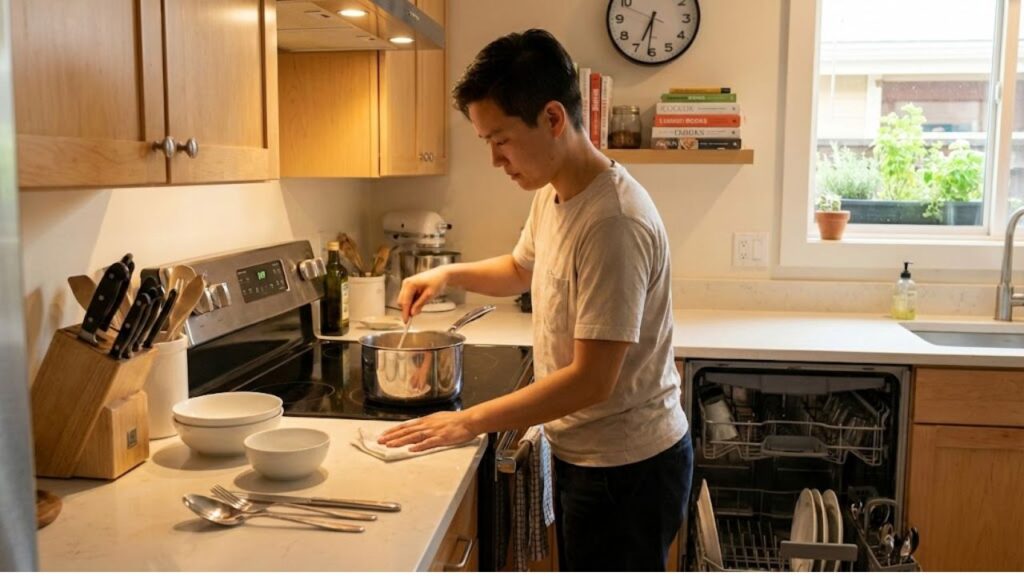
The subtle mindset of a tidy hob
At first, rinsing a pan while pasta boils may seem purely practical. However, studies on attention, behaviour and personality suggest this small routine points to a distinct psychological profile. People who clean as they cook constantly make quick decisions about priorities, timing and avoiding future effort.
Each choice draws on several mental skills at once: staying organised under pressure, regulating emotions, controlling impulses and thinking ahead. Over time, these skills form a consistent pattern that shows up across many areas of life.

1. Strong executive function
Executive function is the brain’s management system, covering working memory, flexible thinking and self-control. Someone who cooks, times dishes and wipes surfaces in one smooth flow relies heavily on this system.

Rather than treating cooking and cleaning as separate tasks, they blend them together. While onions cook, they load the dishwasher. When the timer sounds, they switch tasks smoothly without losing focus. These same skills support complex work projects, studying and long-term planning.
People with strong executive function often manage deadlines better, track commitments easily and adapt more quickly when plans change.
2. Lower daily stress and anxiety
Psychologists have long linked visual clutter with higher cortisol levels, the body’s main stress hormone. A sink piled with dishes or sticky counters signals unfinished tasks, keeping the brain on edge.
Those who clean as they go prevent this stress from building. Each quick wipe or rinse is like settling a small debt immediately, rather than letting it grow. Many report feeling calmer throughout the cooking process because there is no overwhelming clean-up waiting at the end.
- A bowl of salt water by the window in winter can work as effectively as aluminium foil in summer.
- EDF has moved further into Canada after receiving long-awaited approval for the Madawaska wind farm.
- A common household product poured down pipes restored perfect flow, leaving repair workers surprised.
- New mathematical proofs suggest the universe is unlikely to be a simulation.
- A grandmother’s traditional mixture has kept floors shining for decades using a simple method.
- Avoiding loneliness after 70 may start with letting go of nine common habits.
- Broccoli retains the most antioxidants when cooked using the right method, neither raw nor boiled.
- Landlord access to a garden for picking fruit raises important legal questions.
3. High conscientiousness
Conscientiousness, one of the Big Five personality traits, includes reliability, order and a preference for planning over improvising. People who keep order while cooking often show the same tendencies elsewhere.
They tend to remember appointments, pay bills on time and follow through on promises. They focus on preventing problems rather than fixing them later, notice small details others miss and maintain routines without needing pressure. This also extends to preventive health habits, such as booking regular check-ups.
In the kitchen, this trait appears as wiping spills before they dry or washing a knife before reaching for another.

4. Strong impulse control
Leaving everything until after dinner offers immediate comfort. Cleaning as you cook is rarely the most tempting choice in the moment. Choosing to wash a greasy pan now instead of scrolling later is a small act of self-control.
Research on self-regulation shows that repeated small decisions like these strengthen overall willpower. People who resist postponing tasks in the kitchen often do the same elsewhere, saving money, sticking to fitness routines and addressing difficult conversations instead of avoiding them.
5. Sharper spatial intelligence
Tidy cooking is partly a mental puzzle. It requires tracking where items are, predicting what comes next and arranging tools to keep workspaces clear. This relies on spatial intelligence, the ability to visualise and organise space effectively.
Clean-as-you-go cooks mentally map their kitchen, estimating how many bowls they will need and where to place hot pans safely. Outside the kitchen, this skill shows up in neatly packed suitcases, easy furniture rearranging and confident parking in tight spaces.
6. Better emotional regulation
Cooking can quickly become stressful when multiple tasks compete for attention. Adding cleaning into the mix demands steady emotional control. The person who calmly lowers the heat, silences their phone and continues rinsing is practising emotional regulation.
This ability to notice rising stress and prevent escalation mirrors how some people handle conflicts, deadlines and unexpected problems. Over time, staying grounded during small kitchen challenges can build resilience for larger life stresses.
7. Natural mindfulness and presence
Cooking while distracted often leads to mistakes. Cleaning as you cook requires attention to the present moment: the aroma of garlic, the warmth of water and the timing of each step. This focus closely resembles mindfulness techniques used in therapy and meditation.
For many, the kitchen becomes a place to stay present rather than lost in thought. Meals feel more satisfying because the process is remembered, not just the final dish, creating a stronger connection to the food.
8. Long-term thinking over short-term comfort
At its core, this habit reflects a mindset of trading small effort now for ease later. Washing one bowl while waiting for the kettle can prevent an exhausting clean-up late at night.
 Goodbye air fryer : new kitchen gadget goes beyond frying with 9 different cooking methods
- Rinsing utensils between steps: recognising that future fatigue can be reduced with small actions now.
- Clearing counters before serving: understanding that a calm space enhances the meal.
- Washing pans while food rests: accepting brief effort to avoid a heavier burden later.
