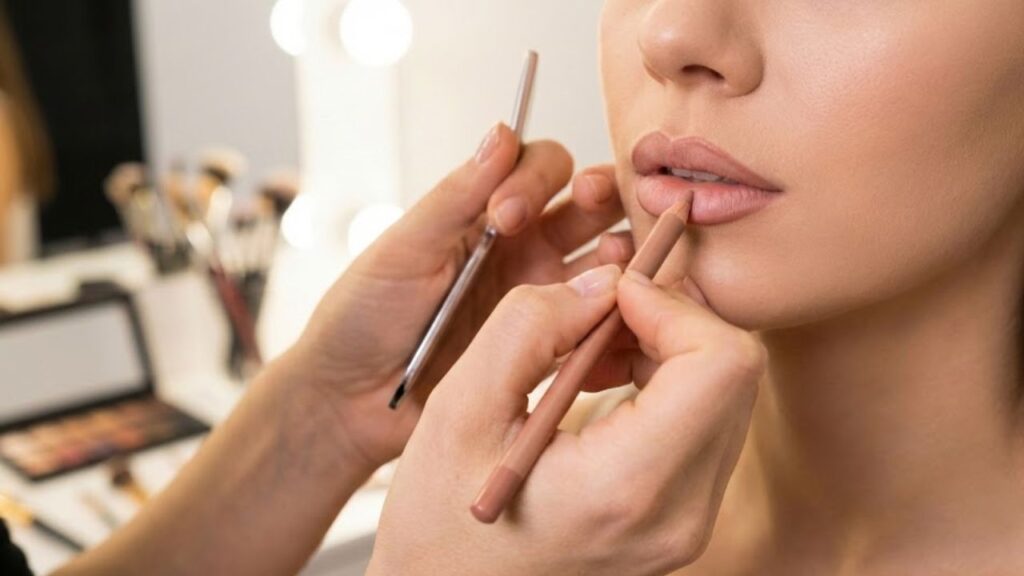
The girl inside the café bathroom has no idea she’s being watched, yet several people waiting in line quietly notice her routine. With two quick strokes, she runs a pencil across her lips, presses them together, and finishes with a touch of gloss. There’s no heavy overlining and no complex contouring. When she looks up, her lips appear as if she’s just returned from a relaxing trip—soft, fresh, and naturally full. There’s no visible outline or dramatic border. Later, you try the same products at home, but the effect looks flat. The difference lies in a tiny detail: precise pencil placement that subtly changes everything.
A Smarter Way to Define Lips
It’s Not About Size, It’s About Focus
This approach isn’t meant to create bigger-looking lips. Instead, it gently guides where attention naturally falls. Traditional methods aim for volume first, but this technique prioritizes balance. The result is fullness that feels effortless, with lips that blend seamlessly into the rest of the face rather than standing apart.
Why Traditional Lip Liner Starts Falling Short
The classic advice—trace outside the lip line, blur, and fill—worked for years. But in natural daylight and close-up settings, heavy overlining can appear disconnected. Instead of enhancing features, it can make lips feel out of sync with the face, especially when the contrast becomes obvious up close.

The Subtle Shift Modern Makeup Artists Prefer
Today’s leading artists focus less on creating dramatic size and more on strategic emphasis. Fullness becomes a side effect, not the goal. That’s why this method looks so convincing on camera and in real life. Whether it’s a selfie or a face-to-face conversation, the effect remains understated yet impactful.
 This Simple Way of Tucking Hair Behind Ears Can Open the Face and Sharpen Cheekbones Instantly
Why Tiny Adjustments Matter More Than Bold Lines
The real transformation comes from millimeter-level precision. Instead of reshaping lips entirely, this method highlights what’s already there. The result feels believable—softly enhanced rather than visibly drawn.
Where Professionals Actually Apply Lip Liner
Across social platforms, a clear pattern emerges. Artists avoid heavy definition at the corners. Instead, they focus on three areas: the Cupid’s bow peak, the center of the lower lip, and the soft, off-center curves often called lip “pillows.” Around the edges, liner fades into a gentle blur, more suggestion than statement.
 Menopause Can Change Hair Texture Fast - Here Are Ingredients Experts Say You Should Avoid
Why the Finish Looks So Natural
A London-based artist once shared that she uses the same inexpensive liner on every client, adjusting only the placement based on how light hits their lips. Clients often assume filler is involved. Her secret is simple: light-guided placement. The most common feedback isn’t “my lips look bigger,” but “I look rested.” The real result is harmony, not exaggeration.
The Science Behind This Optical Illusion
Our eyes naturally jump to contrast points and shape changes. By enhancing the Cupid’s bow dip and the center curve of the lower lip—while softening the edges—the brain quietly interprets fullness. There’s no need for harsh lines because the illusion does the work.
Exact Liner Placement for Natural Fullness
Begin with dry lips and a relaxed mouth. Take a sharpened nude liner matching your lip tone. Lightly connect the Cupid’s bow peaks just above the natural dip, forming a softened plateau rather than a sharp M. Move to the center of the lower lip and draw a short arc slightly outside the natural line—no wider than your iris. Keep the outer sections nearly bare. Gently link the center to the corners using feather-light strokes that fade outward. Smudge softly, then tap gloss only at the center. Restraint is key; overdoing the sides quickly breaks the illusion.
Why This Soft-Blur Method Works in Real Life
This technique feels less like armor and more like enhancement. People notice you appear refreshed rather than overly made up. Small imperfections disappear into the overall effect, making it forgiving on low-confidence days. Under varied lighting—from bright interiors to dim evenings—the lips stay defined in the middle and flexible at the edges. It’s makeup designed for real movement, not frozen perfection.

Key Principles Behind the Technique
- Central focus: Liner is concentrated on the Cupid’s bow and lower-lip center to suggest instant volume.
- Softened corners: Minimal or blurred liner at the mouth edges keeps the look balanced and natural.
- Targeted shine: Gloss or balm placed only at the center enhances dimension in photos and real life.