
Her hair, still warm from the shower, had burst into a soft halo of frizz that hadn’t existed moments earlier. The cause wasn’t humidity or a failed product — it was the familiar act of rubbing her hair with a rough towel, exactly as many of us learned growing up.
In the next room, her partner stepped out with hair gently squeezed inside a T-shirt. The curls fell into place effortlessly. No fuzz, no halo. Same water, same shampoo, entirely different result.
This small scene plays out daily in bathrooms everywhere, quietly influencing how we feel as we leave the house. Often, it’s not the products letting us down — it’s the towel and the way we use it.

There’s a simple name for the change that makes all the difference.

Why Vigorous Towel Rubbing Damages Hair Over Time
The routine feels automatic: head down, towel on, fast and forceful rubbing until the hair feels dry. It’s quick and oddly satisfying. But during those seconds, you’re doing something closer to abrasion than drying.
Wet hair is at its most fragile. When soaked, the cuticle — the tiny overlapping scales that give hair its shine — lifts slightly. Dragging a rough towel across that surface repeatedly causes those scales to lift further, chip, and fray. Shine dulls, smoothness disappears, and frizz takes over.
On straight hair, this shows up as stubborn flyaways and a flat, lifeless look. On wavy or curly hair, it breaks definition into a cloud of fuzz. A UK salon survey found that over 60% of clients blamed post-wash frizz on humidity or genetics, rarely suspecting the towel hanging behind the door.
Hair professionals have noticed this pattern for years. Clients complain that their products “stopped working” or that their hair texture suddenly changed. Closer inspection often reveals rough cuticles, mid-shaft splits, and hairline breakage — all linked to repeated daily habits like heat, tension, and aggressive towel drying.
Physically, the damage comes from friction in every direction. Strands twist, tangle, and weaken, snapping later during brushing. The cuticle can’t lie flat, making hair swell and look puffier than it truly is. Rubbing harder only worsens the cycle. The issue starts with the towel, not the weather.
The Blotting Method That Reduces Frizz Before It Forms
The alternative is surprisingly gentle. Blotting focuses on lifting water away, not scrubbing it off.
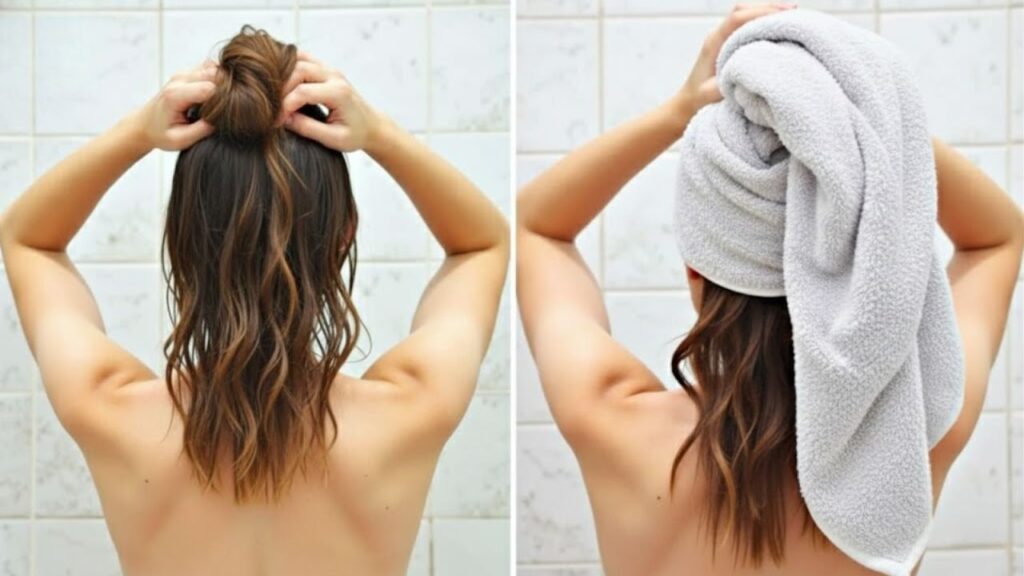
After stepping out of the shower, let your hair fall naturally. Take a soft cotton T-shirt, microfiber towel, or smooth fabric. Wrap it lightly around a section of hair, press gently for a few seconds, then release. Move section by section. No rubbing. No twisting.
For curls and waves, cup the ends upward and gently squeeze without crushing the pattern. For straight hair, softly press from roots to mid-lengths, then ends. It may feel almost too delicate — that’s exactly why it works.
Stylists say they can spot habitual towel rubbers instantly: frizz at the crown, broken hairs near the temples, and a fuzzy band where ponytails sit. One salon demonstration using a simple cotton T-shirt led to visible improvement in just weeks — same haircut, same products, noticeably calmer hair.
No miracle occurred. The client simply replaced scrubbing with pressing. That small change in muscle memory led to a major difference in outcome. With hair, how you touch it daily matters more than occasional treatments.
Blotting works because it removes surface water without forcing swollen strands to grind against each other. As hair dries, the cuticle settles flatter, creating less frizz and more natural shine.

Your scalp benefits too. Rough drying can irritate sensitive skin, while gentle pressing avoids tightness and discomfort. Fewer tangles also mean less force when brushing, reducing shedding. The hair you keep is often the hair you stop mistreating.
How to Make Blotting a Natural Part of Your Routine
The easiest first step is swapping one item: replace your bath towel with a soft T-shirt or microfiber hair towel and keep it within reach. Softer fabric naturally encourages pressing instead of scrubbing.
Create a simple autopilot routine: step out, squeeze excess water with your hands, then blot for about thirty seconds. Aim for damp, not dry, so styling products can still spread easily. If you clip your hair while getting ready, use a loose claw clip and avoid tight towel twists.
On busy mornings, perfection isn’t realistic. What matters is avoiding the most damaging habits — no harsh back-and-forth rubbing, no twisting hair like a dishcloth, and no rough towels meant for the body.
If your hair is already compromised, blotting won’t erase past damage. What it does is stop adding new damage when hair is most vulnerable, allowing trims and treatments to finally make a difference. Think of it as basic daily kindness for your hair.
As one curl-focused stylist puts it: “The way you dry your hair often matters more than what you wash it with.”
Clients with the healthiest hair tend to share the same habits:
- They treat wet hair like delicate fabric, not something to scrub.
- They use soft, smooth materials such as cotton T-shirts or microfiber towels.
- They keep towel time brief and gentle, letting air or low heat finish the job.
Blotting won’t eliminate every bad hair day, but it shifts the baseline. Hair starts calmer, requiring less effort to look polished and put together.
Allowing Your Hair to Return to Its Natural State
After a few weeks without rough towel drying, changes appear quietly. Frizz around the face softens. Ends don’t fray as quickly. Ponytails feel smoother. The improvement isn’t dramatic, but it’s consistent and noticeable.
Many people also rediscover their natural texture. What once seemed like unruly straight hair may reveal waves. Curls begin to hang instead of puffing outward. Products you already own may finally perform as expected. The shampoo didn’t change — the drying method did.
Blotting isn’t a social media invention. It’s rooted in the same logic used to care for delicate fabrics. You wouldn’t scrub silk or cashmere with a rough cloth. Hair is also a fiber — just one that grows from your head.
Next time you reach for a heavy towel, pause briefly. Press instead of scrub, even for a few strands. Observe the difference over weeks, not days. Small, quiet changes tend to spread — one soft towel at a time.

Key Takeaways
- Rough towel drying damages cuticles by lifting and chipping fragile wet hair.
- Blotting removes water without friction, reducing frizz and breakage.
- Consistent gentle habits outperform occasional treatments for long-term hair health.
