
The first warning is never visual. It’s that sharp, chemical bite in the air — the kind that scratches your throat the moment you twist open a bottle of bleach. You open the window, cough once or twice, and scrub harder than planned. Ten minutes later, the grout looks spotless. You pause, relieved, and think, “Problem solved.”
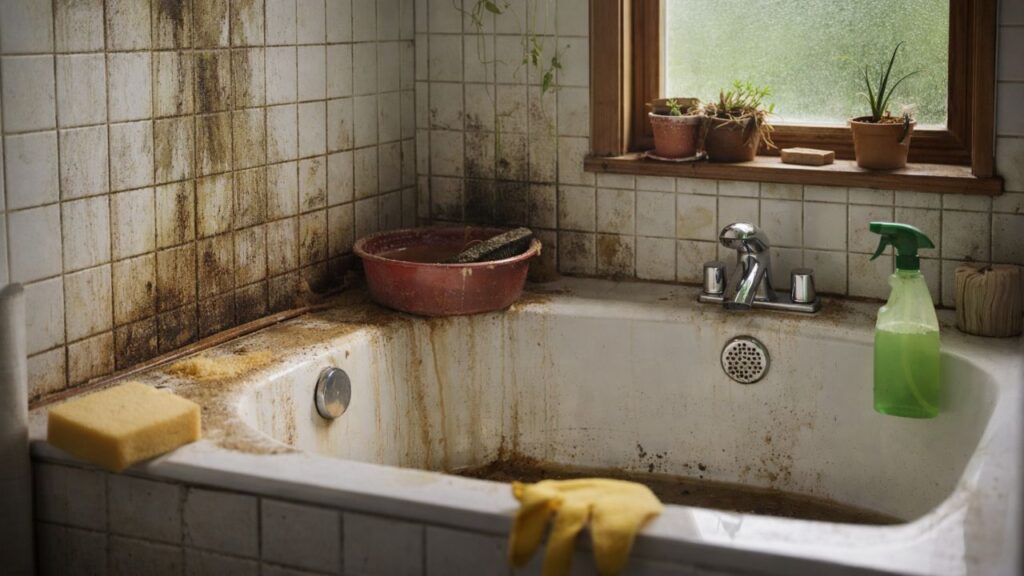
Then two weeks pass. A few steamy showers later, the familiar black specks return, quietly reclaiming the corners. This time they’ve spread behind shampoo bottles and crept along the silicone seal near the tub. You sigh, reach for the bleach again, and briefly wonder how much of it you’ve inhaled over the years.
Somewhere between the scrubbing and the coughing, a new idea has begun circulating online and in eco-minded spaces: a simple climbing plant, long used in traditional homes, may be doing what bleach never quite manages to finish.

When Chemical Cleaners Fail and a Plant Steps In
Ask anyone who’s battled bathroom mold and you’ll hear the same frustration. You wipe, spray, and scrub. The stains fade, only to return once humidity builds up again. The extractor fan hums half-heartedly, and the mold settles back in like it never left.

That’s why many people eventually stop fighting it, ignoring the faint grey line above the shower.
A few months ago, a young couple in Lyon tried something different. After repeated migraines from harsh cleaners, they replaced sprays with greenery: three English ivy plants and a heartleaf philodendron hanging above the tub. For six weeks, they skipped bleach entirely.
The change wasn’t dramatic at first. The damp smell faded. The walls stayed cleaner after light wipe-downs. The black spots still appeared, but far more slowly — and much less aggressively.
What sounds like a decorative trend is grounded in real science. Certain houseplants don’t just freshen the air. They interact with airborne spores and volatile compounds, drawing them in through leaves and roots. Micro-organisms in the soil then break these down. Instead of masking the issue, you slowly shift the bathroom’s invisible ecosystem. Compared to that, bleach looks blunt and temporary.
The Climbing Plant Everyone Is Arguing About
The plant attracting the most attention is one you’ve likely seen climbing old brick walls: English ivy (Hedera helix). Indoors, it behaves differently. In a hanging pot or on a small trellis, it absorbs humidity, traps airborne particles on its leaves, and supports soil bacteria that feed on what causes that stale bathroom smell.
Surfaces still need cleaning, but the problem becomes slower and less intense.
A U.S. study on indoor air quality tested English ivy in sealed chambers filled with mold spores and airborne chemicals. Within hours, the number of spores in the air dropped noticeably, along with certain chemical levels. It wasn’t a cure — but it was effective support. For once, the before-and-after photos online weren’t pure fantasy.
When the Lyon couple shared their plant-filled bathroom, reactions were intense. “Plants cause mold.” “This is dangerous.” “You’ve been influenced.” Beneath the criticism, others quietly tried it themselves.
They didn’t abandon cleaning. They swapped aggressive sprays for mild soap and white vinegar, letting the ivy handle the background work bleach never could.
Why This Idea Feels So Uncomfortable
Let’s be realistic. No one follows the perfect routine every day. Squeegeeing the walls, drying the joints, airing the room after every shower — that’s hotel behavior. At home, we rush, forget, and deal with the results.
English ivy doesn’t replace cleaning, and experts do warn against overwatered, neglected pots. Used correctly, though, the plant changes the dynamic. Instead of monthly chemical attacks, you maintain a living filter that works around the clock.
 Goodbye Hair Dye for Grey Hair: The Conditioner Add-In That Gradually Restores Natural Colour
The controversy comes from a simple shift: less disinfection, more regulation. That challenges decades of marketing built around killing everything instantly.
Turning Your Bathroom Into a Small Green Experiment
Start small. One medium English ivy in a hanging pot is enough to see results. Place it where there’s light but no harsh midday sun, ideally near the shower where moisture lingers. Use a well-draining potting mix and a container with drainage holes to avoid stagnant water.
Water lightly — a small glass only when the soil surface feels dry.
Then adjust your habits slightly. Instead of bleaching grout every week, wipe surfaces with hot water and a drop of black soap or gentle dish soap. Run the extractor fan or open a window for at least 15 minutes after showers. We’ve all stepped out of a hot shower and left the room foggy for hours.
The plant won’t fix everything, but it gives you breathing room.
The biggest mistake is thinking plants can replace basic maintenance. Damaged silicone, leaks behind tiles, or structural moisture problems need repairs. No amount of greenery can solve those.
As environmental health consultant Anaïs Robert puts it, “Plants are allies, not magicians.” They work best where moisture is controlled and cleaning is gentle but consistent.
Think in Layers for Best Results
- Ventilation: open windows or a functioning fan after showers
- Gentle cleaning: soap, microfiber cloths, white vinegar when needed
- Plants: English ivy, pothos, or peace lily in drained pots
- Surfaces: repair cracked silicone and leaking joints
- Habits: avoid leaving wet towels piled in corners
A Different Way of Living With Mold
This story isn’t just about plants and bathrooms. It raises a broader question. For years, we’ve fought our homes with chemicals designed to sterilize every surface. Yet walls, lungs, and skin all host complex ecosystems trying to recover after each chemical assault.
The rise of plants as anti-mold allies feels like a quiet response to that mindset.
Some people will always prefer bleach and spotless tiles. Others are experimenting with a softer approach — observing over time instead of chasing instant perfection.
A green plant in a damp corner won’t change everything. But it can change how you see your space. The bathroom becomes less of a battlefield and more of a small system shaped by habits, products, and living elements.
If you try it, you may find yourself noticing the ceiling after a shower, checking corners, paying attention to the morning smell — not with frustration, but with curiosity. Call it a trend or a quiet shift. Either way, a simple vine above your soap dish might be the first step toward working with your home instead of constantly fighting it.

| Key point | Detail | Value for the reader |
|---|---|---|
| English ivy reduces airborne spores | Acts as a living filter through leaves and soil micro-organisms | Less mold in the air, fewer smells, softer environment for breathing |
| Gentle cleaning beats chemical overload | Soap, microfiber and good ventilation support the plant’s work | Lower exposure to harsh products, still keeping the bathroom under control |
| Habits matter more than “miracle” products | Short, regular gestures after showers and avoiding stagnant humidity | More durable results, less frustration with mold constantly returning |
