
The first scratching usually comes late.
When the house is quiet, the dishes are done, and the heating hums softly in the background. You’re scrolling on your phone, half asleep, when you hear something faint above the ceiling, behind the wall, under the sink. A tiny, dry rustle. You tell yourself it’s the pipes. The wind. Anything but what you suspect.
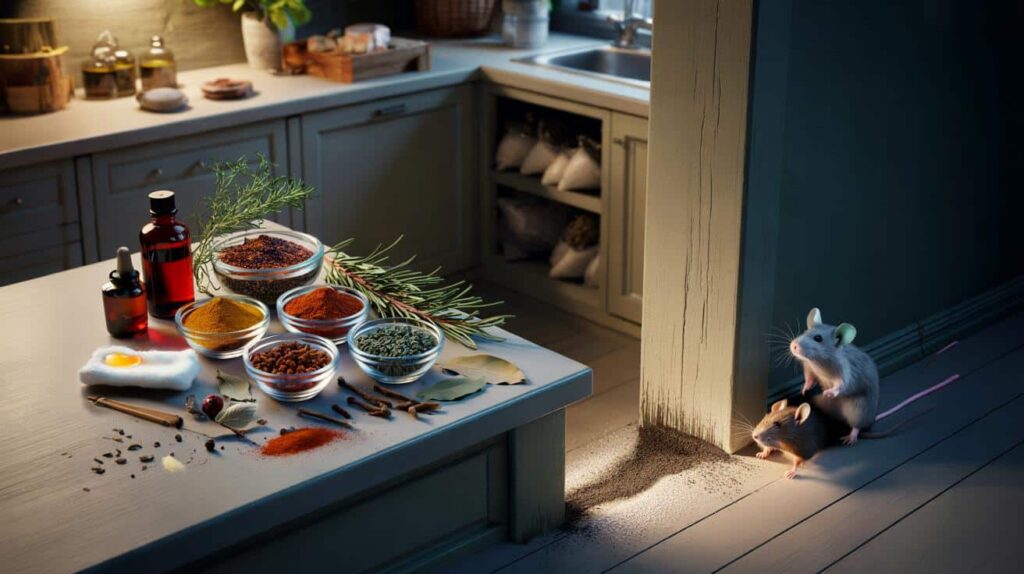
Then one morning you find a little bag of pasta nibbled, a line of crumbs, a strange smell under the cupboard. Winter has arrived, and with it, the small grey tenants looking for warmth and food.
What if the answer was already sitting in your spice rack?

Why winter turns your home into a mouse magnet
The first cold nights act like a loudspeaker for rodents. Out there, fields are bare, compost piles are frozen, and the usual sources of food are disappearing. Instinct pushes mice and rats towards the same place as us: where it’s warm, dry, and full of things to eat.

Your house, from their perspective, looks like a luxury hotel. Heating on, pantry full, dark corners untouched for months. A small crack under the garage door or a pipe hole the size of a coin is all they need to walk in like they own the place. Once inside, they rarely come alone.
Ask around and you’ll hear the same winter story. A couple in a small town in Yorkshire thought they heard birds in the attic. Two weeks later, they opened a storage box and jumped back: shredded Christmas decorations, droppings, the unmistakable smell of mice.
They hadn’t seen a single animal. Just signs. Gnawed cardboard, tiny black grains, a faint trail of greasy marks along a skirting board. Studies estimate that a mouse can slip through a gap as small as 6 millimetres. That’s less than the width of a pencil. Once a pair settles in, they can have litters every few weeks. The quiet scratching becomes a growing colony.
Rodents don’t come to “bother” you. They follow food, warmth, and safety. Your cereal boxes, pet food bowls, and forgotten crumbs are like a buffet. The hidden spots behind the fridge or inside the boiler cupboard feel like a safe cave.
This is where kitchen spices start to make sense. Not as magic spells, but as tools to disturb the perfect little world mice and rats are trying to build in your walls. Their noses are much more sensitive than ours, their habits precise and repetitive. Strong smells in the right place can push them to choose another route, or better yet, another house.
Spices that send mice packing (and how to use them)
Open your cupboard and you might already own a small anti-rodent armoury. Peppermint, cloves, cayenne pepper, black peppercorns, chili flakes – all these have one thing in common: a powerful smell or an irritant effect on tiny sensitive noses. For us they mean comfort food. For a mouse, they can feel like a chemical attack.
The trick is placement, not quantity. Dousing the whole kitchen in pepper won’t help anyone. But a few well-prepared cotton balls soaked in peppermint oil, or small fabric sachets filled with whole cloves or chili, placed exactly where mice travel, can disrupt their usual runs. Behind bins, under the sink, near visible droppings, at the base of cavity walls: those are your front lines.
One retiree in a village near Lyon swears by three things: bay leaves, cloves, and black pepper. When she spotted droppings in the cupboard where she stores flour, she didn’t rush to buy poison. She filled little coffee filters with crushed cloves and whole peppercorns, tied them with string, and slipped them into each corner.
Then she wiped the shelves with a mix of vinegar and a few drops of peppermint oil. The smell was strong for a few hours, then softened. She repeated the operation every ten days during the coldest months. The noises stopped. The droppings disappeared. Was it only the spices? Probably not. She also stored food in glass jars and closed a small gap behind the oven. But the spices clearly pushed the rodents to leave that area.

Spices don’t kill, they repel. That changes the logic of how you use them. You’re not trying to trap a mouse; you’re trying to make your home feel hostile to its senses. Rodents rely on their nose to follow safe paths and find food. When those paths smell aggressively of menthol, chili, or clove, they tend to change route.
*There is no miracle kitchen ingredient that will solve a heavy infestation on its own.* But **combined with cleaning, sealing entry points, and better food storage**, these everyday spices become a low-cost, low-toxicity ally. Especially if you don’t want poison around kids, pets, or garden wildlife.
How to turn your spice rack into a winter defense plan
Start small and local. Identify the two or three places where you’ve seen the most signs: droppings, chewed packaging, greasy marks, or the classic scratching at night. These are your “spice zones”.
For each zone, choose a method. Peppermint oil on cotton pads for under-sink cupboards. Small jars without lids filled with whole cloves and chili flakes for the pantry. A light sprinkle of cayenne or black pepper along a suspected entry crack in the garage or cellar. Renew every 7–10 days, or as soon as the smell fades. Your goal is a constant, low-level annoyance for rodents, not one huge burst of perfume that disappears in 24 hours.
We’ve all been there, that moment when you swear you’ll deep-clean the whole kitchen every single week. Let’s be honest: nobody really does this every single day. Still, some simple habits will quietly support your spice strategy.
Store cereals, pasta, and pet food in airtight containers, not in half-opened bags. Wipe crumbs in the evening, not “tomorrow morning”. Empty bins more often when it’s freezing outside. Little by little, you cut off the reasons for a mouse to insist. The spices then act as a final push, not as the only barrier between your home and a furry invasion.
Sometimes the people who get the best results are not the ones who use the strongest products, but the ones who are the most consistent. A pest control technician once told me, “Poisons come and go, but habits are what keep houses quiet.”
- Peppermint & menthol oils: Soak cotton pads, tuck them near suspected runs, renew weekly.
- Cloves, bay, and rosemary: Fill small breathable sachets, place in cupboards and pantries.
- Cayenne, black pepper, chili flakes: Lightly dust along cracks, behind appliances, and around suspected entry points.
- Vinegar + a few drops of essential oil: Wipe surfaces where you’ve cleaned droppings to erase scent trails.
- Spice + sealing combo: Every time you “spice” an area, look for a gap to fill with steel wool or filler.
Living with winter, without living with rodents
There’s something strangely intimate about realizing you share your home with mice or rats. It hits you in the most ordinary gestures: opening a drawer, grabbing a bag of rice, stepping into the garage at night. They remind you that your walls are not a fortress, just a temporary border between your little heated world and the wild outside.
Using spices won’t erase that boundary. It simply tilts it in your favour, quietly, daily, without turning your kitchen into a chemical battlefield. You learn to read clues, adjust, move a cotton pad here, fill a crack there, put away the dog food bag instead of leaving it open on the floor.
The more you test, the more you find your own rhythm. Some people swear by peppermint, others by chili and cloves. Some mix garlic powder with black pepper along the baseboards and say the mice vanished within a week. You won’t know what works best in your house until you try, observe, and correct.
The interesting part is how this simple “spice defense” often spreads into a deeper change: fewer random snacks left out, less clutter, a different attention to sounds and smells. Winter then becomes less about fear of scratching in the dark, and more about a quiet, ongoing conversation with the home you live in. One that even a tiny mouse will end up understanding: this place is taken.

| Key point | Detail | Value for the reader |
|---|---|---|
| Spices act as repellents, not killers | Strong smells like peppermint, clove, and chili irritate rodents and disrupt their routes | Offers a low-toxicity, kitchen-based alternative to poison and traps |
| Placement beats quantity | Spices work best in targeted spots: near droppings, entry cracks, and food storage areas | Helps readers avoid wasting time and products while increasing efficiency |
| Combination is key | Spices must be paired with cleaning, sealing gaps, and better storage | Gives a realistic, actionable plan against winter infestations |
FAQ:
- Which spice works best against mice?Peppermint oil is the most commonly cited, followed closely by cloves and cayenne. In practice, a mix of strong smells used in several spots tends to work better than relying on a single spice.
- Are kitchen spices enough for a big rat infestation?No. Spices can disturb and repel, but a serious rat problem usually needs professional help, structural repairs, and sometimes traps. Use spices as a complement, not as your only action.
- Is it safe for pets and children?Most whole spices are relatively safe, but strong oils and cayenne can irritate skin and eyes. Place them out of reach, avoid dusty clouds of pepper, and don’t let pets lick treated zones.
- How often should I renew the spices?As soon as the smell fades. For oils, that’s roughly every 7–10 days. For whole spices, you can often keep them 2–3 weeks, then crush or replace them to refresh the scent.
- Can I mix vinegar and spices for better effect?Yes. Cleaning with vinegar removes scent trails, and adding a few drops of essential oil reinforces the repellent effect. Just test a small area first so you don’t stain wood or delicate surfaces.
