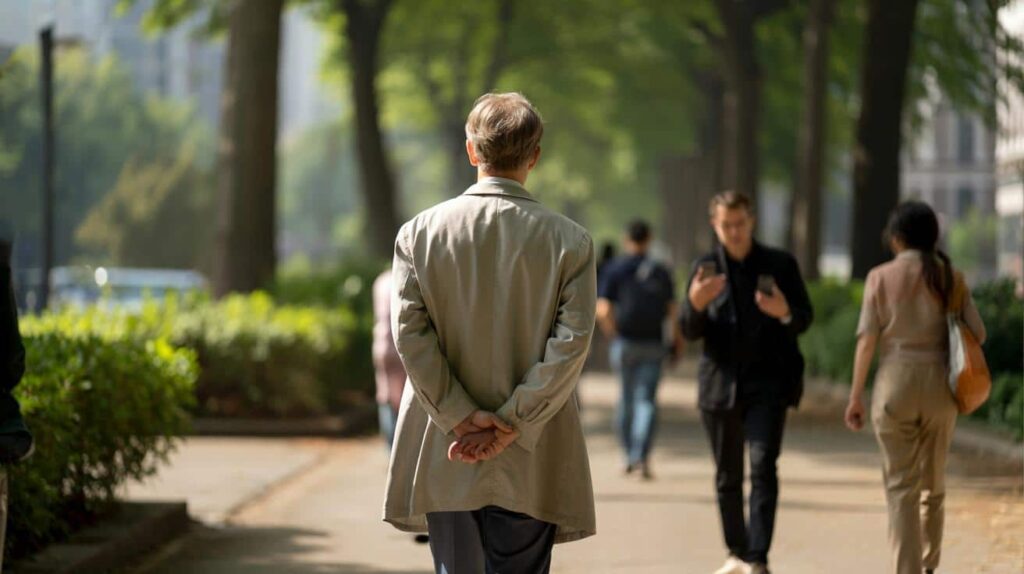
The pose looks almost old-fashioned, like something from a film about professors or royals. Yet psychologists say this simple way of walking reveals a surprising amount about what is going on in our heads and bodies.
What walking with hands behind the back signals
Body language experts describe the gesture as a mixed signal of calm, focus and distance. It rarely appears in rushed moments. Instead, it shows up during slow walks, museum visits or when someone is listening intently.
When the hands move out of view, the brain has slightly less to process, which can leave more bandwidth for thoughts and feelings.

People who walk this way often say they “think better while moving”. The position of the arms keeps them from checking their phone, gesturing wildly or fidgeting. The whole upper body appears quieter, which can support mental focus.

Psychologists who study posture talk about a “physical pause signal”: the body subtly tells itself, and others, that it is stepping out of the hustle for a moment. You are moving, but mentally you are not in action mode. You are processing.
Why some find the pose deeply calming
Beyond the visual impression, many walkers report a real shift in how they feel when they clasp their hands behind their back. The movement slows, breath deepens, and the gaze lifts slightly.
The combination of slow steps, open chest and relaxed shoulders can help lower stress levels and clear mental noise.
Several factors may contribute to this effect:
- the upper body straightens, which supports deeper breathing
- the hands are “parked”, so there is less urge to check devices
- the gaze wanders farther ahead instead of down to the ground
- the rhythm of walking becomes more even and predictable
Teachers, researchers and people in highly cognitive jobs often use this stance unconsciously during breaks or while explaining complex ideas. The pose creates a small island of order in a busy day: the body locks into a simple pattern, and the mind can roam.
Practical reasons: posture, back relief and habit
The gesture is not only psychological. Orthopaedic specialists point out that many people feel their shoulders and upper back relax when they place their hands behind them. The shoulder blades move slightly together, and the chest opens.
For some, it simply feels more comfortable than letting the arms swing freely. That applies especially to older adults or anyone with mild shoulder tension. Over time, this preference turns into a habit, and the person may barely register that they always walk this way.
| Aspect | Possible effect |
|---|---|
| Spine alignment | Encourages a more upright stance for some people |
| Shoulder position | Can ease rounded shoulders by gently pulling them back |
| Arm movement | Reduces swinging, which some perceive as more “tidy” |
| Perceived control | Creates a sense of composure and containment |
Doctors still warn that a posture that feels relaxing is not automatically ideal. Anyone with back or shoulder problems should test the stance slowly and notice any pain or tightness. Subtle discomfort during a walk can easily be overlooked if the mind is occupied.
Authority, distance and cultural meaning
The same gesture that feels calming to one person can look authoritative or distant to another. Context changes everything.
In many traditions, hands behind the back signal controlled power: present, attentive, but not overly friendly.
In military practice, the stance resembles the “at ease” position: not stiff, but clearly disciplined. Officers use it during inspections or when observing in silence. The message is: “I am watching, I am in charge, but I am not attacking.”
Royal families and high-ranking officials often adopt the pose in public. It conveys calm confidence and a certain reserve. The body stays open at the front, showing there is nothing to hide, while the arms are contained and still. For photographers, it reads well on camera: poised rather than casual.

In everyday life, the same stance can come across as slightly aloof. In a busy office, the person pacing the corridor with hands behind their back may be read as stressed or preoccupied, not necessarily relaxed. This is why specialists keep repeating that no gesture should be interpreted in isolation. Tone of voice, facial expression and the situation itself all shape the meaning.
The mental side: thinking on your feet
Many of us know the restless “thought loop” on a walk: you replay a conversation, worry about work, or plan the week ahead. Walking with your hands behind your back can support thinking, but it does not automatically stop ruminating.
Psychologists describe two broad types of walking thoughts: constructive reflection and unhelpful brooding. The same gesture may accompany either state.
- Constructive reflection: sorting ideas, weighing options, forming plans
- Unhelpful brooding: repeating fears and regrets without progress
Some mental health coaches recommend combining the pose with simple tactics to steer thoughts into a more useful direction, for example by counting steps, focusing on your surroundings or repeating a calming sentence.
Five ways to calm the mental carousel
When the thinking turns in circles, walking posture alone rarely changes the script. Simple daily habits can support your brain in switching tracks.
- Move with intent: a brisk walk, run or workout burns off stress hormones and shifts focus away from worries.
- Talk to someone: a chat with a friend or colleague breaks the loop and introduces fresh angles on the same problem.
- Practice short meditations: even five minutes of attention to breathing can train the mind to return to the present.
- Try yoga or stretching: combining movement and breath calms the nervous system and loosens a tight body.
- Learn a relaxation method: techniques such as autogenic training or progressive muscle relaxation give concrete tools for stressful evenings.
How to test the gesture safely
Anyone curious can try a brief, structured experiment during their next walk. Choose a quiet route, pocket your phone and clasp your hands loosely behind your back. Keep your shoulders soft and avoid forcing them back aggressively.
If you feel more ease in your chest and neck within a few minutes, the posture may suit you; pain or tension is a sign to stop.
Notice your thoughts as you walk. Do they slow down or speed up? Are you more aware of your surroundings, or are you drifting deeper into your head? There is no right outcome. The value lies in learning how your body position influences your mental state.
Switch occasionally: let your arms hang freely, then move them again behind your back. Pay attention to differences in breathing, mood and pace. This small comparison helps separate myth from personal reality.
Key terms and subtle risks to know
Specialists often use terms such as “embodied cognition” to describe how posture shapes thinking. The basic idea is simple: the brain does not work in isolation; it constantly reads signals from muscles, joints and breath. A tense jaw or hunched back can fuel anxiety, while open, balanced positions can support calm decision-making.
One caveat: any fixed posture held for long periods can cause strain. Keeping the hands behind the back may overstretch certain structures in the shoulders for some people, especially if they already have joint issues. Alternating between different arm positions during a walk is usually kinder to the body.
For those in leadership roles, the gesture also carries social risks. Used in the wrong moment, it may look cold or superior. A manager pacing the room like a strict headteacher can intimidate without meaning to. Pairing the stance with soft eye contact and a relaxed facial expression keeps the message closer to “thoughtful” than “unapproachable”.
In the end, walking with hands behind the back works like a quiet language: part self-regulation, part signal to others. Learning how and when you use it can offer unexpected insight into how you carry both your spine and your thoughts through the day.