We’ve all been there—perfectly baked bread in the morning, its crisp crust and soft, airy crumb something you want to savor. But by the evening, it becomes a dry, stale mess that’s hard to revive. We often try to save it by freezing it, only to end up with chewy, soggy slices when we thaw it. But there’s a better way to freeze bread—one that preserves its crunchy crust and light texture without using plastic or foil.
Why Traditional Freezing Doesn’t Work
Freezing bread the usual way—wrapped in cling film or foil—seems practical, but it ruins the texture. The moisture inside the bread can’t escape, so it condenses and freezes, resulting in limp, soggy bread when thawed. The crust loses its bite, and sometimes a frosty layer forms, making you question how long the loaf has been in the freezer. The bread might survive the freezer, but it loses all its appeal.
Freeze Bread Like a Pro: A Simple, Effective Method
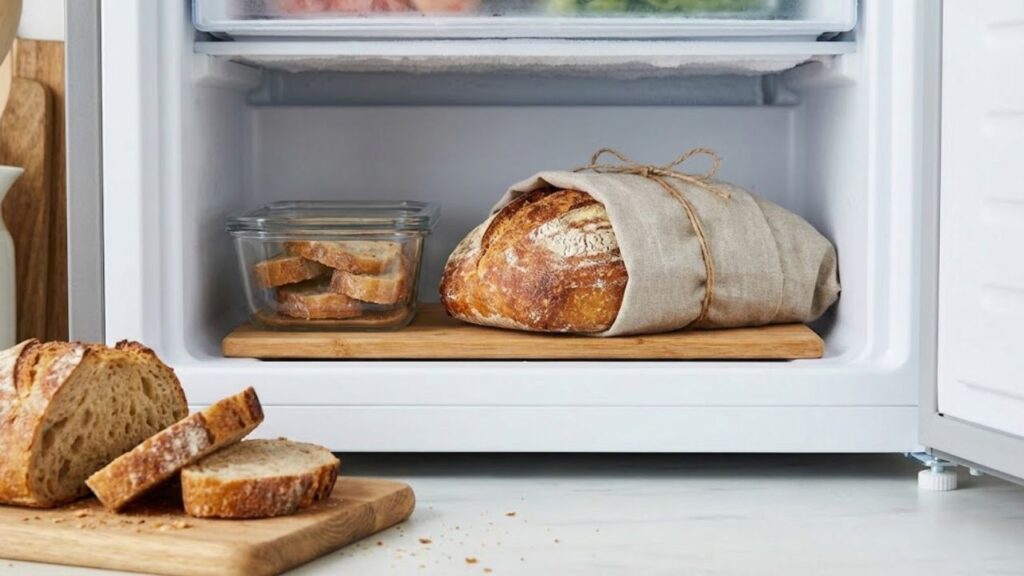
The key to freezing bread properly is to slice it while it’s still fresh. Once it’s fully cooled, slice the loaf and lay the pieces out on a tray, keeping them separate so they don’t stick together. Leave them in the freezer for about 45-60 minutes to firm up before transferring them into a rigid container with a tight-fitting lid. This method protects the bread from freezer burn and keeps it in the best shape possible.
Why Freezing in Separate Slices Works
When you freeze bread in slices, it prevents the loaf from becoming one hard mass. The slices develop a fine crust shell that protects them from moisture, and the crumb stays intact. This method helps avoid the issue of bread becoming too soggy or rubbery once it’s reheated. Additionally, freezing the bread without wrapping it in plastic or foil means it can breathe and retain its natural freshness when thawed.
| Step | Action |
|---|---|
| 1 | Slice the bread once cooled |
| 2 | Place slices on a tray without touching |
| 3 | Freeze for 45-60 minutes |
| 4 | Transfer to a rigid container |
| 5 | Reheat directly from frozen |
Reheating Frozen Bread: The Key to a Perfect Slice
Once your bread is frozen, the real magic happens during reheating. To get that crisp, crackling crust and soft inside, avoid thawing it first. Simply take a slice straight from the freezer and heat it quickly in a toaster, skillet, or oven. For toast, two rounds at medium heat usually bring the bread back to life. If you’re heating a baguette, try a quick splash of water on the crust and bake it for a few minutes in a hot oven to restore its original texture.
Why Quick, Direct Heat is Essential
Fast, strong heat helps the starches and moisture in the bread reorganize, turning it back into something close to fresh. Slow reheating, on the other hand, leads to a sad, rubbery slice. The trick is to avoid letting the bread sit out for too long, which can result in a gummy crumb and lackluster crust. By using fast, intense heat, your bread stays fresh and satisfying.
Making Bread-Freezing a Habit
Once you get the hang of this method, you’ll stop seeing the freezer as a place where bread goes to die. Instead, it becomes a tool that allows you to keep slices of fresh, crunchy bread at hand without wasting any. By freezing slices separately and reheating them properly, you can enjoy fresh-tasting bread every time—without the waste or guilt.
| Key point | Detail | Value for the reader |
|---|---|---|
| Pre-freeze slices “naked” | Arrange bread pieces on a tray without any wrapping for 45–60 minutes | Preserves structure and prevents soggy or gummy crusts |
| Store in a rigid, reusable box | Transfer firm slices into an airtight container instead of plastic or foil | Reduces waste, avoids freezer odors, and keeps slices easy to grab |
| Reheat fast from frozen | Go directly from freezer to hot toaster, skillet, or oven | Restores crispness and flavor close to fresh bread, with minimal effort |