
At first, it’s just a faint, stale scent when you open your closet. A leather bag suddenly feels a bit sticky. A white shirt shows a faint shadow along the collar that wasn’t there before. You spray a little perfume, close the door, and move on.
But then, one damp morning, the smell becomes overpowering. Your favorite jacket now has a patch of green along the seam. The back corner of the cabinet looks darker, as if the paint is slowly sweating. You touch the shelf, and your finger comes back slightly cold, almost sticky.
You begin to wonder—is it the house? Is it you? Are you not clean enough? But the real problem is hiding in plain sight, stacked neatly and perfectly organized. And it’s not what you think.

Understanding the Silent Role of Storage
Open any Pinterest-perfect closet, and you’ll see the same pattern: shelves packed tightly, storage boxes aligned like soldiers, and doors that close with satisfying precision. It looks neat, controlled, and safe. But this setup is also the perfect way to trap moisture where you don’t want it.

Moisture problems in closets and cabinets don’t always start with a leak or flood. They creep in quietly, through everyday activities. Steam from a shower. A damp coat brought in from the rain. A dishwasher running overnight. The air carries moisture into the tightest, darkest corners of your home. Once trapped in a sealed, overcrowded space, it has nowhere to escape.
The tricky part is that the first signs are easy to ignore: a slightly swollen wooden shelf, a cardboard box that feels softer than it should, a jar label beginning to curl. By the time mold spots appear or clothes start smelling musty, the habit causing the problem is already deeply rooted. That habit? It’s about how you store things, not how often you clean.
The Problem in a Small Flat: A Cautionary Tale
On a rainy Tuesday in Manchester, a young couple thought they were doing everything right. They had just moved into a small flat with a single built-in wardrobe and two kitchen cabinets. Space was tight, so they bought sealed plastic boxes, vacuum bags, and lid-on containers. Every shelf was maximized, every inch used. It seemed like a victory over chaos.
Three months later, every time they opened the wardrobe, an odd smell greeted them. They first blamed the old carpet. But one evening, when pulling out a box of winter jumpers, they noticed a thin layer of fuzz on the fabric’s edges. The cardboard shoe boxes under the hanging rail had dark halos at the corners. Their “organized” wardrobe had turned into a private humidity chamber.
Why It Happens: Simple Physics of Moisture
This scenario is common in homes everywhere. In a 2022 UK survey on indoor air quality, almost one in three respondents reported musty smells or mold in storage areas, often in homes without obvious structural issues. Moisture readings in closets were higher than in the main rooms, even when the rest of the home seemed dry. The cause? Tight storage, poor airflow, and doors kept closed for days.
The explanation is simple: air naturally contains water vapor, and warm air holds more moisture than cool air. When damp air gets trapped in a closed, packed space, it stagnates. The surfaces inside—wood, cardboard, plastic—are cooler. As humidity builds up, condensation can form where warm, trapped air meets cooler surfaces.
How Mold Thrives in Your Closets
Mold doesn’t need a flood to grow. It needs three things: moisture, a food source, and time. Closets and cabinets provide all three. The “food” is dust, fabric, paper, glue from labels, and tiny skin particles. Moisture comes from the air and from damp items stored away. Time is guaranteed because those doors stay shut for days or even weeks.
The harsh truth is that our instinct to seal, stack, and pack everything tightly creates a miniature greenhouse. The more we block airflow, the more we invite problems that only show up when it’s already hard to fix.
A Simple Change to Break the Moisture Cycle
The most effective change to prevent moisture buildup isn’t a fancy gadget or cleaning product. It’s this: store things so air can circulate around them. Not perfectly sealed, not wall-to-wall—just enough breathing room for the air to flow, enter, and escape.
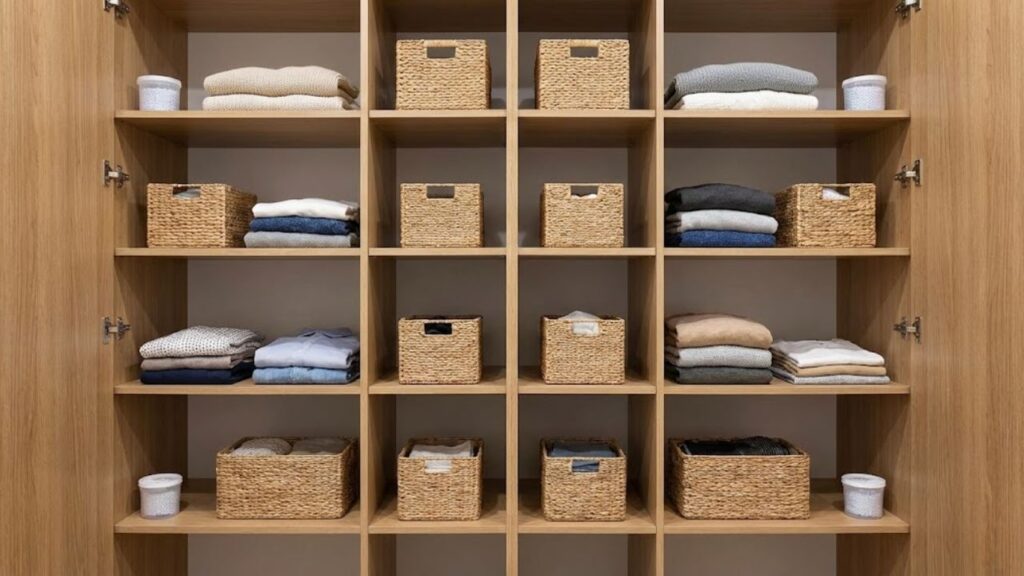
That means leaving visible gaps. A few centimeters between stacks of clothes. A small space between boxes and the back wall of the cabinet. Switch from airtight plastic bins to breathable baskets or perforated containers for items that don’t need to be sealed. It sounds simple, but this small shift turns your storage from a “trapped humidity” zone to a space with real airflow.

How to Create Natural Ventilation in Your Storage
Think of it like this: every item in your closet either helps air move or blocks it. Solid boxes pushed tight against walls create hidden pockets where dampness can remain. A mix of open shelves, slatted racks, and breathable bins turns the same space into a slow, quiet ventilation system. No tech required, just smarter gaps.
On paper, everyone agrees that “letting things breathe” is a good idea. But in practice, life gets in the way. You come home, toss a grocery bag into a lower cabinet “just for now,” and close the door. You squeeze one more jacket into the wardrobe. You keep laundry in a sealed basket to make the space look neater. Let’s be honest: no one does this perfectly every day.
Making Airflow Work Even on Busy Days
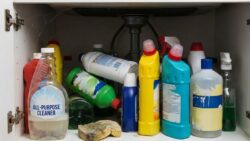
That’s why the most effective changes are those that work even when you’re tired or distracted. For example: swap a solid shoe rack for a metal grid shelf, where air can flow beneath the shoes. Use wire baskets for under-sink storage instead of stacked, lidded tubs. Hang coats with a small gap between them instead of cramming everything together. These decisions work in the background, even on your busiest days.
Simple Adjustments: A Case Study
One woman in Lisbon, tired of recurring mold on the back panel of her kitchen cabinet, made a simple change. She pulled everything 2 cm away from the wall and drilled three thumb-sized holes in the back of the cabinet. She left the bottom shelf less full, replacing two closed boxes with a single open basket. Over the next winter, the mold didn’t return. No magic—just better airflow and less trapped moisture.
Small Steps for a Drier, Healthier Home
The real breakthrough for many homes isn’t a dehumidifier, says building biologist Mark Jensen. It’s the moment people stop treating closets and cabinets like vacuum-sealed containers and start treating them like mini-rooms that need to breathe.
Next time you open a closet door, use this simple checklist:
- Can you see parts of the wall or back panel, or is every surface hidden?
- Does daylight or a lamp light most of the space, or are there dark, compact zones?
- Are some containers breathable (woven, perforated, fabric) instead of all sealed plastic?
- Are there gaps between hanging clothes, or is it one block of fabric?
- Does the door stay slightly open at times, or is it shut 24/7?
If you answer “no” to most of these questions, your space is likely trapping more moisture than you think. One small change at a time can shift your storage from stale and sticky to stable and dry.
Living with Drier Closets Without a Major Overhaul
There’s a quiet relief when you open a cabinet and it just smells like… nothing. No perfume, no chemicals, just neutral air and objects that feel like themselves. This doesn’t come from buying a bunch of products; it comes from changing how your space functions.
Start with the area that bothers you most—your closet, under-sink cabinet, or wherever the moisture issue is worst. Take everything out and do one practical thing: put back only what truly belongs there and give each item space. Leave gaps at the back and sides, and let some shelf space remain visibly empty. It might scratch your sense of maximizing every inch, but it will make the space healthier.
The real turning point comes when you stop searching for a single miracle solution—a moisture absorber, a closet spray, or a fancy organizer. These can help, but they rarely fix the core issue: overcrowded, airtight storage. Accepting that a less-full closet is often a healthier one is the key.
Letting a space breathe sometimes means letting go of a few things. It might sting more emotionally than technically, but it’s the action that breaks the cycle of moisture, mold, and damaged belongings.
Key Tips for Moisture-Free Storage
- Let air circulate: Leave gaps between items and walls to reduce trapped moisture.
- Use breathable storage: Opt for open racks, woven baskets, and fabric bins to keep items dry.
- Treat closets like mini-rooms: Open doors occasionally and avoid overfilling to prevent smells and damage.
