Psychologists say those spinning “what if” thoughts are not harmless worries but mental accelerators. One simple phrase, used the right way, can slow them down and restore a sense of control.
When “what if” turns into mental chaos
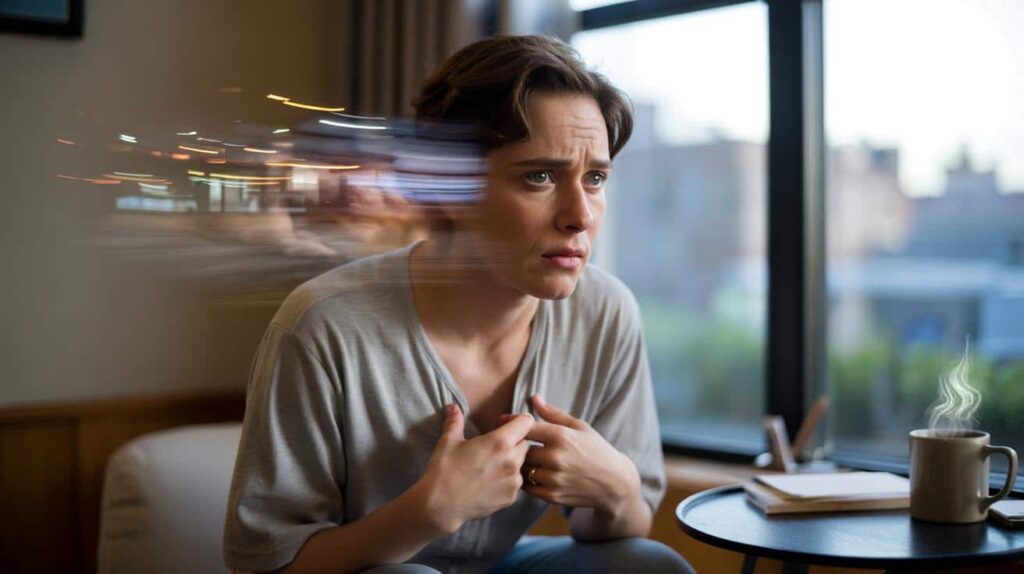
“What if I fail?”, “What if I get sick?”, “What if something happens to my child?” Many anxious spirals start with these two tiny words: “what if”.
They rarely stop at one scenario. The mind jumps from one catastrophe to another, each more unrealistic yet more frightening than the last.

Those repeated “what ifs” fuel uncertainty, push fear into overdrive and make clear thinking much harder.

US psychologist Jeffrey Bernstein, writing in Psychology Today, describes this as a kind of internal scriptwriting: we create elaborate disaster stories in our heads, then react to them as if they were already real.
This pattern affects adults, teenagers and children alike. The content of the story changes with age, but the mechanism is strikingly similar: the brain tries to prepare for danger, then accidentally traps itself in panic.
The eight-word question that acts like a mental fire extinguisher
Bernstein suggests a surprisingly direct tool when the anxious machine starts whirring. Instead of adding another “what if”, he recommends asking yourself:
“What is the worst that could possibly happen?”
On the surface, it sounds like you’re inviting more catastrophe. Bernstein insists the opposite is true. The question is not meant to encourage drama, but to anchor you in reality.
By naming the worst realistic outcome, you force the mind to move from vague dread to concrete facts. The brain shifts from emotional alarm to problem-solving mode.
According to Bernstein, this simple question works in a way that resembles cognitive behavioural therapy (CBT): it challenges catastrophic thoughts and replaces them with more grounded ones.
How the phrase changes the script in your head
Take a classic example: a job interview. Your inner monologue might sound like this:
- “What if I freeze?”
- “What if I say something stupid?”
- “What if they hate me and I never get hired anywhere?”
At this point, anxiety is running the show. Now add the psychologist’s question: “What is the worst that could possibly happen?”
You might answer: “I don’t perform well and I don’t get the job.” That is disappointing, but survivable. You can apply elsewhere. You may even learn from the experience and do better next time.
By walking through the “worst case” calmly, you often realise it is painful, but not life-ending. That realisation alone can lower the panic.
The goal is not to deny that things can go wrong. It is to remove the exaggerated, movie-like tragedy and bring the situation back to human scale.
Interrupting the spiral of negative thoughts
Bernstein describes this as a kind of “mini CBT” that you can use on the spot. The question interrupts the run of negative thoughts and gives your brain a task: assess, don’t catastrophise.
Instead of imagining 20 different terrible outcomes, you are gently pushed to examine one realistic worst case, and then what life looks like after that.
According to clinicians, this process supports:
- Emotional resilience: you see yourself surviving setbacks, not crumbling under them.
- Self-confidence: you reconnect with skills and resources you already have.
- Perspective: problems move from “end of everything” to “serious but manageable”.
The question acts like a mental brake: it slows racing thoughts just enough for your rational mind to catch up with your fear.
When and how to use the phrase
The timing and tone matter. Used harshly or sarcastically, the sentence can sound dismissive, especially with someone already on edge.
 Natural sleeping pill: this common garden plant could be the key to getting your sleep back
Using it on yourself
When you catch your thoughts spiralling, pause and ask yourself the question clearly and kindly. Then answer it honestly, without exaggeration.
| Situation | Typical anxious thought | “Worst that could happen” response |
|---|---|---|
| Sending a risky work email | “What if they think I’m ridiculous?” | “They might ignore it or disagree. I’d feel awkward, then move on and adjust my approach next time.” |
| Going to a social event alone | “What if nobody talks to me?” | “I might feel lonely for a while. I can leave early, message a friend or try again another day.” |
| Taking an exam | “What if I fail and my life is ruined?” | “I might fail this exam. I could retake it, change plans or find another route to my goals.” |
This exercise works best if you really picture yourself living through that outcome and still having options. The aim is not to force optimism, but to see that fear and reality are rarely identical.
Using it with someone you care about
Bernstein cautions that the question is not a challenge, a joke or a way of shutting someone down. If a friend or partner is spiralling, tone is everything.
Asked gently, “What is the worst that could happen?” can sound like an invitation to think together, not a dismissal of their feelings.
He advises keeping your voice calm, avoiding eye-rolling or irony, and giving the person time to answer. The goal is to help them climb out of panic, not prove that they are being irrational.
Why imagining the worst can bring relief
There is a paradox here. Many anxious people say they avoid thinking about the worst possible outcome because it feels too scary. Psychologists see the opposite effect in practice.
As long as the fear stays vague, the brain cannot “finish” the story, so the alarm keeps ringing. Once the worst case is clearly stated and mentally rehearsed, the nervous system gets a kind of closure.
Often, the imagined “worst” turns out to be uncomfortable, not catastrophic, and the body responds with a small but real sense of relief.
This does not mean the phrase works for every situation. In cases of severe trauma, serious illness or high-risk scenarios, professional support and safety planning come first. The question is a tool for everyday anxiety, not a solution to all forms of distress.
How this fits with other anxiety tools
The eight-word question sits neatly alongside classic CBT techniques often used in therapy rooms:
- Thought challenging: asking “Is there evidence this will happen?” and “Is there another way to see this?”
- Behavioural experiments: testing your fears in real life on a small scale.
- Grounding: focusing on your senses to bring your attention back to the present.
On its own, the phrase can reduce intensity enough to make these other strategies feel possible. Once panic drops a notch, people often find it easier to breathe more slowly, question their thoughts or take a small practical step.
Practical scenarios where the phrase can help
Many therapists encourage people to rehearse the question in specific areas of life, so it becomes more automatic.
- Parenting: “What is the worst that could happen if my child has a bad day at school?”
- Health worries: used carefully, it can shift focus from every symptom being fatal to more likely, treatable possibilities.
- Relationships: “What if this argument ends badly?” followed by imagining concrete next steps, like apologising or seeking support.
In each case, the key is moving from “I couldn’t bear it” to “I wouldn’t like it, but I could handle it somehow.” That mental shift is at the heart of emotional resilience.
A few terms worth unpacking
Psychologists often talk about “catastrophising” – turning a setback into an imagined catastrophe. The question “What is the worst that could happen?” targets this exact habit by forcing a more precise, less exaggerated picture.
Another term is “tolerance of uncertainty”. Many anxious people feel deeply uncomfortable not knowing what comes next. Practising this phrase is one way of increasing that tolerance: you accept that you cannot control every outcome, while reminding yourself you can cope with many of them.
Risks, limits and when to seek more help
There are limits to this approach. Used in a joking or blunt way, the phrase can sound like “Stop worrying, it’s not that bad”, which tends to shut people down. Used compulsively, it can even become another ritual in obsessive thinking.
If your honest answer to “What is the worst that could happen?” includes thoughts of self-harm, extreme danger or situations you cannot see a way out of, that is a signal to reach out for professional support rather than handling it alone.
For many day-to-day fears, though, those eight words are a small, portable device. They turn anxiety from an all-consuming storm into something you can walk through, one realistic step at a time.