The first silver lines along her parting looked almost aggressive under the bathroom light, as if they’d been sketched in with a dull pencil. Her hand drifted toward the familiar box dye under the sink, then paused. Scalp irritation, the sharp chemical smell, towels ruined forever. The routine felt exhausting before it even began.
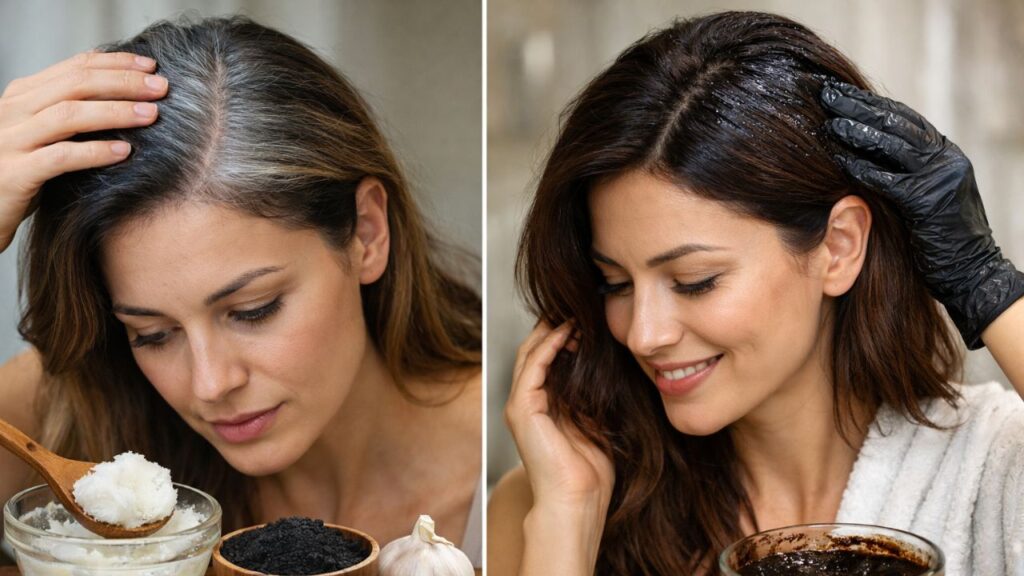
Instead, she reached for her phone and typed the same late-night question countless others do: “natural way to cover gray hair”. Most results felt confusing or impractical, swinging between folk remedies and lab experiments. Until one simple recipe kept resurfacing, shared quietly, almost like a secret passed between friends.
Two ingredients. A spoon. A bowl. And the quiet promise that gray hair doesn’t have to define the entire story.

Why gray hair appears earlier than expected
You often notice it in unplanned moments. A candid photo in a WhatsApp group. The harsh office lighting near the coffee machine. The hair at your temples looks lighter, almost translucent. You laugh it off, but the thought follows you home.

Once associated with life after 50, gray hair now shows up much sooner. Dermatologists report people in their late 20s and early 30s seeking help in growing numbers. Chronic stress, ultra-processed diets, poor sleep, and pollution all leave their mark. Hair follicles lose melanin faster, and the pale strands grow in without apology.
Suddenly, every mirror becomes a quiet conversation with time.
What dermatologists are noticing now
A London-based trichologist keeps notes on her patients. One phrase appears again and again: “I’m too young for this.” Over the past five years, cases of premature graying under 35 have nearly doubled. She points beyond genetics, toward stress hormones, crash diets, late-night scrolling, and skipped rest.
Online, silver hair is often celebrated, and that visibility matters. Yet private messages reveal another side: parents mistaken for grandparents, job seekers worried about looking “tired,” confidence eroding with every new streak. This isn’t vanity. It’s about identity, age, and first impressions.
What gray hair actually means
Gray hair itself isn’t unhealthy. It’s a sign that melanocytes, the pigment-producing cells in your follicles, are slowing down. As they do, new hair grows in lighter, eventually turning white or silvery. Conventional dyes only mask this process. The biology underneath continues, which is why roots reappear so quickly.
Plant-based, homemade dyes work differently. They gently tint the outer layer of the hair shaft, softening contrast rather than erasing it. Coverage is subtler, but the ingredients are kinder. The shift isn’t about miracles. It’s about working with your hair instead of battling it every few weeks.
The two-ingredient homemade dye people quietly rely on
The recipe shared across kitchens and group chats is almost disarmingly simple: ground coffee and conditioner. Not instant coffee, but strong, dark grounds mixed into a plain conditioner. Together, they create a smooth, cocoa-colored paste that looks surprisingly inviting.
You brew a small, very strong coffee and let it cool. Mix two to three tablespoons of wet coffee grounds with four tablespoons of conditioner. Stir until smooth. This isn’t a harsh dye session. It behaves more like a nourishing hair mask.
The pigment from the coffee settles onto the outer cuticle, especially on lighter, porous gray strands.
How people actually apply it at home
Most start by throwing an old towel over their shoulders. Gloves are optional, though brown fingertips may linger for a day. Hair should be clean and slightly damp. Working in sections, the mixture is applied from roots to ends, focusing on temples, parting, and crown.
The scent is warm and familiar, like a quiet café. Once coated, hair is twisted into a loose bun and covered with a shower cap. Then comes the wait: 45 to 60 minutes of reading, scrolling, or simply resting. Longer time deepens the tint. Rinse patiently with lukewarm water, finishing with a cool rinse to smooth the cuticle.
The result isn’t jet-black perfection. It’s a soft coffee-brown veil that turns gray into subtle highlights instead of sharp lines.
Who this method works best for
This approach suits dark blond to medium and dark brown hair best. On black hair, it softens contrast and adds warmth. On very light blond or bleached hair, the tone may lean caramel or coppery. Expectations matter. This is about blending, not changing your base color.

Dry or porous hair often absorbs more pigment, which can make ends appear richer than roots initially. Repeating the mask weekly for three to four weeks helps build depth, especially at the front. After that, most people settle into a rhythm that fits real life.
Once every two or three weeks. Or simply before an important meeting or gathering.
Common mistakes and simple precautions
Issues usually come from applying the mix on dirty, product-heavy hair, expecting dramatic results after one use, or forgetting that coffee stains fabric and grout. An old T-shirt and quick cleanup make the process stress-free.
Those with sensitive skin often wonder about irritation. It’s uncommon, but a small patch test on the inner elbow offers reassurance. Listening to your body matters more than any viral trend.
- Use freshly brewed, cooled coffee, not instant powder.
- Choose a plain, light conditioner to see the color clearly.
- Start with 45 minutes, increasing only if your hair tolerates it.
- Repeat weekly at first for better buildup on stubborn grays.
- Protect towels and clothing for 24 hours after application.
What this small ritual changes beyond hair color
On the surface, it’s just coffee and conditioner. In reality, it shifts how you relate to your reflection. Instead of reacting with panic to every white strand, you have a gentler option within reach. That alone softens the experience.
You can skip it during hectic weeks without guilt. On quieter evenings, you mix the paste, apply it slowly, and claim an hour for yourself. The effect is subtle, but the ritual is grounding. Among shelves of industrial products, this feels personal.
As gray blends more naturally, attention moves away from individual strands and back to your face. Friends might simply say you look rested. Daylight becomes less intimidating.
Between covering and embracing gray
Some eventually stop coloring altogether. Others keep this method as a middle path between full dye and full acceptance. The choice isn’t a statement. It’s a tool. What matters is how and why you use it.
Practically, the savings add up. A bag of coffee and your regular conditioner cost far less than salon visits. There’s less plastic waste, fewer fumes, and more control. You know exactly what touches your scalp.
On a human level, it’s quieter and deeper. With coffee in the air and a towel on your shoulders, you’re not resisting time. You’re meeting it halfway. And that two-ingredient recipe becomes less about hiding gray and more about choosing how you want to show up.
Practical details readers ask for most
Exact ratio for the coffee dye: Mix 2–3 tablespoons of freshly used coffee grounds with 4 tablespoons of plain, white conditioner and 2–3 tablespoons of very strong cooled coffee. Adjust thickness so it doesn’t drip.
Best hair types and shades: Works best on dark blond to dark brown hair with scattered grays. On black hair, it softens contrast. On very light blond hair, it may turn warm or caramel.
How often to repeat: Start once a week for 3–4 weeks, then move to every 2–3 weeks or before important occasions.
Protection and cleanup: Use old towels and clothing, and rinse surfaces promptly. Coffee can stain light fabrics, grout, and wood if left to dry.