
At the salon, she sits down with that half-apologetic smile people reserve for “I’ve let myself go” confessions. Her roots are a solid band of silver, the lengths still a faded brunette trying to pretend nothing’s changed. She laughs, but her fingers keep going back to the parting, almost checking if the white has spread overnight. Around her, other women scroll on their phones, saving photos of celebrities with perfect salt and pepper hair that somehow never goes yellow or flat.
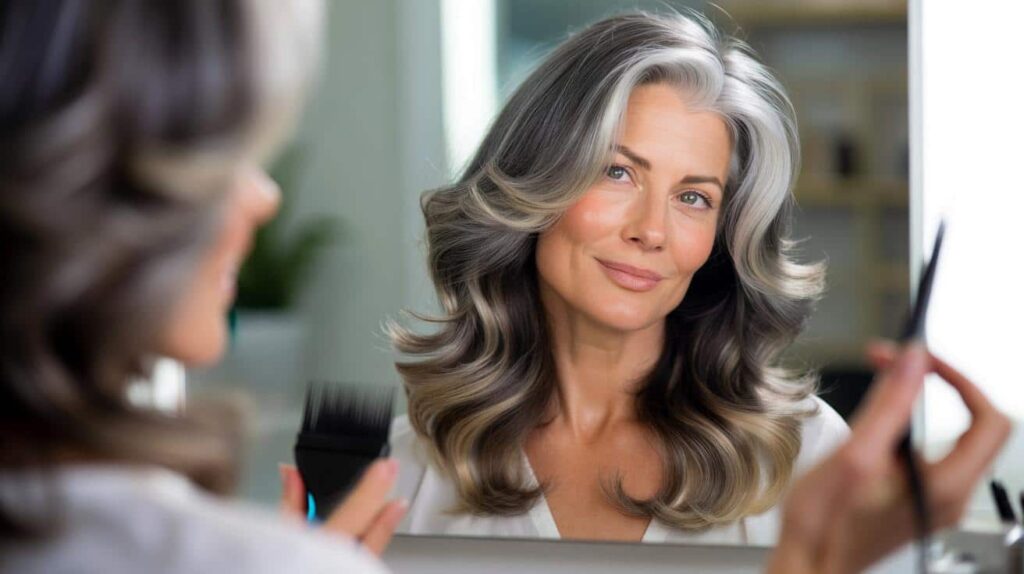
The colorist leans in, studies the mix of gray and old dye, and says quietly: “You know, we could stop fighting your roots. We can actually make them the star.”
That’s the moment the word drops: High-Low. And the mood in the mirror shifts.
The “High-Low” balayage: finally working *with* your roots, not against them
High-Low balayage has a very simple starting point: your natural salt and pepper is the “high”, and the soft, deeper tones you add are the “low”. Instead of covering the gray, the colorist paints around it. Think of it as contouring, but for hair.
 Hairstyles after 50: this cut that was very trendy in the 60s is coming back into fashion in 2026
The roots remain mostly natural, especially around the parting and hairline. Then, through the lengths, the stylist weaves in cooler, slightly darker ribbons that frame and highlight the silver. The contrast stays gentle, not stripy.
What you get is a hair color that looks intentional, current, and strangely liberating. No harsh line of demarcation. No panic when the roots grow. Just dimension.
A Paris hairstylist I spoke with described a client in her late 40s who arrived saying, “Either you erase the gray or I cut everything off.” Her roots were almost 70% white on top, but the ends were still tinted chocolate from years of loyalty to box color. The gap between the two shades looked like a bad home job, even though she’d been faithfully dyeing every three weeks.
They agreed to try High-Low. The stylist cooled down the mid-lengths with an ashy beige, added a few deeper, smoky pieces underneath, and left the most beautiful silver strands untouched. When she stood up, she didn’t look “younger” in a fake way. She looked sharper. Fresher. Like those Pinterest photos she’d been saving, but real.
That same client came back three months later. Not because she had to. Because she wanted a tiny refresh.
There’s a simple logic behind this technique. Pure coverage fights against what your hair is naturally doing, so every millimeter of growth screams for attention. With salt and pepper hair, the eye is drawn to contrast. When the contrast is a hard block of dye vs. a bright root, it looks like neglect.
With High-Low, the contrast is scattered along the lengths, not stacked at the scalp. The natural white and gray becomes the lightest shade in a soft, blended palette. The “lows” are strategically placed to give depth so the silver doesn’t feel flat or “old lady” to use the words many clients whisper.
Plain truth: once you’ve seen salt and pepper treated as an asset instead of a problem, full coverage suddenly looks strangely dated.

How a colorist actually builds a High-Low balayage on salt and pepper hair
The process usually starts with a long chat in front of the mirror. A good colorist will first map where your gray is strongest: often around the temples, parting, and crown. These zones are protected, because they’re the future highlight of the look.
Then the stylist decides on your “low” shades. For cool, icy gray, they’ll often pick an ash or mushroom brown. For warmer, softer silver, think sandy or beige tones. The aim is not to go darker than your natural base was 5–10 years ago. Too dark and the gray looks harsh.
Balayage panels are then painted through the mid-lengths and ends, leaving slices of natural salt and pepper untouched, particularly near the face and parting. The scalp stays softly diffused, not blocked in.
Where many people struggle is trying to jump from years of solid dye to a lived-in gray in one go. We’ve all been there, that moment when you consider shaving your head rather than enduring another root touch-up. The High-Low approach lets you transition in stages.
The first session usually focuses on breaking up the old color. The stylist will add lighter, cooler pieces and soften any red or orange leftovers in the lengths. Next visit, they might increase the presence of your natural gray and tweak the lows to better match how your hair is evolving.
The mistake many clients make is giving up after one appointment because the result doesn’t instantly match an airbrushed Instagram photo. High-Low is more like a gentle negotiation with your hair than a one-time miracle. The good news: each session buys you more freedom between appointments.
“On salt and pepper hair, High-Low balayage is my go-to,” explains London-based colorist Anna R. “I tell clients: I’m not here to erase your gray, I’m here to stage it. We keep the brightest silver where it’s naturally strongest and wrap it in soft shadows. The result isn’t ‘colored hair with roots’, it’s a palette that already includes your regrowth.”
- Ask for a gray-respecting planYour colorist should talk about how your gray will grow in and how the look will age, not just what you’ll see on day one.
- Stay in a cool or neutral familyWarm, golden lows can make silver hair look yellow. Most stylists prefer smoky, beige, or ash tones with salt and pepper.
- Space your appointments strategicallyEvery 3–4 months is enough for most High-Low clients. The technique is designed to survive regrowth gracefully.
- Bring daylight photos of your natural grayOld selfies with visible roots help the colorist match the right depth and undertone for your lows.
- Care like it’s colored, even if half is naturalPurple or blue shampoos, gentle masks, and heat protection keep both silver and painted lows crisp.
Living with High-Low salt and pepper hair: less pressure, more personality
What surprises most people who switch to High-Low is not the color itself, but the way it changes their routine. The emergency calendar alerts for root touch-ups quietly disappear. You stop planning holidays around your next color session.
There’s also a shift in how you look at yourself. The mirror stops being a scoreboard of “weeks since last dye”. You start noticing other things: the texture of your hair, how a haircut alters the movement of the silver, how different lipsticks suddenly look better.
Let’s be honest: nobody really does a professional blow-dry every single day. A color strategy that still looks good on air-dried, slightly frizzy, lived-in hair is worth more than any filter. Salt and pepper, framed by thoughtful highs and lows, has that rare quality: it looks good messy.

| Key point | Detail | Value for the reader |
|---|---|---|
| High-Low respects natural gray | Gray and white strands are left visible at the roots and hairline, with depth added only where needed | Less obvious regrowth, a more modern look, and fewer emergency salon visits |
| Cool, blended “lows” balance silver | Ashy, mushroom, or beige tones are painted through the lengths to avoid brassiness | Salt and pepper looks luminous instead of yellow, flat, or “aged” |
| Transition can be gradual | Several sessions progressively soften old dye and increase natural gray | Smoother shift from full coverage color to proudly visible salt and pepper |
FAQ:
- Question 1How often do I need to redo a High-Low balayage on salt and pepper hair?
Most clients stretch it to every 3–4 months, sometimes even twice a year. Because the roots are mostly natural, there’s no stark line forcing you back to the salon every few weeks.- Question 2Will High-Low work if I’m only 30–40% gray?
Yes, but the result will be softer. Your stylist may add a few extra lighter pieces to mimic the effect of more salt and pepper, so the pattern already anticipates future gray growth.- Question 3Can I go back to full coverage color later?
Technically yes, but most people don’t want to once they’ve tasted the freedom of not chasing roots. If you do, your colorist will use the existing highs and lows to avoid a flat block of color.- Question 4Does High-Low damage gray hair more than regular dye?
The technique often uses less overall product than full coverage, and focuses bleach away from the most fragile root area. With good care at home, the hair usually feels healthier than during constant root retouches.- Question 5What should I ask my hairstylist if they don’t know the term “High-Low”?
Describe it simply: tell them you want to keep your salt and pepper visible at the roots, add soft, cool lowlights in the lengths, and break up old color so regrowth blends in instead of forming a line.
