
The retiree swears he only wanted to help. A strip of land he no longer cultivated, a local beekeeper looking for a quiet place for his hives, a handshake over the fence. No rent, no contract, just that old-fashioned kind of arrangement you barely see anymore. A few weeks later, the hum of bees at the edge of the field, the smell of wildflowers, the feeling of doing something vaguely useful for nature and the village. Then came the brown envelope.
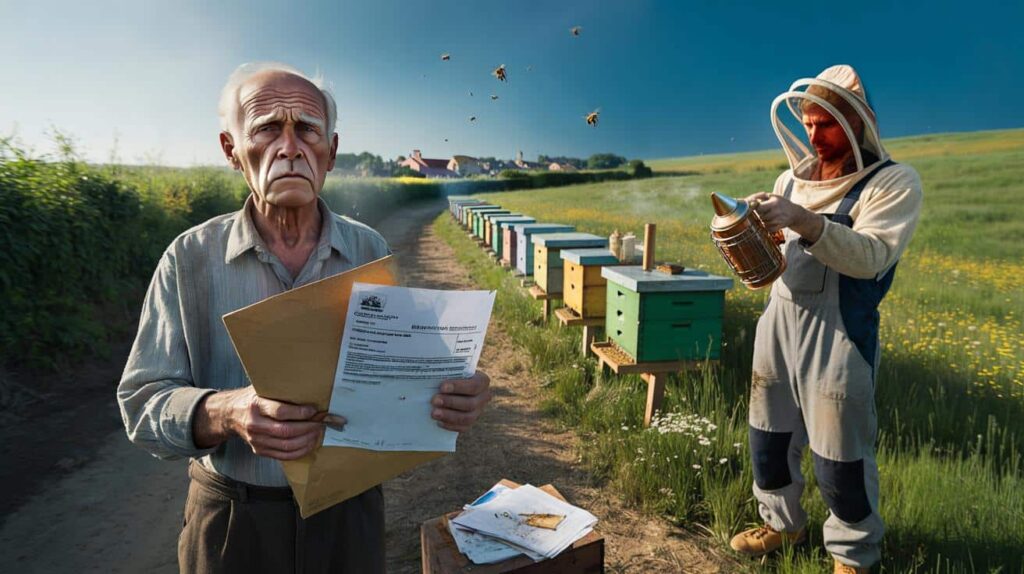
Inside: a notification of agricultural tax. The land, now considered used for an agricultural activity, had slipped into a different category. The beekeeper sells honey, the hives are a business, the plot is now taxed accordingly. The retiree stared at the letter and said the sentence many would say in his place: “I’m not making any money from this.”
That doesn’t always matter to the tax office.
 French foreign trade surges in Chinese Sichuan province with 32.7% export jump to €432 million
When a good deed suddenly looks like a business
What stings most in this story is not the tax bill. It’s the feeling of being punished for trying to be helpful. The retiree’s land had been sitting there, mostly unused, grass too high, a few brambles creeping in from the hedges. Letting a beekeeper install a dozen hives seemed like the perfect way to give that space a second life. Flowers for the bees, honey for the village market, a small environmental gesture that made sense when you talk about pollinators disappearing.

On paper, nothing changed for him. No rent, no share of the honey. In the eyes of the administration, something very real did change.
The case quickly spread on social networks and local forums. Some sided with the retiree, furious that the tax office would see taxable value where he only saw civic generosity. Others pointed out that beekeeping is an agricultural activity, and that tax rules don’t disappear because the person is retired or kind-hearted.
A similar situation hit a widower who let a young market gardener use a corner of his land for free. He ended up reclassified as holding “agricultural land in productive use”, with a tax bill that jumped just enough to sting his small pension. That’s when you understand how a simple favor can end up on a government spreadsheet.
Behind these cases lies a blunt logic. The tax authorities don’t look at feelings, they look at use. If land is used for an activity that produces goods sold on the market — honey, vegetables, eggs — it tends to slide into an agricultural category with its own tax rules. Whether the owner pockets profit or not is often irrelevant.
The administration sees assets and uses, not moral intentions. One official, speaking off the record, summed it up like this: the beekeeper is running a business, and that business depends on land. That land has a value tied to that activity. So the system follows its own path, even when the story behind it sounds like a neighborly favor instead of a business deal.
How to help… without getting stung by the tax rules
For landowners who still want to lend a field, a corner of orchard or a fallow strip to a beekeeper, there are ways to proceed with fewer surprises. The first reflex is boring but vital: ask questions before saying yes. Is the beekeeper professional or purely hobbyist? Does he sell the honey or only give it away? Is he registered as a farm or micro-business?

From there, you can call your local tax office or a rural advisory service, explain the exact situation, and ask how such a use would be classified. Five minutes on the phone can save months of frustration. Let’s be honest: nobody really does this every single day.
The other gesture is to put things in writing, even in a very simple way. A short loan agreement that states clearly: no rent, limited duration, number of hives or plots concerned, and who carries the professional risk. It won’t magically erase taxation, but it can clarify that you’re not a silent business partner.
People tend to skip this step because it feels cold between neighbors, almost suspicious. We’ve all been there, that moment when you hesitate to ask for a signature because you’re afraid of breaking the friendly mood. Yet that little sheet of paper often acts as a shield in case of requalification or dispute. A clear framework can also protect the beekeeper, especially if something goes wrong on the land.
Sometimes the most striking part of these stories is the sense of betrayal they create. “I just wanted to help the bees,” the retiree repeats, half angry, half tired. “Now they treat me like a farmer dodging tax. I don’t see a cent from those hives.”
The beekeeper, for his part, defends himself: “Without landowners like him, small-scale beekeeping dies. The system pushes us into formal contracts, declarations, and costs that small operators can barely handle.” Between the two, the law sits there, heavy and indifferent.
- Ask about status – Clarify if the beekeeper is a professional, registered activity, or purely amateur with no sales.
- Get a written agreement – One page is enough to describe the free loan, limits, and responsibilities.
- Contact the tax office – Present the exact use of the land and ask how it might be classified.
- Limit the scale – Fewer hives or smaller areas sometimes avoid a shift into a different taxable category.
- Review your bill – Check your next property tax carefully and contest quickly if something looks off.
A story that says a lot about how we treat generosity
This retiree’s misadventure raises a tough question: what space is left for quiet generosity in a rules-obsessed society? You offer a patch of land for bees, or a corner for a vegetable plot, and suddenly you’re dragged into the world of agricultural status, declarations and codes you never asked for. It’s the same feeling people get when they lend a room, give rides, or share tools, then discover they’ve stepped into some legal gray zone.
*Some readers will see this as necessary control, others as yet another way the system crushes small gestures under big regulations.* Between tax justice, environmental needs and the human desire to help, the line is thinner than it looks.
Stories like this spread fast because people instinctively recognize themselves in them, whether they have land or not. They touch that quiet fear that any good deed might one day arrive in a brown envelope with a barcode and a deadline to pay. And they force a conversation: do we want every tiny act of rural solidarity to look like a contract, or do we accept that, sometimes, humanity doesn’t fit neatly into a tax category?

| Key point | Detail | Value for the reader |
|---|---|---|
| Clarify land use | Identify if the activity on the land is professional (sales, registration) or purely hobbyist | Anticipate possible reclassification and avoid surprise tax bills |
| Formalize the favor | Simple written agreements and a quick call to the tax office before accepting hives or crops | Protects retirees and small landowners without killing neighborly help |
| Know your rights | Check tax changes, contest quickly, and seek advice from local rural or legal services | Reduce financial impact and regain a sense of control over your own land |
FAQ:
- Question 1Can I really be taxed more just for lending my land to a beekeeper for free?
- Question 2Does it change anything if the beekeeper is only a hobbyist and doesn’t sell honey?
- Question 3What kind of document should I ask for before accepting hives on my property?
- Question 4How can I contest a tax increase linked to agricultural use of my land?
- Question 5Are there ways to support local beekeepers or farmers without risking a tax reclassification?
