Across the Himalayas, scientists are sounding the alarm as evidence shows glacier melt is accelerating faster than earlier models suggested. In India, where millions depend on glacier-fed rivers for drinking water, farming, and power generation, the pace of change is becoming impossible to ignore. Researchers tracking ice mass, temperature shifts, and seasonal snowfall say the process is unfolding years ahead of projections. This growing gap between expectation and reality is raising urgent questions about water security, disaster risk, and how prepared the country truly is for rapid environmental change.
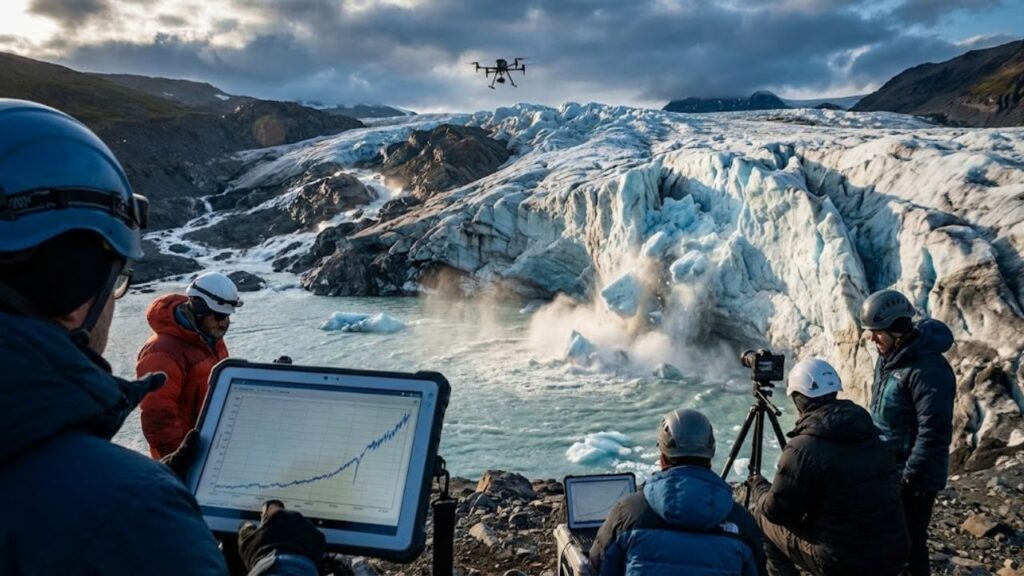
Glacier melt accelerating across mountain regions
Field studies and satellite data now show glacier melt advancing at an unsettling rate, particularly in high-altitude regions of northern India. Researchers note that warmer winters and reduced snowfall mean glaciers are no longer rebuilding enough ice to offset summer losses. This creates rapid ice loss, disrupts seasonal water flows, and weakens natural ice reserves that communities rely on during dry months. What worries experts most is the compounding effect: as ice thins, it absorbs more heat, speeding up melting even further. The result is a feedback loop that challenges long-held assumptions about how slowly glaciers respond to climate shifts.
Why glacier melt is happening sooner than expected
Scientists say glacier melt is accelerating because multiple factors are converging at once instead of unfolding gradually. Rising average temperatures are combining with shorter snow seasons, higher levels of black carbon deposits, and more frequent extreme heat events. These elements darken ice surfaces and reduce reflectivity, allowing glaciers to absorb more solar energy. In India’s Himalayan belt, even small temperature increases can have outsized effects due to steep terrain and sensitive ice structures. Earlier climate models underestimated how quickly these combined pressures would push glaciers past critical thresholds.
What faster glacier melt means for India
The consequences of faster glacier melt extend well beyond the mountains. In the short term, communities may see unpredictable river surges, higher risks of glacial lake floods, and stress on hydropower systems. Over time, however, shrinking glaciers threaten long-term water availability for agriculture and cities downstream. India’s major river basins depend on steady meltwater to balance monsoon variability. As glaciers retreat, that buffering effect weakens, making droughts and floods more severe. Policymakers now face the challenge of adapting infrastructure and planning for a future with less reliable meltwater.
Why this shift matters more than ever
The fact that glacier melt is happening faster than expected forces a rethink of timelines and preparedness. Adaptation plans based on slower change may no longer be enough as climate timelines shrink, risk planning gaps widen, and water security pressures intensify. For India, this means investing in better monitoring, early warning systems, and long-term water management strategies. The science is clear that delay carries costs, not just for ecosystems but for livelihoods tied to rivers that begin as fragile ice high in the mountains.
| Indicator | Earlier Estimates | Current Findings |
|---|---|---|
| Average melt rate | Moderate increase | Rapid acceleration |
| Snowfall recovery | Seasonally stable | Declining yearly |
| River flow stability | Predictable cycles | Highly variable |
| Flood risk outlook | Localized concern | Widespread concern |
Frequently Asked Questions (FAQs)
1. What process is happening faster than expected?
Researchers say glacier melt is accelerating more quickly than earlier scientific models predicted.
2. Why is this important for India?
India depends heavily on glacier-fed rivers for water, agriculture, and energy.
3. Does faster melting mean more floods?
Yes, rapid melting increases the risk of sudden floods and unstable river flows.
4. Can this trend be slowed?
Reducing emissions and improving regional planning can help limit long-term impacts.