For decades, the microwave has been a staple in British kitchens, prized for speed and convenience. But in the UK, a new kitchen device is now gaining attention as a serious challenger to that long-standing role. Designed to cook food faster while improving texture and energy use, this technology promises to change how households reheat, roast, and prepare everyday meals. As energy costs rise and consumers seek healthier, more versatile cooking options, many experts believe this innovation could quietly push the microwave toward retirement.
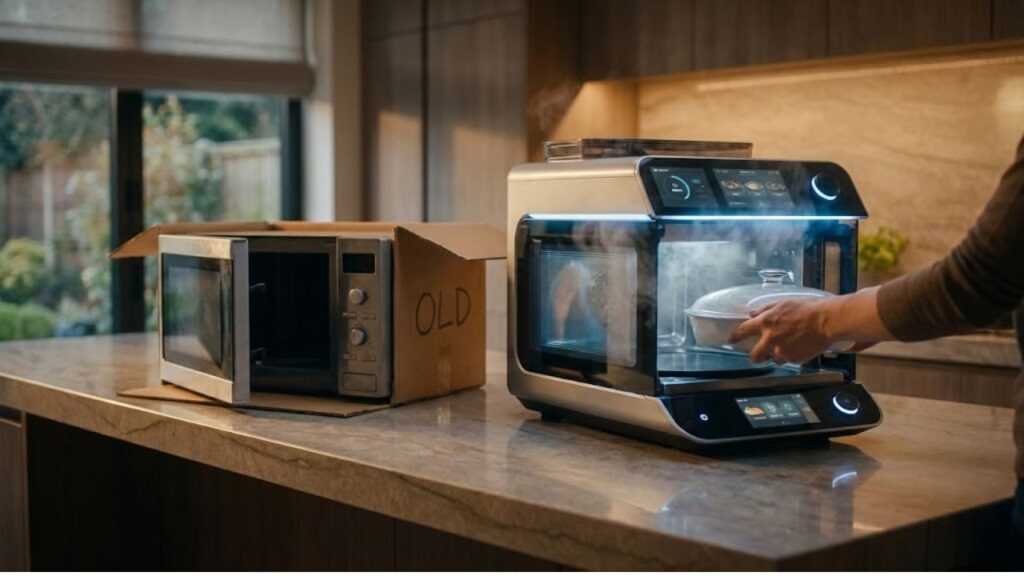
Why this new kitchen device is replacing the microwave
Unlike traditional microwaves, this appliance combines precision heat, airflow, and smart sensors to cook food evenly from the inside out. Supporters say it solves common complaints like soggy leftovers and uneven temperatures. By using controlled heat zones, it adapts to different dishes automatically, reducing guesswork. The result is crisper textures and more consistent results across meals. Many users also praise its energy efficient cooking, which aligns with UK households trying to cut utility bills. Over time, these benefits make it feel less like a gadget and more like a genuine upgrade.
How the microwave replacement changes daily cooking
This new kitchen device is designed for flexibility, handling everything from reheating tea-time leftovers to preparing full dinners. Its standout feature is multi mode heating, allowing users to switch between warming, baking, and quick-roasting in one unit. Families appreciate the faster meal prep, while food enthusiasts enjoy better flavour retention. Because it relies on even airflow design, meals emerge with fewer cold spots and less drying. Over time, this could reduce reliance on multiple appliances cluttering already compact UK kitchens.
What makes this next-gen kitchen device appealing
Beyond performance, the appeal lies in convenience and design. Many models feature compact countertop size, making them suitable for flats and smaller homes. Integrated apps and displays provide smart cooking presets tailored to popular UK dishes. Safety improvements, such as cooler exterior panels, add peace of mind, while modern kitchen aesthetics help the device blend seamlessly into contemporary interiors. Together, these features position it as more than a microwave alternative—it becomes a central cooking hub.
Is the microwave really becoming obsolete?
While the microwave won’t vanish overnight, its dominance is clearly being challenged. This new kitchen device offers broader cooking control and delivers results that feel closer to traditional ovens without the long wait. For households prioritising taste, efficiency, and versatility, it presents a compelling case. However, cost and learning curves may slow adoption for some. Still, as prices fall and familiarity grows, the shift could mark a turning point in how UK kitchens approach everyday cooking.
| Feature | New Kitchen Device | Traditional Microwave |
|---|---|---|
| Cooking Quality | Even and crisp | Often uneven |
| Energy Use | Lower overall | Moderate |
| Functions | Reheat, bake, roast | Reheat only |
| Kitchen Space | Compact design | Standard size |
Frequently Asked Questions (FAQs)
1. What is this new kitchen device?
It is a multi-function countertop cooker designed to outperform traditional microwaves.
2. Is it suitable for UK homes?
Yes, most models are designed for UK power standards and smaller kitchen spaces.
3. Does it cost more than a microwave?
Initial prices are higher, but long-term energy savings may offset the difference.
4. Will microwaves disappear completely?
Unlikely soon, but their role may shrink as newer devices become more common.