
You pull open the oven door to slide in a tray of cookies, and something feels slightly wrong. There’s no overpowering stench, just that faint, stale “old kitchen” smell that lingers. You clean the racks now and then. You wipe the glass. Still, the odor seems to return on its own. One day, while scrolling on your phone, a simple tip keeps popping up: place a slice of lemon in a cold oven and close the door. No cleaners. No sprays. Just a thin yellow slice resting on the rack. Some people claim it “resets” the oven. Others call it pointless. Yet more and more people are trying it, and a surprising number are quietly pleased with the result.
Why lemon slices are suddenly appearing in ovens
Modern cleaning often focuses on big, dramatic efforts. Deep cleans, harsh products, or self-clean cycles that run for hours. But daily home life is built on small habits we repeat without much thought. The lemon slice in the oven began as one of those habits, shared casually in forums, comment sections, and family groups online. The method was always the same: one slice, a closed door, some waiting. When people checked later, they didn’t find a spotless oven. Instead, they noticed the air felt fresher, lighter, and less greasy, without that lingering memory of the last meal.
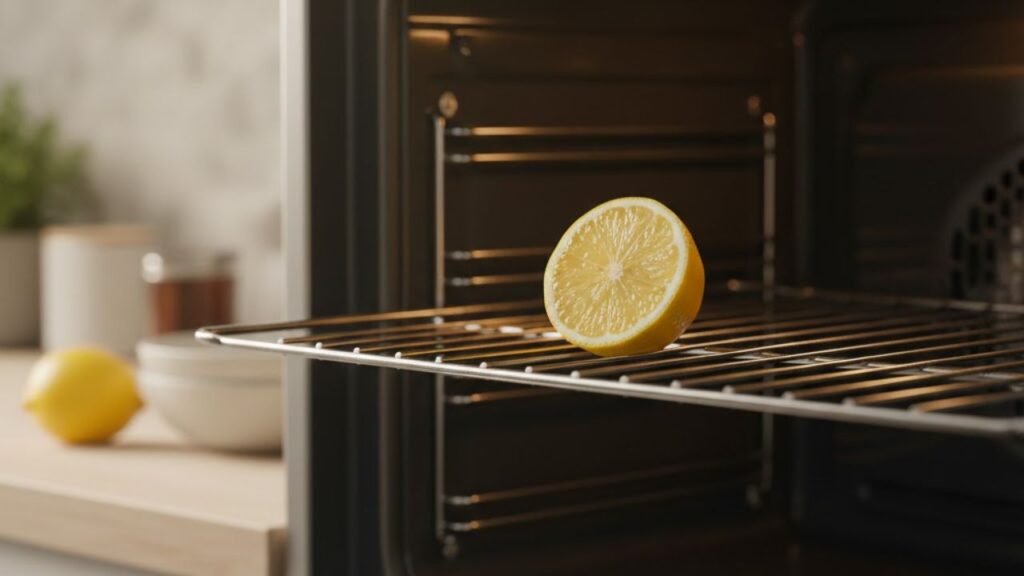
In a French home-cleaning group, someone shared a photo of a single lemon slice sitting alone on an oven rack. The caption explained that the kitchen no longer smelled of fish after dinner. The comments filled quickly. Parents mentioned using it after cooking fish for their kids. Renters said their ovens had carried the scent of previous tenants until they tried the lemon trick for several evenings in a row. The focus wasn’t on shiny surfaces. It was about comfort. About opening the kitchen in the morning and not being reminded of yesterday’s food.

What the lemon slice actually does
There’s nothing mysterious happening. Lemon doesn’t absorb odors like a sponge. Its citric acid and natural oils gently coat the air and interior surfaces of the oven. This light layer disrupts stubborn, greasy smells that settle in a closed space. The acid also begins to soften thin films on walls and racks, making future cleaning easier. It’s not a deep clean. It’s more like a soft reset for mild odors. In that sense, the lemon slice is less about scrubbing metal and more about refreshing the environment you cook in.

How to use the lemon trick correctly
The most common method is straightforward. After cooking, once the oven has cooled completely, place one or two thin lemon slices directly on the middle rack. Avoid wedges or thick pieces. Close the door and leave it alone for several hours, ideally overnight. When you open the oven again, remove the dried slice and give the interior a quick wipe with a damp cloth. That’s all. A small action with very little effort, yet it often brings noticeable relief.

Problems usually appear when expectations are too high. If the oven is covered in baked-on splatters, a lemon slice won’t erase them while you sleep. It only helps with light smells and surface film. Think of it as maintenance, not a replacement for real cleaning. Use it after cooking strong-smelling dishes or between proper cleans. Treated this way, it avoids the disappointment many viral hacks create.
When this habit fits best
- Best time to try it: After cooking fish, cheese-heavy dishes, or strong casseroles, once the oven has cooled.
- How often it makes sense: Once or twice a week in a busy kitchen, or before guests arrive.
- When to skip it: If the oven is visibly greasy or produces smoke, a full clean is needed.
- Simple upgrade: Place the lemon slice on an oven-safe dish with a spoon of water to slow drying and spread the scent.
- Hidden benefit: This habit encourages you to check the oven regularly and prevent buildup before it becomes a major task.
When it works well and when it doesn’t
This trend highlights something honest about everyday life. Most people balance work, fatigue, and late meals, and still want a kitchen that smells inviting. A low-effort ritual like this feels manageable and forgiving. It offers a way to care for the space without committing to a full scrub. At the same time, a lemon can only do so much. If the oven smokes, looks sticky, or affects the taste of food, proper cleaning is unavoidable. The lemon slice belongs firmly in the category of a gentle reset, alongside airing out the kitchen or wiping the stovetop.
The real question isn’t whether the trick works in every case. It’s what “working” means. For some, it means a perfectly clean appliance. For others, it simply means opening the oven without being greeted by yesterday’s garlic and cheese. That’s where the lemon slice quietly succeeds. It encourages small habits that prevent bigger problems and shows how simple kitchen rituals can subtly improve how home feels at the end of a long day.

| Key point | Detail | Value for the reader |
|---|---|---|
| What the lemon slice really does | Lightly freshens the air inside the oven and softens superficial grease film, especially after strong-smelling meals. | Reduces lingering food odors and makes later cleaning feel less overwhelming. |
| How and when to use it | Place thin lemon slices in a completely cold oven, leave for several hours or overnight, then wipe and discard. | Easy, low-effort ritual that fits into daily life without a full cleaning session. |
| Limits of the trick | Does not remove heavy baked-on grime or fix a smoking oven; works best as regular maintenance between real cleans. | Helps set realistic expectations and avoid frustration with viral cleaning hacks. |
