
You open the oven to slide in a tray of cookies and something feels wrong. Not dramatic—just that faint, stale note that lingers like an old kitchen smell. You scrub the racks, wipe the door, and still the odor creeps back. Then, while scrolling, a simple tip keeps popping up: place a slice of lemon in a cold oven, close the door, and wait. No sprays. No soap. Just a thin yellow circle resting on the rack.
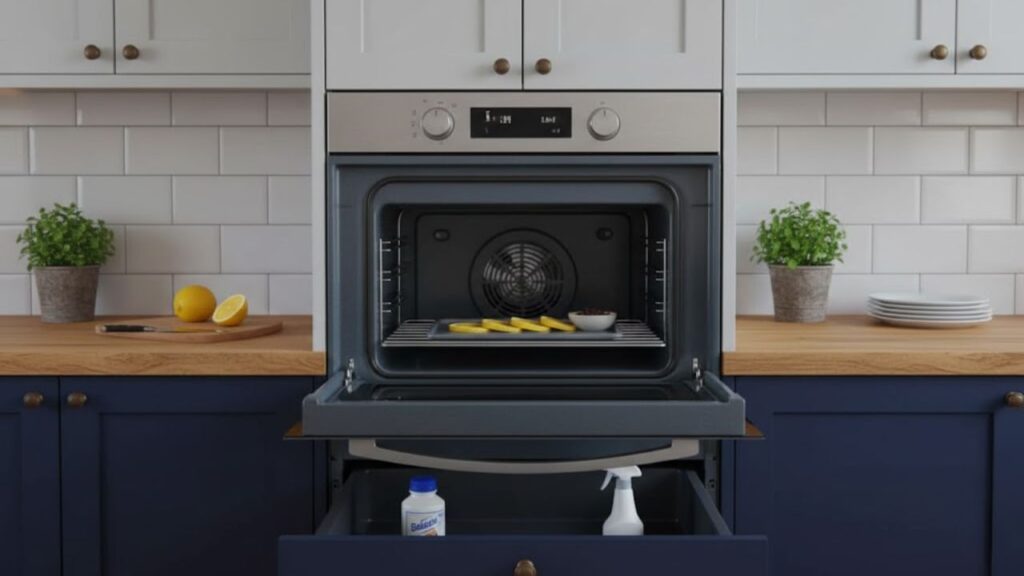
Some people swear it “resets” the oven. Others call it nonsense. Yet more and more households are trying it—and many are quietly pleased with what follows.
How a Simple Lemon Became a Go-To Oven Ritual
We’re used to big cleaning moves: deep scrubs, self-clean cycles, hours of effort. But daily life is really shaped by small, repeatable habits. The lemon-in-the-oven trick grew from that space—a tip passed through forums, TikTok comments, and family groups.

The routine is modest: one lemon slice, a closed door, a little time. When people return, they don’t find sparkling glass or foamy residue. What they notice is subtler. The air feels fresher. Less greasy. Less like last night’s lasagna.

In a French home-cleaning Facebook group, a photo of a lone lemon round on an oven rack sparked hundreds of replies. One person said her kitchen no longer smelled like fish the next morning. Another shared that her rental oven, which always carried traces of past tenants’ meals, finally felt neutral after trying the trick a few nights in a row.
No one claimed miracles. They talked about comfort—about opening the kitchen in the morning without yesterday’s dinner greeting them.
What the Lemon Slice Actually Does
There’s nothing mystical at work. Lemon doesn’t absorb odors like a sponge. Instead, its citric acid and natural oils lightly coat the oven’s interior and the trapped air. That thin layer interferes with lingering greasy smells in a closed space. The acidity also begins to soften light residue on walls and racks, making later cleaning easier.
This isn’t a deep clean. It’s closer to a gentle reset. In many ways, the lemon slice isn’t about scrubbing the oven—it’s about refreshing the atmosphere you cook in.
How to Use the Lemon Trick the Right Way
The most common method is straightforward. Once the oven has cooled completely, place one or two thin lemon slices directly on the middle rack. Avoid wedges or half lemons. Close the door and leave it for several hours, or overnight if possible.
The next time you open the oven, remove the dried slice and wipe the interior lightly with a damp cloth. That’s it. A tiny action with surprisingly noticeable mental relief.
Where does it fail? When expectations run too high. If the oven is coated with baked-on splatters, a lemon slice won’t fix it while you sleep. It helps with light odors and mild film—nothing more.
 Goodbye Hair Dye for Grey Hair: The Conditioner Add-In That Gradually Restores Natural Colour
Think of it as maintenance, not replacement. Use it between proper cleans, especially after cooking foods that linger. That’s how it avoids becoming another disappointing social media hack.
As one home-organization coach put it, the appeal is its forgiveness. You’re not committing to a full scrub. You’re simply offering your future self a nicer oven to open tomorrow.
When It Makes Sense to Try It
- Best time: After cooking strong-smelling dishes like fish, gratins, or cheesy casseroles, once the oven is fully cool.
- How often: Once or twice a week in a busy kitchen, or before guests arrive if lingering smells bother you.
- When to skip: If the oven looks greasy or smokes when heating, it’s time for a proper clean.
Small Tweaks and Subtle Benefits
A simple upgrade is to place the lemon slice on a small oven-safe dish with a spoonful of water. This slows drying and helps the scent spread more evenly.
The biggest hidden benefit is awareness. This ritual nudges you to open the oven and actually look at it, catching buildup before it turns into a dreaded chore.
When a Lemon Slice Helps—and When It Doesn’t
This trend reflects something honest about home life. Between work, fatigue, and late dinners, most of us want a kitchen that smells inviting, not like old fries. A low-effort ritual such as this feels like a manageable act of care.
But there are limits. If your oven smokes, if the glass is sticky, or if baked goods carry a burnt aftertaste, citrus won’t save it. That’s when hot water, soap, baking soda, or a self-clean cycle are necessary.
The lemon slice belongs in the “light reset” category, alongside airing out the kitchen or wiping the stovetop. It won’t replace real cleaning, but it can delay the mess from becoming overwhelming.
In the end, the question isn’t whether it works, but what “working” means. For some, it’s a spotless interior. For others, it’s opening the oven without being hit by last night’s garlic and cheese. That’s where the lemon slice quietly earns its place—by encouraging small habits that make home feel calmer, one ordinary evening at a time.

| Key point | Detail | Value for the reader |
|---|---|---|
| What the lemon slice really does | Lightly freshens the air inside the oven and softens superficial grease film, especially after strong-smelling meals. | Reduces lingering food odors and makes later cleaning feel less overwhelming. |
| How and when to use it | Place thin lemon slices in a completely cold oven, leave for several hours or overnight, then wipe and discard. | Easy, low-effort ritual that fits into daily life without a full cleaning session. |
| Limits of the trick | Does not remove heavy baked-on grime or fix a smoking oven; works best as regular maintenance between real cleans. | Helps set realistic expectations and avoid frustration with viral cleaning hacks. |
