
The pan crackles, the sauce simmers, and beneath a growing pile of onion skins, the cutting board has vanished. One person stirs with one hand while wiping the counter with the other. Another lets the mess expand, promising to deal with it later as plates, spoons, and spice jars slowly claim every surface. Same recipe, same kitchen, but two very different realities.
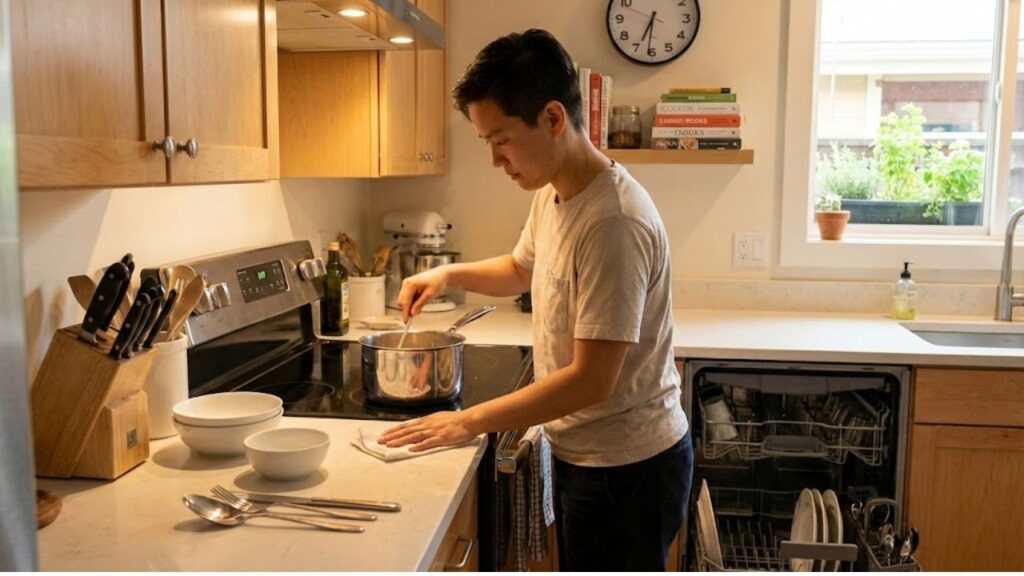
If you look closely, a pattern appears. Some people instinctively rinse the knife the moment they’re done, stack bowls as they go, and swipe the stove between steps. They don’t seem rushed or tense. If anything, they appear more at ease.
Psychology has a lot to say about these clean-as-you-cook types, and it goes far beyond simple tidiness.

1. They Stay Grounded Amid Small Bursts of Chaos
People who clean while they cook are rarely obsessed with control. More often, they’ve learned that small actions prevent big messes. While pasta boils, the colander gets rinsed. While vegetables roast, spices return to their shelves. It’s a steady way of turning down the noise of disorder.

This habit reflects a deeper skill: the ability to create pockets of order even in busy moments. A sauce splatter doesn’t trigger panic. It triggers a reach for the sponge.
Put two friends in a kitchen. One chops quickly, leaving scraps behind, grabbing new utensils every few minutes. The other moves in a slower rhythm: chop, slide scraps aside, quick rinse, back to work. When dinner is ready, one half of the kitchen looks camera-ready, the other mildly overwhelmed.
Research on environmental stress shows that visual clutter can raise cortisol levels. The person who cleans as they go often finishes cooking less mentally drained, not because the task was easier, but because their brain wasn’t fighting the space.
Psychologists describe this as micro-regulation — small choices that keep a situation from tipping into overwhelm. Cleaning mid-cooking doesn’t eliminate chaos. It simply keeps it at a level the nervous system can tolerate, a strategy that often carries into everyday life.
2. They Think in Sequences, Not Just End Results
Many people focus on the finish line: dinner served, guests fed, cleanup postponed. Clean-as-you-cook individuals tend to see cooking as a series of completed steps. Chopping ends with a quick wipe. Sauce simmering includes returning ingredients before they spread across the counter.
It’s a practical blend of planning and awareness. Each action has a beginning and a clean ending.
This mirrors study habits where tasks are broken into stages rather than vague goals. In the kitchen, it might look like lining up ingredients, setting aside a bowl for scraps, or linking the end of a timer with washing the cutting board.
Cognitive psychologists call this implementation thinking — tying actions to specific moments. These small rituals help people manage complex tasks without feeling buried by them. They don’t just aim for the finished meal. They respect the choreography that leads there.
3. They Carry a Quiet Sense of Responsibility
There’s an unspoken message in rinsing a pan before sitting down: future me shouldn’t pay for present me. People who clean while they cook often feel responsible not only for the meal, but for what comes after.
They’re the ones who wipe a sticky jar before putting it back, not because they were told to, but because they don’t want someone else dealing with it later.
In shared kitchens, personalities often show up in the sink. There’s the “I cooked, you clean” type, the “we’ll soak it overnight” type, and the quiet organizer who rinses as they stir and stacks dishes before they pile up. That third person often learned early that leaving things better than they found them matters.
Psychologically, this connects to an internal locus of control — the belief that personal actions shape the environment. Cleaning while cooking is a low-key expression of that belief. It rarely gets noticed, but it reduces future workload and respects shared space.
4. They Use Tidying as a Form of Self-Soothing
It’s easy to assume that someone who cleans while cooking is tense or rigid. Often, the opposite is true. The rinsing, wiping, and sorting act as gentle calming rituals. Warm water, repetitive motion, and orderly stacks can quietly settle a restless mind.

They may not think of it as emotional regulation. They just know they feel better when the mess doesn’t loom.
Picture a parent cooking after a long day, kids arguing nearby, thoughts still tangled in work emails. Between stirring and flipping, they tidy lightly. To an outsider, it looks like perfectionism. For them, it’s a way to create a small zone of calm.
Research on behavioral activation shows that purposeful, organized actions can reduce anxiety. Cleaning while cooking fits neatly into this pattern. It’s not about appearances. It’s about giving the nervous system something steady to hold onto.
Common patterns often include:
- Using small, repetitive actions to stay calm
- Cleaning during natural pauses, like waiting for timers
- Rarely drawing attention to it as a coping strategy
5. They Value Future Time as Much as Present Comfort
Clean-as-you-cook people often show strong time awareness. They don’t just think about cooking time, but about how they’ll feel later when they’re full, tired, and facing a messy kitchen. Cleanup is mentally included in the cost of the meal.
That’s why their kitchen feels unexpectedly peaceful after eating. The work has been quietly disappearing throughout the process.
Instead of dreading the post-meal crash, they spread the effort out. While sauce reduces, the blender gets rinsed. While bread warms, trash is cleared. It doesn’t register as extra work, just a smarter use of waiting time.
Studies on procrastination suggest that people who think this way delay less. They don’t wait for motivation. They integrate tasks into the moment, a habit that often extends beyond the kitchen.
6. They Subtly Shape the Mood of Shared Spaces
In group cooking situations, the person who cleans as they go often becomes the emotional stabilizer. They move steadily, anticipate small issues, and quietly make space easier for everyone.
In crowded kitchens, they gather used utensils, wipe spills before they spread, and keep things flowing without speeches or praise. This is a form of emotional labor, and it frequently goes unnoticed.
Psychologists link this to a communal orientation — thinking in terms of “we” rather than “me.” Cleaning mid-cooking isn’t just about order. It’s about easing collective stress, one small action at a time.
What This Small Habit Says About You
If you clean as you cook, you’re probably not analyzing your behavior. You’re just rinsing a spoon. Yet this simple habit often reflects how you handle chaos, manage time, and care for both yourself and others.
If you’re the opposite, it doesn’t signal laziness or failure. It may simply mean your mental load is heavier, or you learned to separate cooking and cleaning completely.
The real question isn’t which approach is better, but what your kitchen habits reveal about how you move through life. Even adding one small step, like rinsing the cutting board before plating, can bring subtle relief.
The kitchen makes these patterns visible. Next time you cook, notice whether you pile everything into the end or spread the load across the process. There’s no moral scorecard, just a quiet opportunity to be a little kinder to your future self, one pan at a time.

Key Takeaways
- Micro-actions reduce stress: Small cleanup steps prevent overwhelm.
- Future-focused thinking: Using waiting time protects later energy.
- Hidden emotional skills: This habit often reflects responsibility, self-soothing, and communal care.
