
It’s a typical winter day. A couple of tourists are sipping coffee while chatting about their latest adventures—one mentions the cost of living. “They’re not coming like they used to,” says the owner, looking out at the quiet scene. “It’s too expensive now.”
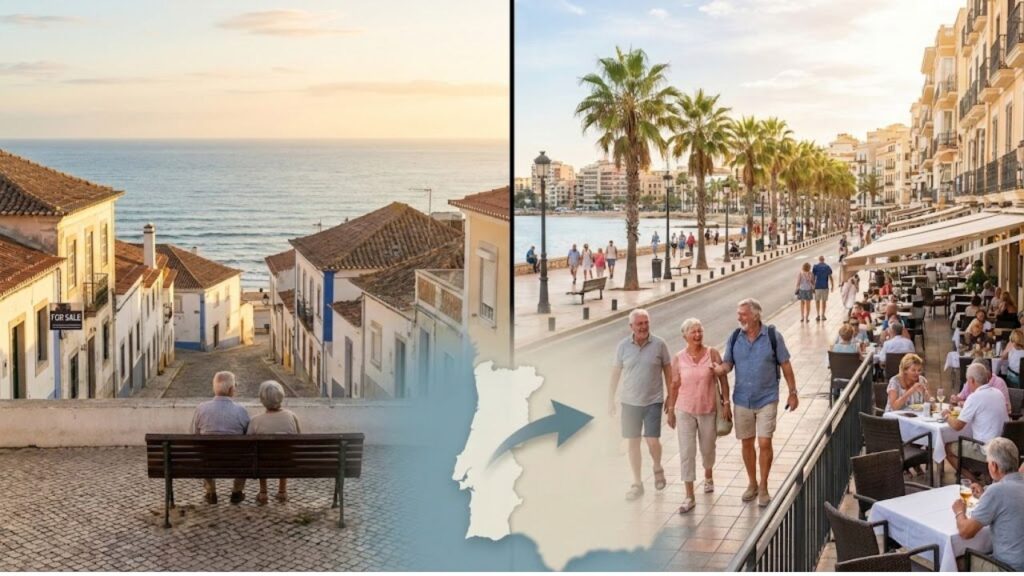
Not far off, a retired Dutch engineer scrolls through his tablet, not looking at property listings in the Algarve, but rather tax offices in another EU country—a place with lower rents, better healthcare, and a tax regime that Portugal quietly scrapped.
For years, Portugal was the go-to dream: sun, safety, and affordable pensions. But now, things are shifting. And it’s not by chance.

From Dream Destination to Fading Favourite
Ten years ago, retiring in Portugal seemed like the ultimate cheat code for life. The sun shone year-round, seafood was cheap, and the tax system turned foreign pensions into nearly tax-free income. Cities like Lisbon became the backdrop for YouTube channels, while the Algarve was the setting for “We finally did it!” Facebook posts. The dream wrote itself.

Today, that dream has shifted. Rents in Lisbon and Porto have surged, driven by tourism and digital nomads. The Non-Habitual Resident (NHR) regime, once a pensioner’s ticket to low taxes, was trimmed and closed off to newcomers. Long lines at immigration and stressed doctors have replaced the “easy living” lifestyle.
Portugal hasn’t suddenly become unattractive. It just stopped being the bargain it once was, and retirees, quietly and pragmatically, began looking for other options.
Numbers back this up. Between 2014 and 2021, Portugal saw a surge in foreign residents, many of whom were Northern Europeans seeking early retirement by the sea. Local councils bragged about international schools, and real estate agents hardly had to lift a finger before receiving offers from abroad.
Then came political pressure. Locals, priced out of the city centers, protested. The government watered down golden visas, stopped accepting new NHR applications, and started talking more about housing crises than foreign investment. Expats’ forums shifted from “How to move to Lisbon?” to “Is it still worth it?”
Meanwhile, one country started to reappear in those forums more and more. Short-haul flights from London, lower crime, top-tier public healthcare, and a cost of living that still feels like 2012 Portugal. That country is Spain.
Spain’s Quiet Rise as the Retirement Destination of Choice
Spain hasn’t reinvented itself overnight. It’s always been a contender for the best place to retire. But as Portugal dialed back its fiscal perks and rents spiked, Spain quietly became a more stable alternative. Sure, taxes can be higher, and bureaucracy can be a headache. But for more and more retirees, the balance is shifting from “maximum tax break” to “solid, predictable life.”
Ask recent retirees why they chose Spain, and a pattern emerges. First, healthcare: Spain’s public system ranks among the best in Europe, and private insurance, especially for younger retirees in their early 60s, remains affordable. For someone used to waiting on the NHS or paying for expensive U.S. premiums, the contrast is striking.
Next, housing. Many areas of coastal Spain, especially away from the major cities like Barcelona and Madrid, still offer reasonably priced two-bedroom apartments. The Costa Cálida, parts of the Valencian Community, and inland Andalusia are now popping up in retirement planning discussions. The promise? A decent flat, a walkable town, and a café where the barista learns your coffee order by week two.
Take Anne and Michael, a British couple who moved to Spain in 2023 after first trying Portugal in 2018. They rented in Cascais, loved the sea, but watched their landlord hike the rent twice in three years. The local GP changed three times, and the new tax rules introduced more complexity and fewer benefits. “We felt like the goalposts kept moving,” Anne says.
After moving to a small town near Alicante, their rent dropped by nearly a third. The local health center got them sorted more smoothly than expected, and their social circle grew. It wasn’t as romantic as Portugal, but it worked. “It’s less glamorous, but it works,” says Michael.

Their story isn’t dramatic. It’s pragmatic. People who once followed their hearts are now double-checking with spreadsheets.
Why Spain Offers Something Different
The logic behind this shift is clear. When Portugal’s NHR regime was open, the financial appeal was obvious: low taxes, affordable living by the sea, and an easy visa process. But as costs increased and tax perks dwindled, the equation changed.
Spain fills that gap with something more sustainable: stability. The country has an established expat infrastructure, from English-speaking lawyers to clinics familiar with foreign residents. There are dozens of towns where retirees are no longer a novelty. For someone planning a 20-30 year retirement, that sense of stability can outweigh the thrill of a “hot new destination.”
Plus, Spain’s lively, communal culture appeals to many Northern Europeans. With long lunches, noisy streets, and kids playing well into the evening, Spain feels like the retirement many envisioned: less about tax breaks, more about being surrounded by life.
How to Reassess Your Retirement Plan Without Going Overboard
If you were set on retiring in Portugal but are now having second thoughts, don’t make drastic moves right away. Start small. Don’t sell your house or move all your pension funds in one sweeping action. Choose two or three regions in Spain that meet your must-haves: climate, budget, proximity to an airport, or even distance to a good hospital.
Treat your first year in Spain as a test drive, not a fairy tale. Rent before you buy. Experience at least one off-season. Keep a simple journal on what works and what doesn’t—noise levels, bureaucratic issues, social connections, and the realities that rarely make it into the Instagram-perfect posts.
By the end of that year, you’ll have a clearer picture than any blog article could give you.
A Slower, More Grounded Approach to Retirement
Retirees often admit they didn’t anticipate how tiring “starting from scratch” would feel in their 60s. Learning a new language, finding new doctors, and adjusting to new rules about everything from car insurance to recycling. So, give yourself permission to take things slowly. Ask questions openly. Visit local meetups, town halls, or even coffee mornings if that’s your style.
Spain certainly has its challenges. Buying too quickly in ghost towns, underestimating the summer heat inland, or believing everything the first lawyer tells you can lead to missteps. So, stay curious. Cross-check advice. Talk to people who’ve lived there for ten years, not ten months. They’ve lived through the excitement, disappointment, and adjustment phases and can provide valuable insight.
Remember, there’s no such thing as a “perfect place.” What you’re looking for is somewhere where the little annoyances of daily life feel smaller than the joys.
The Shifting Landscape of Retirement Dreams
What we’re seeing in this shift from Portugal to Spain is revealing. Retirement abroad, once a dramatic leap, has become more about cautious, practical decisions. It’s no longer just about buying into a “dream” destination. It’s about finding somewhere that balances romance with reality, stability with adventure.
In the past, retirees might have jumped into a destination based on excitement. Now, they’re looking for a place where they can grow old without constantly redoing the math. And that simple shift may be what reshapes the next generation of European retirees more than any slick marketing campaign ever could.

Key Points
- Rising costs in Portugal: Higher rents, reduced NHR perks, and housing pressure have made the “Portugal dream” less accessible.
- Spain’s balanced offer: With strong healthcare, moderate living costs, and established expat infrastructure, Spain is becoming the pragmatic alternative.
- Test-drive approach: Rent first, test different seasons, track day-to-day life, and avoid rushing into permanent commitments.
