A towel rests on her shoulders, her phone balanced in one hand, while the other pulls a glossy plastic comb through soaking-wet hair. Steam fills the bathroom, the mirror is half blurred, yet one sound stands out—the soft, rubbery snap of strands under strain.
She winces, flicks broken hairs from the comb, and shrugs it off. “My hair’s everywhere lately,” she mutters, brushing faster to finish before work. She blames stress, hormones, weather, pillowcases—anything except this quick, everyday routine.
But what if the real issue isn’t your shampoo, your age, or your genetics, but the repeated damage caused by combing wet hair with a standard plastic comb?

What actually happens when you comb hair while it’s wet
Right after a shower, hair feels soft, heavy, and elastic. It lies flat, slick with water and conditioner, giving the illusion of strength. In reality, the opposite is true. Wet hair swells, and its cuticles lift slightly, like roof tiles in heavy rain. Inside the strand, key bonds temporarily loosen.
 This Simple Way of Tucking Hair Behind Ears Can Open the Face and Sharpen Cheekbones Instantly
Now add a rigid plastic comb with narrow, sharp teeth. Each pass forces its way through a weakened structure. Hair stretches further than it should, then crosses its breaking point. Some strands snap immediately. Others suffer microscopic damage that builds over time. You may not notice it at first, but the evidence collects quietly in your brush, sink, and shower drain.
The thinning no one connects to brushing
We all know someone who swears their hair has “thinned” over the last couple of years. They blame everything except that rushed, post-shower combing habit.
In a London salon, one stylist tracked the hair shed by long-term clients over a year. A clear pattern emerged. Clients who arrived with wet hair combed through using stiff plastic tools left behind far more broken pieces than naturally shed hairs. Many strands were short with blunt ends—clear signs of mechanical breakage, not loss from the root.
One client in her late 30s with long brown hair believed she was losing hair. Her ponytail felt thinner, and her ends looked transparent in photos. The stylist suggested a single change: stop combing soaking-wet hair with a rigid plastic comb. Four months later, the difference was obvious. Fewer broken lengths, less hair debris around the chair, and a ponytail that finally felt full again.
The science behind wet-hair breakage
The explanation is simple, even if it’s not glamorous. Hair is made of keratin, held together by multiple bonds. Water weakens some of these bonds temporarily. When hair is fully soaked, it can stretch by up to 30 percent. Add force from an inflexible tool, and strands are pushed past the point of recovery.
Those quiet snaps don’t create bald spots overnight. Instead, they show up as gradual thinning: reduced density through the mid-lengths, frayed ends, and short broken pieces that never reach full length. Tight, unyielding plastic combs don’t bend or cushion under resistance. They simply push through, acting like a blade against fragile wet strands.
Over time, the message is clear: the hair isn’t falling out—it’s breaking off.
How to handle wet hair if you want to keep it healthy
The best time to detangle isn’t when hair is dripping. It’s when it’s damp, not soaked, and has some slip from conditioner or a leave-in product. Gently squeeze out excess water using a soft towel or cotton T-shirt, pressing instead of rubbing to reduce friction.
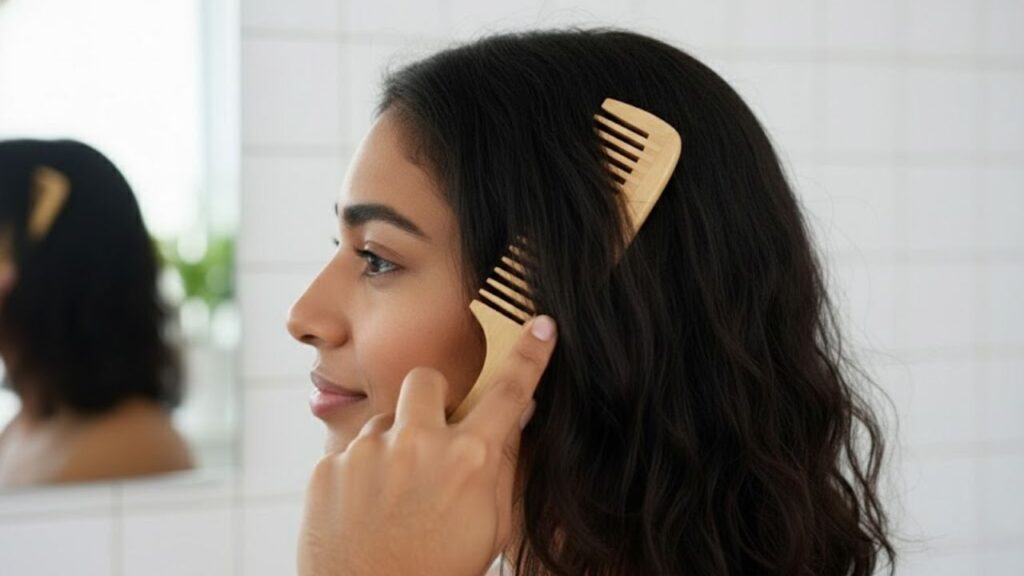
Swap rigid plastic combs for tools with wider, smoother, more forgiving teeth. A wide-tooth comb, a flexible detangling brush, or a wooden comb that glides instead of scraping all reduce stress on strands. Start at the ends and work upward in sections, pausing whenever you feel resistance rather than forcing through it.
Think of the process less as brushing and more like carefully loosening a delicate knot.
 Menopause Can Change Hair Texture Fast - Here Are Ingredients Experts Say You Should Avoid
Why rushed brushing causes long-term damage
Many people drag a comb from root to tip in one frustrated motion, especially when running late. That’s when long-term damage quietly builds. Fine, bleached, or curly hair suffers most because its structure is already more fragile. But even thick, “strong” hair eventually shows signs—length that never increases, ends that always look worn.
Perfect habits aren’t realistic. Life happens. You sleep on damp hair, yank through a knot, or borrow a comb at the gym. The goal isn’t perfection—it’s reducing the most damaging behaviors so hair has a chance to recover.
If you change just one thing, let it be this: stop ripping through wet tangles with a stiff, narrow plastic comb.
What professionals see under the microscope
Hair specialists have repeated this warning for years, often in quiet comments at the sink. One trichologist summed it up clearly:
“Many people think they’re going bald. In reality, I often see hundreds of snapped mid-length hairs caused by rough handling of wet hair.”
A simple routine can dramatically change how hair behaves over time:
- Comb only when hair is damp, not dripping wet.
- Use wide-tooth or flexible tools, not rigid plastic combs.
- Start from the ends and work upward in sections.
- Add slip with conditioner or leave-in products.
- Pause at knots and loosen them gently with fingers.
It may not feel exciting, but it quietly protects volume, length, and long-term density.
Reconsidering “normal” hair habits before damage adds up
Many people reach their 30s or 40s and notice something missing in old photos. Not just a different style, but thicker ends, softer hairlines, fuller shapes. Aging, hormones, and genetics matter—but so do the small, daily frictions we dismiss.
Brushing soaking-wet hair with a rigid plastic comb is one of those forgettable actions that slowly accumulates damage. You don’t count each broken strand. You just notice the drain clogging faster, the hair tie wrapping one extra loop.
Long-term thinning isn’t always sudden shedding. Often, it’s chronic breakage that goes unnoticed until the change is obvious.
Maybe it’s time to treat that old plastic comb like a worn-out sleep shirt—familiar, comfortable, but not something you’d choose if you knew it was quietly erasing the length and fullness you’re trying to keep.
 Lip Definition Trick: The Strategic Liner Placement That Enhances Fullness Without Heavy Overlining
Key takeaways
- Wet hair is weaker: Water swells strands and loosens internal bonds, making breakage more likely.
- Rigid plastic combs increase damage: Narrow, inflexible teeth cause snapping at mid-lengths and ends.
- Gentle detangling preserves density: Using flexible or wide-tooth tools on damp hair helps maintain thickness over time.