If most of your day is spent at a desk, behind the wheel, or sinking into the sofa, you’re far from alone. Research from Harvard Health suggests the average adult sits for more than ten hours daily, and the body responds quickly. Tight hips, rounded shoulders, a stiff lower back, and that unmistakable compressed feeling often appear the moment you stand.
Working from home and logging long hours on a laptop has made me especially aware of how sitting shapes the body. Over time, I’ve found that Pilates-style movement is one of the most effective ways to counteract those hours, thanks to its focus on alignment, controlled strength, and restoring natural balance.
Why Pilates Works as an “Anti-Desk” Solution
Pilates is particularly well suited to reversing the postural tension and stiffness that build up from prolonged sitting. To pinpoint the most effective options, I asked Pilates instructor Tara Riley to share the movements she recommends most for desk-bound bodies.
“A few targeted exercises can offset many of the negative effects of long periods of sitting,” Riley explains. “These movements help reconnect, mobilize, and re-educate the body. Ideally, try them daily.” The routine is simple, requires no equipment, and takes only minutes, yet the benefits to posture, mobility, and everyday comfort can be significant.

A Pilates Instructor’s Go-To Anti-Desk Exercises
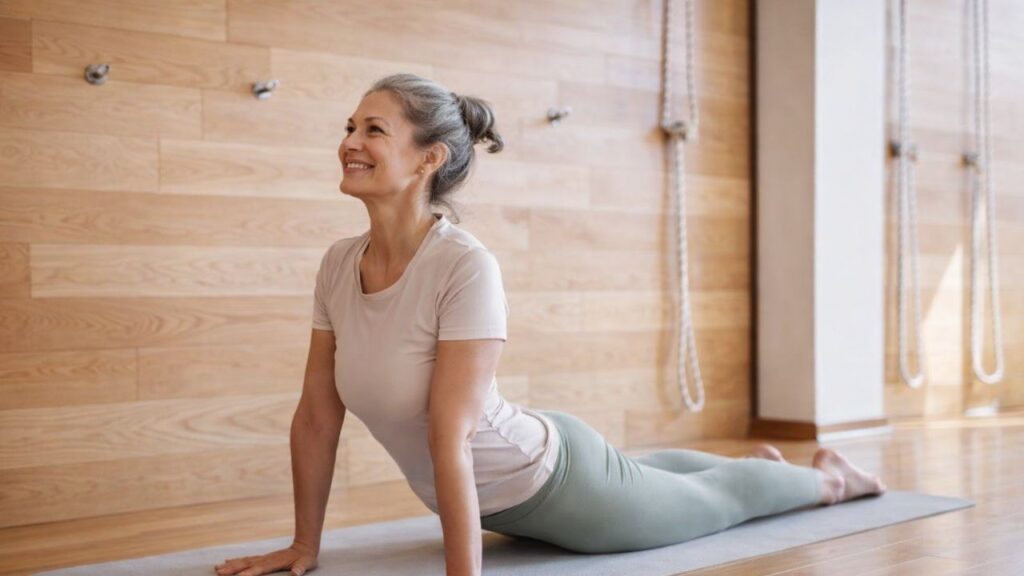
1. Swan Extension
This exercise is excellent for reversing a rounded, slouched posture. It opens the chest, activates the mid-back, and gently encourages healthy spinal extension.
- Lie face down with one hand stacked over the other, forehead resting on your hands.
- Press lightly into your elbows to draw the shoulders down away from the ears.
- Lengthen through the crown of your head and lift your chest slightly.
- Optionally, lift the forearms and draw the elbows toward the waist as you extend forward through the chest.
2. Mermaid Stretch
The mermaid stretch targets the ribs, lats, and side body, areas that often feel compressed after sitting all day. It also promotes deep breathing, helping the body and mind reset.
- Sit or kneel with one hand on the floor and the opposite arm reaching overhead.
- Inhale to lengthen upward, then exhale as you gently arc to the side.
- Lift through the underside of the waist to avoid collapsing into the supporting arm.
- Breathe into the open ribs and repeat on the other side.
3. Single-Leg Kick
Prolonged sitting can leave hip flexors tight and glutes underactive. Single-leg kicks stretch the front of the hips while strengthening the back of the body, helping rebalance desk posture.
 Goodbye Hair Dye for Grey Hair: The Conditioner Add-In That Gradually Restores Natural Colour
- Lie on your stomach, propped on your forearms with the chest lifted.
- Draw the shoulders down and engage the core.
- Bend one knee, kicking the heel toward the glutes in a controlled motion.
- Alternate legs while keeping the spine long and pelvis steady.
4. Low Lunge With Reach
Low lunges deeply lengthen the hip flexors, a critical area for undoing sitting-related tightness. Adding an overhead reach encourages spinal mobility and chest opening.
- Step one foot forward into a lunge, keeping the hips squared.
- Lower the back knee to the floor.
- Begin with hands on the floor, then lift the chest.
- If comfortable, raise the arms to deepen the stretch.
- Hold for several breaths and switch sides.
5. Glute Bridge
Strong, responsive glutes are essential for counteracting the posterior inactivity caused by sitting. The glute bridge activates the glutes, hamstrings, and lower back to support better posture.
- Lie on your back with knees bent and feet hip-width apart.
- Press through the heels to lift the hips, keeping ribs and pelvis connected.
- Squeeze the glutes at the top.
- Lower slowly, rolling the spine down one vertebra at a time.
- Optional: gently press the knees outward while keeping the hips level.
6. Calf Raise and Ankle Mobility
Sitting can also lead to stiff ankles and reduced circulation in the lower legs. Improving ankle mobility supports better balance, walking mechanics, and overall posture.
- Sitting or standing, extend one leg and fully point and flex the foot.
- Make slow, controlled circles through the full range of motion.
- Stand and lift the heels so weight shifts to the balls of the feet.
- Lower the heels with control and repeat.
Key Takeaways
You don’t need to completely overhaul your routine to counter hours of hunching. Adding a few intentional anti-desk movements throughout the day can make a noticeable difference. Riley recommends aiming for two to three short movement breaks daily to reset stiff joints and reawaken dormant muscles. Think of these exercises as small daily investments in a body that feels looser, lighter, and far less attached to the chair.