Psychologists say this habit reveals far more than quirky affection.
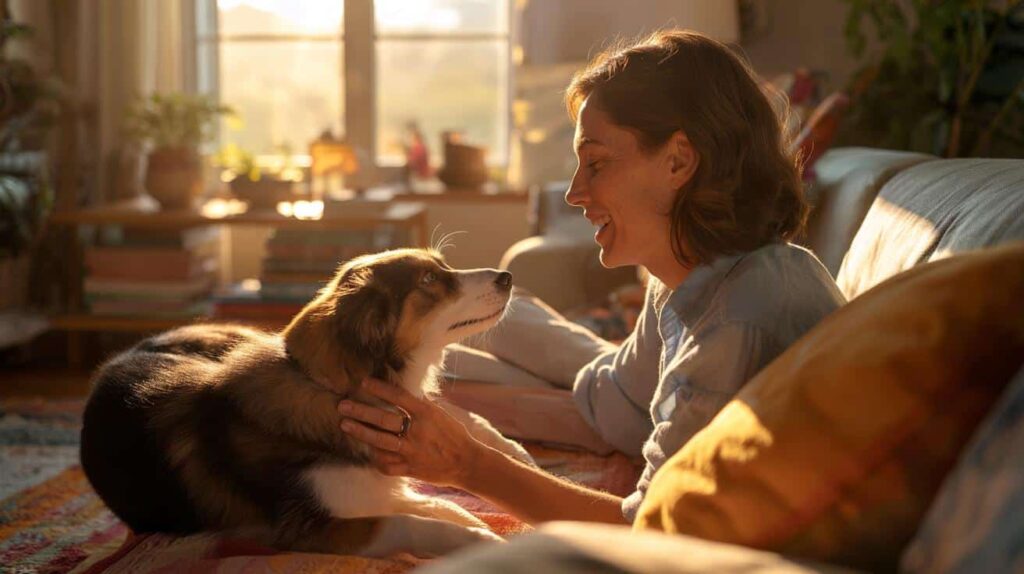
Talking to animals as if they were fully fledged conversational partners can look eccentric from the outside, yet research suggests it points to specific strengths of character and mind. From emotional intelligence to creativity, this seemingly odd routine may reflect a surprisingly robust psychological profile.
Why talking to pets like people fascinates psychologists
Pet owners have long claimed that their animals “understand everything”. Science stops short of that, but it suggests that the humans doing the talking share common traits. Social psychologists and animal behaviour experts note that people who humanise their pets, including through speech, often relate to the world in a particular way: emotionally tuned in, protective, and comfortable with intimacy.

Speaking to a pet as though it were human is less about delusion and more about connection, regulation of emotion and social creativity.

Here are eight characteristics that repeatedly appear in people who chat with their dog, cat or parrot as though they were old friends.
1. A strong natural talent for bonding
People who hold full conversations with their pets usually form deep attachments in general. They tend to notice subtle signals in others: a shift in posture, a brief glance, a flick of an ear or tail. That sensitivity builds stronger relationships, whether with humans or animals.
Researchers call this “social attunement” — the ability to read non-verbal cues and respond in kind. A person who can sense that their dog is uneasy before a storm, or that their cat is unusually clingy, often brings the same awareness to friends, partners and colleagues.
This talent does not require constant socialising. Instead, it shows up in the quality of connections: fewer superficial ties, more meaningful bonds.
2. High emotional intelligence
Talking to an animal about your day looks one-sided, yet it is often a sign of emotional sophistication. Emotional intelligence includes noticing feelings, naming them and responding constructively. Speaking them out loud, even to a silent listener, supports that process.
When someone tells their dog, “I’m anxious about tomorrow,” they are not just venting; they are identifying and regulating an emotion in real time.
Many pet owners use these moments to calm down after conflict, rehearse difficult conversations, or process sadness. That habit strengthens self-awareness and often prevents emotional spillover in human relationships.
3. An inventive, flexible brain
Psychologists know that “self-talk” — speaking your thoughts out loud — can sharpen problem-solving and memory. Talking to a pet can work in a similar way. The animal becomes a kind of gentle sounding board or “thinking partner”.
People who chat to their pets often report that ideas feel clearer once spoken. They walk the dog with a problem in mind, narrate possible solutions, and return home with a decision. The pet has not given advice, of course, but the process nudges the brain into a more flexible and creative mode.
- Putting worries into words makes them less blurry.
- Hearing yourself think can reveal flaws or gaps in your plan.
- A relaxed setting — a walk, a cuddle on the sofa — encourages fresh ideas.
4. Deep-running empathy
People who talk to animals as equals rarely see them as “just pets”. They notice discomfort, boredom and excitement, and adjust their own behaviour. That is the essence of empathy: recognising another’s emotional state and responding in a way that offers comfort rather than control.
This trait does not stop with animals. Studies on pet ownership often find stronger prosocial attitudes among those who treat their pets as family. They are more likely to volunteer, to step in when someone is being mistreated, and to think about the impact of their actions on vulnerable beings, human or otherwise.
The ability to feel for a frightened rescue dog often reflects the capacity to feel for an anxious colleague or a lonely neighbour.
5. A quiet knack for mindfulness
Mindfulness is simply paying attention to the present moment. Time with animals naturally encourages that. There are no office emails in a dog’s gaze, no deadlines in a cat’s contented purr.
When someone describes their day to a pet while stroking its fur, they often drop, for a few minutes, into a slower rhythm. Breathing deepens, shoulders loosen, and attention narrows to the here and now. Regularly using these micro-moments of presence can lower stress, improve sleep and soften rumination.
6. A strong streak of authenticity
Talking to a pet wipes away the usual social performance. With animals, there is no need to seem clever, successful or composed. People who chatter freely to their pets tend to be more comfortable showing their unpolished sides in general.

They may cry in front of their dog, laugh at themselves with their cat, or rehearse a clumsy apology out loud. This habit trains a kind of everyday honesty.
A person who can admit, “I messed up today,” to their dog often finds it easier to admit the same to a partner or friend.
That does not mean such people overshare with everyone. Rather, they are less driven by image and more by inner alignment between what they feel and what they show.
7. A protective, caregiving personality
Many people who talk to animals like humans also treat them like dependants, not decorations. They worry about the pet’s comfort, safety and emotional life. Did the dog get enough stimulation? Is the flat too noisy for the cat? Does the elderly rabbit need a quieter space?
This protective streak often extends outward. Teachers, nurses, social workers and carers are heavily represented among those who form intense bonds with animals. The urge to shield and nurture seems to be part of their basic wiring.
| Trait | How it shows up with pets | How it shows up with people |
|---|---|---|
| Protection | Checking food, weather, noise, stress | Looking out for friends, family, colleagues |
| Encouragement | Cheering on during training or recovery | Motivating others through setbacks |
| Responsibility | Routine vet checks, walks, play | Reliability at work and in close relationships |
8. Comfort with solitude
People who talk a lot to their pets are often content with their own company. They may spend long stretches at home or outdoors without feeling socially starved, because the pet’s presence fills part of that need for connection.
This does not mean they dislike people. Many enjoy friendships and love. Yet they can recharge alone, with a dog on their lap or a cat on the windowsill nearby. Psychologists describe this as “secure solitude”: being alone without feeling abandoned.
For some, the difference between loneliness and peaceful quiet is a heartbeat at their feet or a soft purr by their side.
What this habit does for mental health
Talking to pets can act as a low-cost, low-pressure emotional support tool. For people who struggle to open up to friends, an animal offers a safe starting point. Speaking thoughts aloud, even to a creature that cannot answer, can reduce the intensity of anxiety or anger.
There are limits. Pets do not replace therapy, nor can they meet every social need. Yet they can bridge difficult moments, especially for those coping with grief, heartbreak or relocation. This partly explains why animal-assisted interventions are used in some hospitals, care homes and prisons.
How to use pet conversations constructively
For anyone who already talks to their pet, psychologists suggest a few tweaks to make it even more helpful:
- Name your feelings: saying “I feel overwhelmed” rather than “everything is awful” brings clarity.
- Ask yourself simple questions out loud: “What can I control today?” keeps focus practical.
- Pair talking with touch: gentle stroking or grooming supports calm for both you and the animal.
- Set a small action: end the “chat” by deciding on one concrete step, such as sending an email or taking a break.
Two terms that often come up in this context
Anthropomorphism. This is the tendency to attribute human thoughts, emotions or intentions to non-human beings. Far from being only childish fantasy, mild anthropomorphism can help people care more about animals and the environment, as long as they remain aware of species-specific needs.
Attachment. Psychologists use this word for the emotional bond formed between a person and a significant other. Many pet owners experience a secure attachment to their animals: a sense of safety and comfort in their presence, and genuine distress at their absence.
Everyday scenarios that reveal these traits
Picture a person coming home from a difficult shift. They drop their bag, sit on the floor and tell the dog, “Today was rough, mate.” They recount what happened, pause to scratch behind its ears, then decide to message a colleague about a concern. In that short ritual, they have processed emotion, regulated stress and chosen a constructive step.
Or imagine an older adult living alone with a cat. They chat while making tea, comment on the weather and confide worries about their health. The cat does not respond, yet the owner’s blood pressure drops, and their sense of isolation softens. The conversation is less about logic and more about staying psychologically connected.
In both cases, the habit of talking to an animal reveals and reinforces psychological traits that often go unnoticed: emotional clarity, creativity under pressure, and a capacity for gentle but determined care — for others and, quietly, for themselves.