A quick flash of russet chest, a sharp tilt of the head, and the robin is already hopping toward the same corner of the garden. It seems like it knows something you don’t. Despite the nearly empty feeders and the ice-covered birdbath, this little bird keeps returning to a small tree near the fence. It’s a mystery. What draws it in?
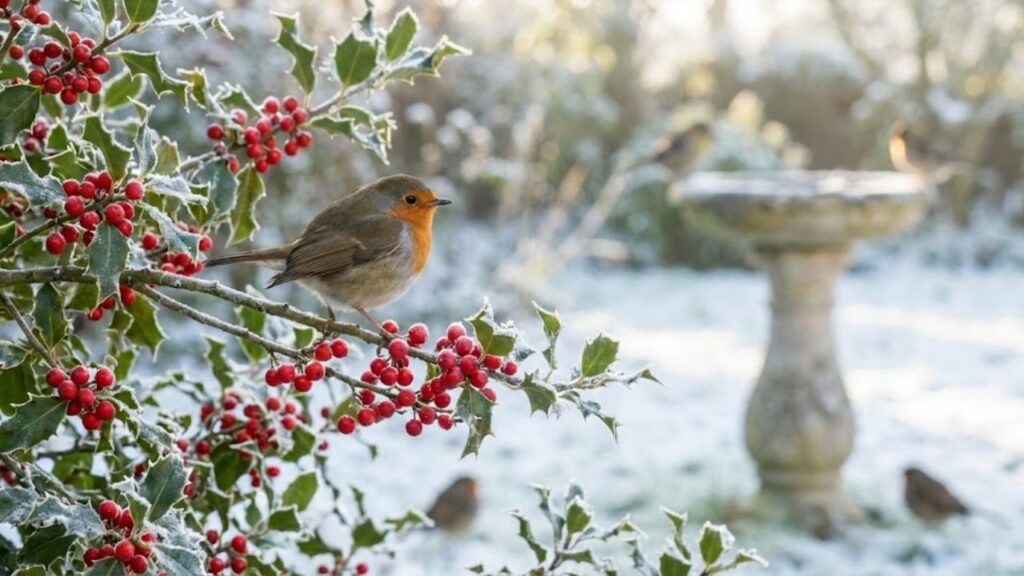
A neighbor leans over with a chuckle, “It’s your berries. They’re hooked on those.” Standing there with mugs steaming in our hands, we watch the robin pick, gulp, and sing between mouthfuls. The little tree, scruffy as it may seem, is the center of its winter world. It doesn’t stop coming back, again and again.
The Winter Attraction: Holly Berries
Ask a group of British birdwatchers which winter fruit keeps robins loyal, and you’ll hear the same answer: **holly berries**. Those glossy red orbs aren’t just festive decorations—they’re a vital winter food source for robins. As the days grow shorter and other food sources become scarce, these berries stand out against the dull winter landscape, offering a beacon of nourishment.

While other plants fade, holly holds onto its fruit. A mature holly bush can produce hundreds of berries, which become a lifeline for robins in winter. It’s not just decoration—it’s a **winter pantry** paid for in advance.

Spend a morning near a holly bush, and you’ll start to notice the robin’s careful behavior. First, it perches on a nearby branch, surveying the area. Then, it swoops in quickly, plucking a berry, gulping it down, and returning to its lookout. It’s methodical and calm, never frantic, always coming back to the same spot.
It’s a pattern that gardeners from Kent to Cumbria recognize. One survey revealed that gardens with holly bushes attracted more than **double** the number of winter robin visits compared to those relying solely on seed feeders. The key? It’s the natural, reliable food source.
Why Robins Keep Coming Back to Holly
Robins are territorial creatures. They like to patrol and defend a patch they know well. A holly tree that reliably produces berries each winter becomes part of the robin’s mental map, a predictable and dependable food source. But it’s not just the berries’ **sugars and energy** that attract the birds—it’s the timing. The holly berries appear exactly when robins need them the most, during those cold, short, and grey days.
The robin doesn’t just return for the berries. It returns because the holly tree is part of its environment, a place that offers food, shelter, and a vantage point to survey the surroundings. This is the key to its loyalty.
Creating Your Own Robin-Friendly Garden
If you’d like to attract a robin to your garden this winter, the first step is to plant a **female holly** that reliably bears berries. Many garden centers sell holly bushes, but be sure to check that the plant is female and paired with a male nearby to ensure pollination. A single holly won’t produce berries without this essential pairing.

Choose a location where the holly can serve as both a **food source and lookout point** for the robin. Plant it near a hedge, in a corner of the lawn, or by a low wall. Leave enough space around the bush so the lower branches remain dense and sheltered. Over time, the holly’s structure will create a natural stage for the robin: the top branches for singing, the mid-branches for watching, and the lower ones for quick berry retrieval.
Gardening guides often stress the importance of regular watering, perfect mulch, and pruning at the ideal moment. However, holly is fairly **forgiving**. It prefers well-drained soil and does better with occasional neglect rather than constant attention. The key to its success is avoiding the mistake of pruning heavily in late summer or autumn, when berries are forming. One unthoughtful “tidy-up” can cost you half of the winter food the robin relies on.
If possible, save your big pruning tasks for late winter or early spring, and leave some of the older, berry-laden branches untouched. This small choice can transform a neat shrub into a true winter refuge for robins.
Making the Most of Your Holly Tree for Robins
- Choose a reliable female holly: Ensure the holly produces berries by pairing it with a male for pollination.
- Position for visibility and cover: Place the holly where robins can see the area clearly and find shelter in the lower branches.
- Prune thoughtfully: Avoid cutting the berry-bearing branches in late summer and autumn to keep the food available when robins need it most.
- Enhance the environment: Add water sources, shelter, and leaf piles to create a haven for robins.
Why the Robin is More than Just a Visitor
On a bleak February day, when the garden seems drained of color, a robin landing on your holly tree feels like a spark of life. Its chest puffed out, eyes bright, it claims its place in the tree with a berry-laden throne. The sight cuts through the dullness, offering a small but real moment of warmth.
A robin’s regular visits bring a quiet sense of connection. On frosty mornings, you find yourself checking for the robin’s arrival. Some days it’s there, perched on its familiar branch, framed by those bright red berries. It becomes part of the rhythm of your day, a living presence in the garden.
Planting holly isn’t about receiving instant recognition or rewards. It’s about creating a space that thrives even in winter, where the robin keeps coming back and life continues, quietly, outside the windows. Over time, the holly tree becomes a vital part of the landscape, turning those red berries into something more than just decoration.

Key Takeaways
- Holly berries attract robins: Female holly trees offer food during winter, drawing robins to your garden.
- Placement matters: Plant holly where robins can enjoy both food and shelter, increasing the chances of regular visits.
- Prune thoughtfully: Avoid cutting berry-laden branches during critical times to ensure food availability for robins.