
Shortly before midnight, the town feels strangely loud. Not because of traffic or sirens, but because of the silence that falls when everyone is waiting for something to hit. Streetlights hang in the foggy air, catching the first thin flakes like static on an old TV screen. Somewhere two streets over, a snow shovel scrapes against concrete, a sound that feels both premature and prophetic.
On phones across the region, the same red banner flashes: “Severe Weather Warning – Heavy Snow. Avoid travel from late tonight.” People read it, lock their screens, and then unlock them again, just to be sure they didn’t imagine it.
The snow hasn’t even started in earnest, and already the region is bracing for chaos.
Heavy snow warnings: when an alert turns into a real threat
The official confirmation came early this evening: heavy snow will begin late tonight and continue well into tomorrow. Not a passing shower, but a sustained wall of white stretching across the entire region. Meteorologists talk about “bands of intense snowfall,” while emergency coordinators speak in plainer terms: major disruptions, dangerous conditions, and **widespread travel chaos**.

On social media, radar images circulate like crime scene photos. You can almost see the storm creeping closer, pixel by pixel. The message behind all the jargon is blunt enough. Staying on the roads tonight could be a bad decision.
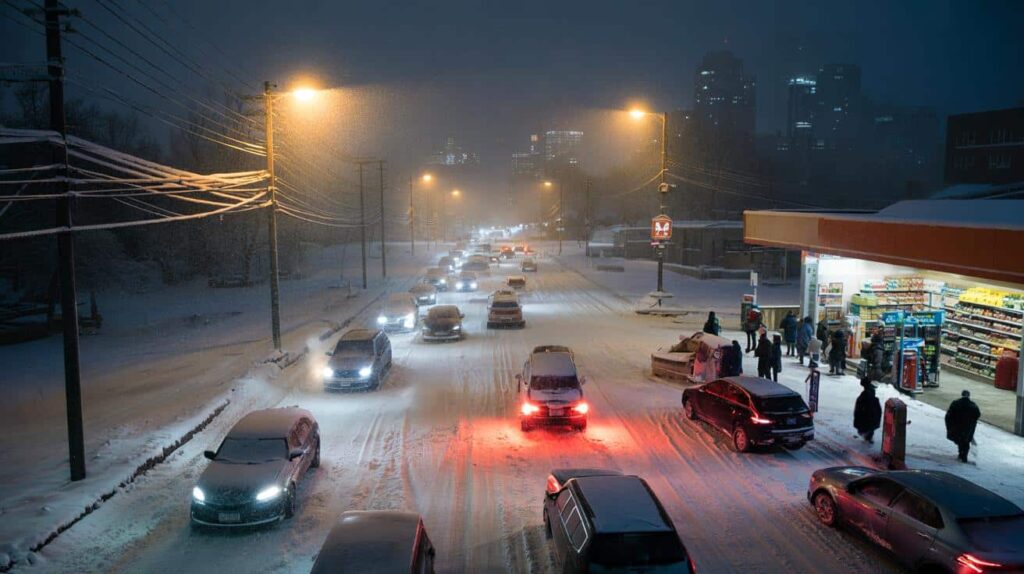
Around 7 p.m., at a gas station just outside the city, the warning became visible in a different way. Lines formed at the pumps, drivers filling up “just in case” they got stranded or needed to run generators. Inside, shelves of bread, milk, and instant noodles thinned out fast.
Behind the counter, the cashier kept glancing at the screen above the lottery tickets, where a muted news channel displayed a bright red “Severe Snow Alert” banner. She shrugged as a customer joked about “Snowmageddon,” but her eyes didn’t quite follow the smile.
Everyone pretends not to panic, until you look at the shopping baskets.
Meteorologists say the setup behind this storm is the classic winter troublemaker. A deep low-pressure system is dragging moist air over a blast of Arctic cold, the perfect recipe for thick, wet snow that piles up fast. Forecast models now agree on one uncomfortable point: there’s no obvious safe pocket in the region.
Forecasters warn of snowfall rates that could hit several centimeters an hour during the peak. That’s the kind of pace that buries roads faster than plows can clear them. *Once that happens, every journey becomes a gamble.*
Public agencies are already speaking in urgent tones about power lines, emergency access, and the simple fact that ambulances need roads that actually exist.
How to face a night of travel chaos without losing your cool
The first real decision for many people tonight is brutally simple: go out, or stay put. Officials are clear: if your trip isn’t essential, postpone it. Cancel dinner plans. Rebook that late train. Tell your boss you’ll log in from home if you can.
If you absolutely have to travel, leave earlier than planned and expect your journey to take double the usual time. Charge your phone fully. Pack a small “winter kit” in your car: blanket, flashlight, water, snack, charger, ice scraper. It sounds dramatic until you’re stuck in a stationary line of vehicles with snow climbing up your wheel arches.
On nights like this, preparation isn’t overthinking. It’s survival with a bit of foresight.
We’ve all been there, that moment when you tell yourself, “It’s just snow, I’ll be fine.” That’s the trap officials are begging people to avoid tonight. The most common mistake is underestimating how fast conditions can deteriorate. Roads that look wet at 10 p.m. can be lethal by midnight, once temperature dips and plows fall behind.
Another pattern repeats every big storm: drivers heading out with almost no fuel, bald tires, and zero winter gear. Let’s be honest: nobody really does this every single day. People leave work tired, climb into the car, and trust that luck will stretch a little farther. This is exactly the kind of night when luck runs out early.
Emergency planners use almost the same language year after year, because the risks don’t really change. This time, they’re not mincing words.
“As of late tonight, we expect whiteout conditions in open areas, rapidly worsening visibility, and treacherous ice under accumulating snow,” one regional emergency manager said. “If you’re on the road, you may not get the chance to turn back.”
They’re urging residents to think about three basic priorities:
- Stay off the roads unless the trip is truly essential.
- Prepare your home for potential power cuts and blocked access.
- Check in on vulnerable neighbors who might need help before the storm peaks.
These aren’t dramatic TV-safety tips. They’re the quiet steps that separate a difficult night from a dangerous one.
A long night ahead, and a region holding its breath
As the first heavy bands of snow move in, the region is entering that strange suspended time when everything slows but tension rises. School districts are already drafting closure notices, transit agencies are warning of suspended lines, and airport departure boards are filling with the same brutal word: “Canceled.”
Inside homes, people are doing small, practical rituals that feel oddly intimate. Charging laptops, loading the dishwasher now “just in case” the power goes, moving the car off the street, laying out boots by the door. Parents check on their sleeping kids, listening for the distant scrape of the first plows.
What happens by dawn will write its own story. Roads may be impassable, commutes abandoned, whole neighborhoods wrapped in an eerie quiet. Or the storm could underperform slightly, leaving everyone relieved but exhausted from the mental build-up.
Some will spend the night refreshing radar apps, watching the storm swirl on a screen. Others will fall asleep to the soft hiss of snow against the window, trusting that the world will still function somehow in the morning.
The officials have done their part: the alerts are out, the warnings are clear, the language is blunt. What happens next comes down to how seriously each person takes that small, inconvenient choice: head out into the storm, or sit tight and wait it out.

| Key point | Detail | Value for the reader |
|---|---|---|
| Severe snow timing | Heavy snowfall expected to begin late tonight and persist into tomorrow | Helps plan travel, work, and family schedules around the most dangerous hours |
| Travel disruption risk | Officials warn of whiteouts, blocked roads, and stretched emergency services | Encourages safer choices about driving, commuting, and overnight trips |
| Practical preparation | Home readiness, vehicle kits, and checking on vulnerable neighbors | Reduces stress, increases safety, and strengthens community resilience |
FAQ:
- Question 1How bad is this storm really expected to be?Officials describe it as a major winter event, with heavy, prolonged snowfall and high potential for widespread disruption across the entire region.
- Question 2Should I cancel my travel plans tonight and tomorrow morning?If your trip isn’t essential, yes, postponing is strongly advised, especially during the late-night and early-morning peak of the storm.
- Question 3What should I have in my car if I must drive?Carry a blanket, warm clothing, water, snacks, phone charger, flashlight, ice scraper, and enough fuel to idle for an extended period if traffic grinds to a halt.
- Question 4How can I prepare my home for possible power cuts?Charge devices, have batteries and lanterns ready, keep some non-perishable food and bottled water, and know where your blankets and layers are if heating fails.
- Question 5Who is most at risk during this kind of heavy snow event?Elderly people, those with mobility issues, people who rely on regular medical visits, and anyone who needs to commute long distances, especially overnight, face the highest risk.
