
The dog has just barrelled in from the garden, kids are racing to the fridge, and your hardwood floor looks like it’s been through a storm. Sunlight hits the boards and suddenly every dull patch, every smudge, every tired plank seems to scream for help. You swipe a sock over a cloudy spot, hoping it’s just dust, and the wood stays stubbornly flat and lifeless. No glow. No warm reflection. Just… meh.
You’ve tried the “miracle” mixes, the cloudy polishes, maybe even that bottle of vinegar your aunt swears by. The result? A floor that seems to get more tired with every cleaning.
There’s a calmer, quieter trick hiding right in your pantry.

The quiet enemy of hardwood shine
Most dull hardwood floors aren’t actually ruined. They’re just buried under a layer of residue from well‑meaning cleaning routines. Each pass with the wrong product leaves a microscopically thin film that clings to the finish. Under normal light, you barely notice it. Then one afternoon the sun hits at just the right angle and you wonder when your home started to look like an old waiting room.

We reach for vinegar, scented soaps, shiny “2‑in‑1” sprays, thinking more power equals more shine. On a screen, the ads look convincing. On real floors, the wood slowly loses its crisp reflection and turns hazy. The problem isn’t dirt. It’s build‑up.
Ask around and you’ll hear the same story. A woman in her 30s in Milwaukee thought her decade‑old oak floors were “finished” and budgeted thousands for sanding. Her living room had that cloudy gray veil that no mop could erase. At a neighbor’s suggestion, she tried a simple pantry‑based cleaner and a microfiber pad, no vinegar, no wax.
Two hours later, the photos tell a different story. The baseboards reflect in the boards again, the caramel tones of the oak look deeper, and the floor suddenly matches the rest of her carefully decorated home. Not “new” in the showroom sense. But alive, warm, honest. Her quote in a local Facebook group: “I was a bit mad nobody told me sooner.”
What changed wasn’t magic. It was chemistry. Modern hardwood finishes are usually polyurethane or factory UV coatings. They’re designed to resist water, not to be stripped by acids like vinegar or smothered by wax. When you put acidic liquids, oily soaps, or silicone polishes on top, they react with the surface and cling instead of lifting soil away.
A mild, neutral cleaner plus a soft, slightly damp tool behaves differently. It loosens the grime and leaves the finish alone. Think of it as rinsing glasses until they’re crystal clear, instead of coating them with syrup and perfume. That’s the whole game: clean the finish, don’t attack it.
 Psychology reveals why your mood shifts after certain interactions without obvious reasons
No vinegar, no wax: the simple pantry trick
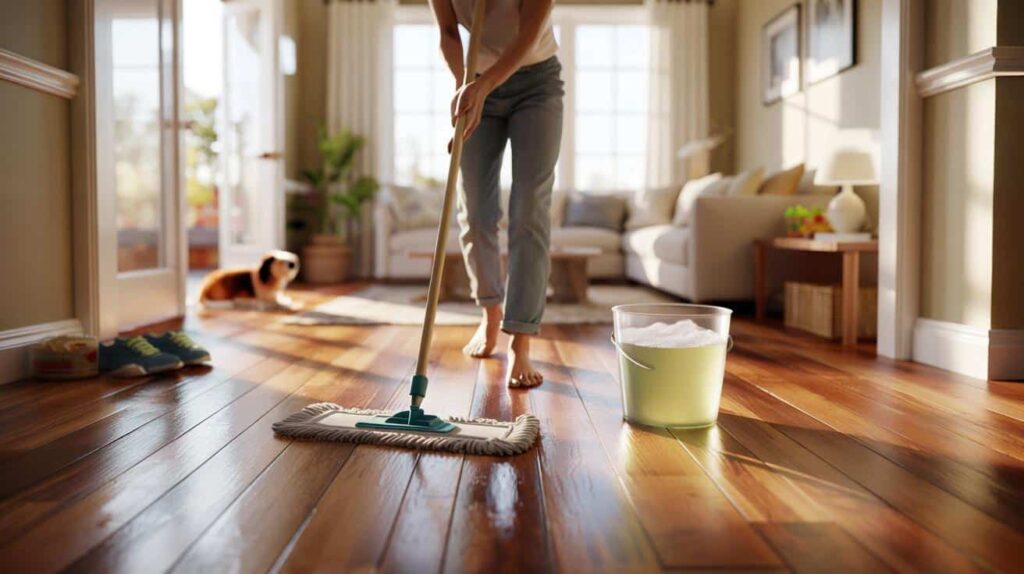
Here’s the home trick that quietly rescues tired floors. Fill a bucket with warm water and add just a squirt of gentle, pH‑neutral dish soap. Not degreaser, not “power scrub,” just the bland, everyday stuff you’d happily use on wine glasses. You’re aiming for barely sudsy, not a bubble bath.
Grab a clean microfiber mop pad, dip it, wring it out hard until it’s only slightly damp, then glide it with the grain of the wood. Work in small sections and rinse the pad often. What you’re doing is lifting off layers of old product and street film, letting the polyurethane underneath finally breathe. Dry footprints and light swirls disappear as the floor dries.
This is also the moment when reality hits. You see that some scratches and dents aren’t going anywhere, and that’s okay. Those are part of the floor’s story. What you’re chasing is that soft, even reflection that makes a room feel cared for. People often panic and pour half a bottle of soap, chasing more “clean.” That only creates new residue.
Let’s be honest: nobody really does this every single day. Once every week or two is plenty for most homes. Between cleanings, a dry microfiber broom keeps grit from acting like sandpaper under shoes. That one habit alone stretches the life of your finish and keeps that fresh, low‑sheen glow going.
“I stopped using vinegar when a floor installer told me, ‘Would you wash your car with lemon juice every week?’ That sentence stuck,” laughs Daniel, a handyman who’s been called more than once to ‘fix’ floors ruined by heavy wax and home mixed potions. “Nine times out of ten, the floor is fine. It’s just buried under stuff people added trying to help.”
- Use barely a squirt of mild dish soap in warm water for a neutral, gentle clean.
- Work with a well‑wrung microfiber mop, not a sopping string mop that floods the boards.
- Avoid vinegar, steam mops, and acrylic “gloss” polishes that leave cloudy films.
- Test in a small corner first, especially with older or waxed floors.
- Finish by letting the floor air‑dry; no fans blasting hot air right on the wood.
When shine becomes a kind of quiet pride
There’s a subtle shift that happens once your floor finally reflects the room again. The same sofa looks a little more intentional, the same rug suddenly pops, the same afternoon light feels softer because it travels across a clean, even surface. You haven’t renovated anything. You’ve just taken away what was dulling the picture.
We’ve all been there, that moment when you look around and think, “When did everything start feeling a bit… tired?” Floors are like that friend in the group photo who stands in the back. You don’t notice them until they step into the light. *Then you realize how much they were holding the whole scene together.*

| Key point | Detail | Value for the reader |
|---|---|---|
| Skip vinegar and wax | Acids and coatings react with modern finishes and cause haze | Prevents long‑term dullness and costly refinishing |
| Use mild soap and microfiber | Tiny amount of neutral dish soap in warm water, well‑wrung pad | Restores natural shine with products you already own |
| Clean gently, not often | Weekly or biweekly damp mopping, daily dry dusting if needed | Less effort, longer‑lasting finish, more consistent glow |
FAQ:
- Question 1Can I ever use vinegar on hardwood floors?It’s best to avoid it on finished hardwood. The acid slowly etches the protective layer, especially with frequent use, and can lead to a dull, matte look that won’t wipe away.
- Question 2What if my floor already has a wax or polish build‑up?You may need a commercial hardwood floor stripper designed for that type of product, or a professional evaluation. Mild soap will clean the surface, but it won’t dissolve layers of acrylic or paste wax.
- Question 3Is this method safe for all wood floors?It’s generally safe for sealed, polyurethane‑finished floors. For old, waxed, or oiled floors, test a small, hidden area first or ask the installer which cleaners they recommend.
- Question 4How wet can the mop be without risking damage?The mop should be damp, not dripping. If you squeeze it and water runs freely, it’s too wet. After a pass, the floor should dry within a few minutes, not stay visibly wet.
- Question 5Do I ever need a professional refinishing?If you see bare wood, deep scratches everywhere, or gray patches that don’t change after cleaning, the finish is worn. In that case, a light screen and recoat or full sanding by a pro brings back the protection and the shine.
