
The routine had become automatic. Foil after foil, the sharp scent of ammonia, the timer chiming like an alarm she never set. Her stylist leaned closer and said, almost gently, “You know, we don’t actually need to dye your hair to hide the grey anymore.”
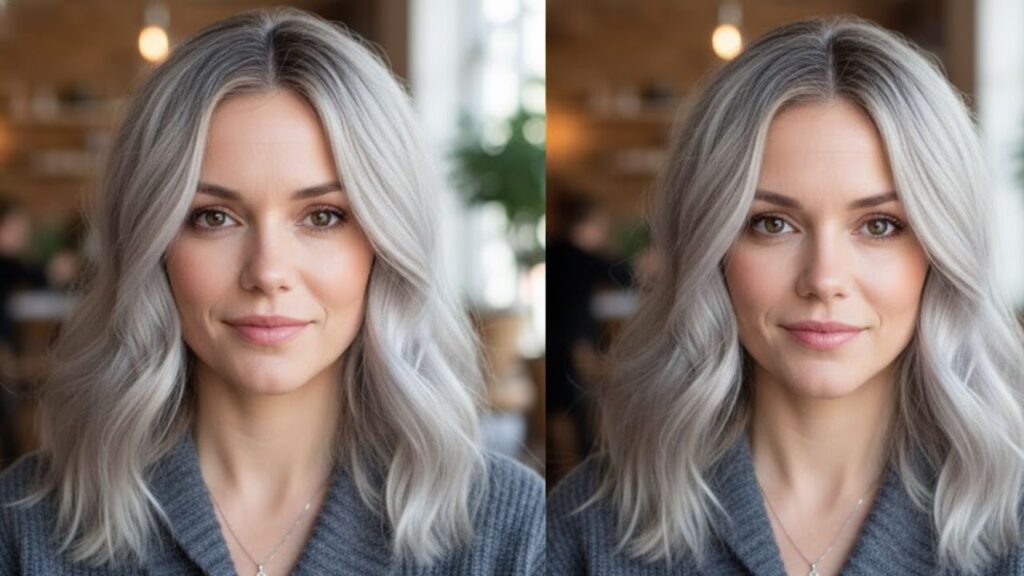
She paused. No colour? No three-hour appointments. No return visits scheduled like checkups. Around her, younger clients scrolled through their phones, saving clips of something different: softly blended hair where grey melted into lighter tones like natural highlights.
Once you start noticing it, you see it everywhere. Outside, on the street, there’s less solid colour and more seamless transitions. Less about covering up, more about reshaping. A quiet change is unfolding, strand by strand.
 People who push in their chair when leaving the table often share these 10 unique personality traits
And it often begins with an unexpected idea: no more hair dye.

The subtle shift from hiding grey to reshaping it
This trend isn’t about rejecting colour entirely. It’s about stepping away from the illusion of flat, opaque dye that tries to erase every silver strand. Instead, stylists are using techniques that let grey exist, then refine it into something intentional.
Think translucent glazes, ultra-fine lowlights, and soft root melts that blend grey into your natural shade rather than fighting it. Grey becomes the lightest note in a multi-dimensional palette, not a flaw to fix.
The effect can be surprising. Faces appear softer. Features look lifted. Jawlines feel less severe. It’s not a trick—it’s contrast. Heavy, dark blocks of colour can frame the face too harshly. Blended tones create movement and light, which the eye reads as fresher and more relaxed.
On social platforms, grey blending is quietly replacing the “cover your roots now” mentality. Searches for transitions and blended silver show people moving away from permanent dye and gaining a look that feels refined rather than dated.
There’s Emily, 47, whose ten-month transition from box-dyed brunette to softly blended silver gained attention online. Early clips show a stark line at the roots. By the end, it’s hard to tell where the grey begins and the old colour fades.
Then there’s Jamal, 52, a creative director whose barber swapped dark dye for a subtle toning gloss at his temples. The sharp edge softened into a natural salt-and-pepper texture. Colleagues commented that he looked rested before noticing anything specific had changed.
A survey by a French professional beauty distributor found that over 60% of clients aged 40 and above now request less obvious colour. Not darker. Not younger. Just less effort-looking. It marks a clear break from the all-or-nothing dye habits of the past.
The logic is simple. Grey hair is hair without pigment. What tends to age the face isn’t the grey itself, but harsh contrast and artificial flatness. Jet black on naturally greying hair can pull features downward. Uniform blonde can wash them out.
Grey-blending techniques work by redistributing light and shadow. Smoked lowlights near the temples restore depth. A soft beige glaze cools yellowing silver so it appears deliberate rather than neglected.
Our brains associate varied tones with health and texture. That’s why the same person can look noticeably younger when their hair has shine and movement, even if the amount of grey hasn’t changed.
How the “no-dye” look really works
The irony is that this approach often begins with a small amount of colour—used differently. Instead of coating the entire head, stylists apply fine, strategic strokes where grey naturally appears, then soften everything with sheer glazes.
For darker hair, this might mean cool-toned lowlights and a smoky root melt to blur the line between old dye and natural grey. For lighter hair, silver is treated as a built-in highlight, with warmth toned down rather than covered.
The key products are translucent, demi-permanent formulas and clear glosses. They fade evenly, avoid harsh regrowth lines, and can be layered over time to gently shift the overall tone. It’s more like filtering grey than deleting it.
At home, the focus shifts from transformation to maintenance. Monthly dye sessions give way to occasional refreshes, paired with simple habits that suit the texture of greying hair.
One widely used trick is a weekly hydrating mask, followed by a cool-toned glaze or purple conditioner on mid-lengths and ends. It takes minutes but helps prevent yellowing and brassiness.

Another adjustment involves volume placement. Lifting slightly at the crown while keeping the ends smooth softens facial lines. More height on top, less weight near the jaw, and the overall look feels lighter.
A thoughtful cut still plays a role. Blunt, short styles can appear severe against high-contrast grey. Many stylists recommend soft layers and subtle face-framing so silver strands reflect light like planned highlights.
What’s rarely shown online is the fatigue behind the change. People grow tired of constant upkeep, tight schedules, and chasing a version of themselves that never stands still. This shift saves time and money, but it also offers permission to age with intention.
The most common misstep is stopping dark dye abruptly and expecting to love the stark regrowth immediately. That contrast can feel jarring. Stylists note that the most satisfied clients choose a gradual transition, reducing coverage with each visit.
Perfection isn’t realistic. Daily blow-dries, weekly masks, precise styling—life doesn’t allow for that. Small, consistent habits are what keep hair looking intentional, even on rushed mornings.
“When people stop trying to match the colour they had at 22, they don’t suddenly look older,” says London colourist Ana Martins. “They look like someone who’s grown into their face.”
Common guidelines shared in salons include:
- Choose shades one or two levels softer than your previous colour
- Request grey blending, lowlights, or a root melt instead of full coverage
- Prioritise hydration, as grey hair is naturally drier
- Use purple or blue shampoo only once weekly to avoid dullness
- Plan a 6–12 month transition rather than a one-visit change
This approach isn’t about giving up. It’s about editing rather than hiding, using natural grey as the base.
A younger look without pretending
What stands out about this movement is how personal it feels. It isn’t a polished campaign telling people to embrace age while smoothing every line. It’s ordinary moments—on buses, at work, outside schools—where hair quietly aligns with real life.
Friends exchange progress photos, asking not “Do I look younger?” but “Do I look more like myself?” Often, the shift in confidence is noticed before the hair itself.
The most shared images online aren’t always flawless. They’re the in-between stages, where grey is half-grown and half-blended, and the expression says acceptance rather than anxiety.
This change also opens options for men, long limited to either dark dye or complete neglect. Subtle toners, gentle blending at the temples, and textured cuts now turn salt-and-pepper into a considered style.
In the end, no more hair dye doesn’t necessarily mean no colour at all. It means moving away from the idea that every grey must disappear. It’s a shift toward nuance, letting hair reflect experience while still framing the face well.
That moment of seeing an older relative in your reflection isn’t about the grey itself. It’s about time moving faster than expected. Grey-friendly styling offers a way to meet that reflection with less resistance.
You might keep some colour. You might lean fully into silver. You might stay somewhere in between. What’s changed is that the in-between is now a destination, not a phase to rush through.
Hair has always carried meaning. This quieter shift—toward blending, glazing, and softer choices—tells a story where youthfulness comes from light, texture, and energy, not a number on a box.
Maybe the question is no longer how to hide grey, but how to shape it with intention.

Key takeaways
- Grey blending over full coverage: Uses lowlights, root melts, and glazes for softer regrowth
- Planned, gradual transition: A 6–12 month approach reduces shock and regret
- Focus on texture and care: Hydration, gentle toning, and modern cuts create an intentional look
