
The first time you notice it, it’s 3 a.m.
Not the buzz of your phone or the cat on your feet, but this heavy, stuffy feeling in the room.
You wake up with a dry mouth, your head a little foggy, your pillow warm in a way that feels… used up.
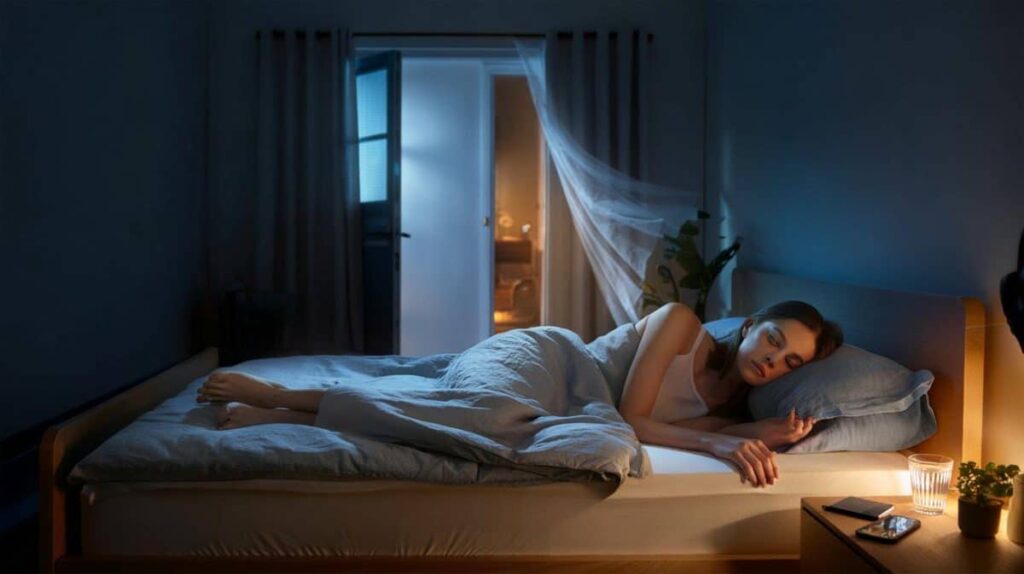
You turn on the bedside lamp and the air looks fine, of course.
But it feels thick, almost like the room has been holding its breath all night with you inside.
You crack the bedroom door open, just a few centimeters, and a faint stream of cooler air slips in from the hallway.
You lie back down, not thinking much of it.
And the next morning, for some reason, you feel like you actually slept.
That tiny gap in the door keeps nagging at your mind.

Why your closed bedroom feels stuffy by 3 a.m.
Most bedrooms are built like little boxes.
Nice for privacy, terrible for air.
Once you close the door, draw the curtains, and settle in, the air you breathe all night basically becomes a closed loop.

Each exhale adds more carbon dioxide to that loop.
The more people in the room, the faster it builds up.
And your body doesn’t sound an alarm like a smoke detector when that happens; it just quietly starts to sleep less deeply.
Researchers have measured this in real homes, not just sterile labs.
In one small Dutch study, bedrooms with closed doors and windows easily reached CO₂ levels above 2,000 ppm during the night.
Open the door or a window even slightly, and those levels dropped under 1,000 ppm.
The difference might not sound dramatic on paper.
But people reported better sleep quality, fewer awakenings, and a sharper feeling in the morning.
Not a miracle cure, just fewer foggy mornings in a row.
The logic is almost boringly simple.
When the door is shut, the air you breathe out has nowhere to go fast enough, so it lingers, especially in smaller rooms with heavy curtains or carpets.
Crack the door open and you give that used air a path out and fresher air a way in.
It’s like opening a small side window in a crowded car.
The ride doesn’t suddenly turn into a spa, but everyone feels less sluggish.
Your bedroom works the same way, except you’re stuck in that “ride” for six to eight hours straight.
The tiny nighttime habit that changes the air you sleep in
Try this simple experiment tonight.
About ten minutes before you go to bed, open your bedroom door fully and leave it like that while you get ready, brush your teeth, scroll through your phone.
Right before you turn off the lights, pull the door almost closed but not quite.
Leave a gap the width of your thumb or a bit more.
You still get the feeling of being in your own cocoon, but the room is no longer completely sealed.
If you live with other people or pets, you might want a doorstop that holds the gap in place so it doesn’t swing open wider.
Some people tape a small piece of felt where the door meets the frame to keep noise down.
Tiny detail, real impact on sleep… especially over dozens of nights.
This is also where real life kicks in.
You may worry about kids wandering in, pets pacing the hallway, or someone turning on the kitchen light at 2 a.m. and sending a spotlight into your room.
Those are valid reasons many people shut their doors completely at night.

One option is to coordinate “quiet hours” with whoever you live with, so late-night Netflix happens in headphones, not with speakers booming.
Another is to sleep with a small eye mask so hallway light doesn’t wake you while you still get the benefit of an open door.
Let’s be honest: nobody really does this every single day, but doing it most nights already helps your sleep environment a lot.
There’s also the safety reflex: we’ve been told for years that a closed bedroom door might slow down a fire.
That advice isn’t wrong; it just doesn’t account for every context.
If you live in an apartment with sprinklers and solid walls, the risk profile isn’t the same as in an old wooden house.
“I wear earplugs, he uses a sleep mask, and the door now stays open by maybe five centimeters. I didn’t expect much, but the headaches I used to get by midweek almost disappeared.”
To keep the habit simple, you can build a small toolkit:
- A soft door wedge or magnetic catch to hold a narrow gap
- A basic sleep mask if hallway light bothers you
- Foam or silicone earplugs for those with noisy roommates
- A cheap CO₂ monitor, if you love data and want to see the numbers drop
*You don’t need gadgets to breathe better, but a couple of low-tech tweaks can nudge your bedroom closer to the calm space your body is quietly begging for.*
Sleeping with the door open… and your mind slightly more open too
Once you start paying attention to how your room feels at night, you can’t quite un-notice it.
The slight heaviness in the air, that dull, cotton-wrapped feeling when you wake up, the urge to open a window even when it’s cold outside.
Opening your bedroom door at night is not some magic sleep hack or a viral trend.
It’s just a small, physical gesture that respects a basic fact: you share that room with your own breathing.
And the more that breath can move freely, the more your body can sink into deeper rest.
Maybe you try it for a week and feel nothing.
Maybe you try it and suddenly your mornings feel a shade clearer, your dreams less choppy, your partner a little less grumpy before coffee.
Sometimes the changes are so small, you only notice them when you stop and go back to the old way.
You can play with it too: door slightly open in winter, wider in summer, combined with a fan or a cracked window when the outside air is clean.
Or you talk about it with friends, and suddenly everyone is swapping “open door vs closed door” sleep stories like it’s the latest podcast episode.
The deeper question under all this is simple.
How many of our tired mornings come from things we never really question, like a firmly shut door at night?
And what would shift if we let just a bit more air — and a bit more curiosity — into the room where we spend a third of our life?

| Key point | Detail | Value for the reader |
|---|---|---|
| Open door lowers CO₂ buildup | A small gap in the bedroom door lets exhaled air escape and fresher air circulate | Helps reduce stuffy-feeling nights and groggy mornings |
| Simple habit, no gadgets needed | Cracking the door, using a doorstop, and dimming hallway light are easy changes | Makes deeper sleep more likely without expensive devices |
| Balance comfort, privacy, and safety | Combine a slightly open door with earplugs, sleep masks, and quiet-hour routines | Keeps you feeling safe and private while improving airflow |
FAQ:
- Question 1Does sleeping with the bedroom door open really improve sleep quality?
- Question 2How wide should I leave the door open to get better airflow?
- Question 3What if I live on a noisy street or with loud roommates?
- Question 4Isn’t it safer to sleep with the door fully closed because of fire risks?
- Question 5Can I combine an open door with a fan or air purifier?
