In every old photo, her hair looks perfectly even, a flat brown shade like a digital filter fixed in place. Today, the mirror shows something different. Along her parting, clean silver roots catch the light. Her colorist meets her eyes and asks gently, “So… are we still covering these?” There’s a pause filled with the hum of dryers and the soft clink of bowls. She exhales and answers carefully. Maybe not full coverage. Maybe something softer. Just enough to look rested. Around them, other women are asking the same quiet question.
From Concealing Gray to Shaping It
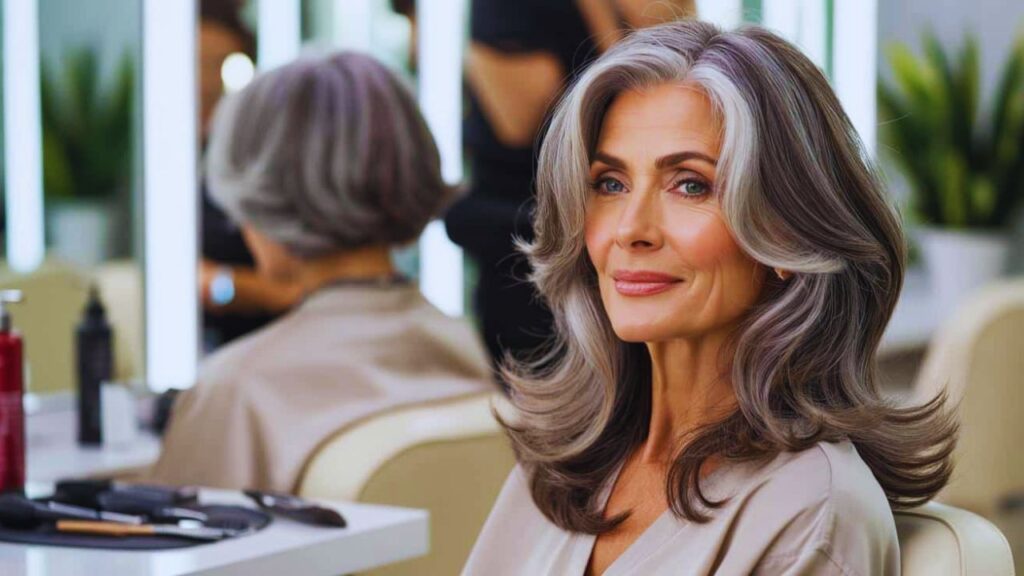
Step into a modern salon and the language has changed. You hear blending, dimension, and soft contrast far more than “erase” or “hide.” The shift isn’t about fighting gray hair anymore. It’s about refining it. Harsh contrasts are softened. Silver is made to look deliberate, not accidental. Instead of solid dye every few weeks, people request lowlights, babylights, and sheer glosses that allow gray to live alongside color. The payoff is hair that reflects light, moves naturally, and avoids that freshly-painted look.
This movement is visible online too. Searches for gray blending have surged, and salons report sharp increases in requests. One US studio noted a 40% rise in a single year. Women share stories of stepping off the constant root-touch-up cycle. A 52-year-old lawyer described regaining her Sundays and her face. Friends didn’t comment on color. They said she looked well-rested. That reaction defines the new idea of looking younger.
 Goodbye Lidl and Action: this even cheaper discount chain is opening a new store in this major city
The reason it works is simple. Opaque dye flattens hair and creates a harsh line when roots appear. Gray hair, by nature, reflects light. When colorists work with it instead of against it, silver becomes a natural highlight. The result is soft framing, gentle contrast, and an ease that reads youthful without trying too hard.
Softer Techniques That Replace All-Or-Nothing Dye
The most requested approach today is gray blending. Instead of full coverage, fine highlights and lowlights are placed to blur the line between gray roots and darker lengths. The gray remains visible but balanced by tones chosen to suit skin and eyes. Another growing option is the translucent gloss. These demi-permanent treatments don’t hide gray completely. They add shine, tone down yellow hues, and give hair a polished finish that looks healthy rather than masked.
Colorists are also breaking long-standing routines. Many clients have followed the same four-week root schedule for years. New methods stretch appointments further apart and reduce maintenance. Transitions are planned gradually, often over six to eighteen months. Contrast is softened first, lighter pieces are added later, and full coverage is slowly reduced. On camera or in photos, it reads like better lighting, not a dramatic change.
London colorist Maya Clarke explains it simply: clients no longer want gray erased. They want it enhanced. The change is emotional as much as technical. It lowers chemical exposure, shortens chair time, and eases the pressure of constant upkeep.
- Use the right language: Ask for gray blending, soft dimension, or translucent coverage instead of full coverage.
- Bring references: Choose photos with a similar base color to set realistic expectations.
- Start at the front: Face-framing areas benefit most from subtle light.
- Plan the transition: Think in months, not a single appointment.
- Support the look: Hydration, heat protection, and a flexible cut matter.
Looking Younger Without Becoming Someone Else
This trend isn’t about declaring gray fashionable. It’s about flexibility. When harsh root lines disappear, many people stop checking mirrors obsessively. On video calls, what shows is the light around the face and the movement of hair, not the exact shade at the scalp. Blended gray creates a soft halo effect, replacing the heavy, helmet-like look of solid dye.
The middle ground offers freedom. One month you lean into your darker shade. Later, a silver streak becomes part of your signature. That space allows choice and time. It also quiets a background anxiety: missed appointments, surprise photos, visible roots. Gray becomes part of the narrative, not a flaw to hide.
For many, the turning point is a simple sentence to a stylist: “I don’t want to hide it all anymore.” From there, conversations shift to real lifestyles and realistic definitions of looking younger. Hair color becomes evolution rather than secrecy.
Key Techniques and Why They Matter
- Gray blending: Light and dark strands woven around gray reduce harsh roots and lower maintenance.
- Translucent gloss: Semi-permanent toning adds shine and softness without full concealment.
- Gradual transition: A multi-month plan avoids awkward phases and eases emotional stress.