On a quiet evening in Brooklyn, I saw something that would soon change how many people reheated their food. Sitting on a countertop, next to a retired microwave turned breadbox, was a sleek new device that promised to be more than just a faster way to cook. A food photographer placed a slice of leftover pizza inside, tapped the touchscreen, and walked away. No whirring plate, no sizzling sounds—just a low whoosh like a gentle laptop fan. Three minutes later, the pizza came out with golden, bubbling cheese and a crisp crust that snapped with the perfect bite. No rubbery textures, no sad leftovers—just fresh pizza.
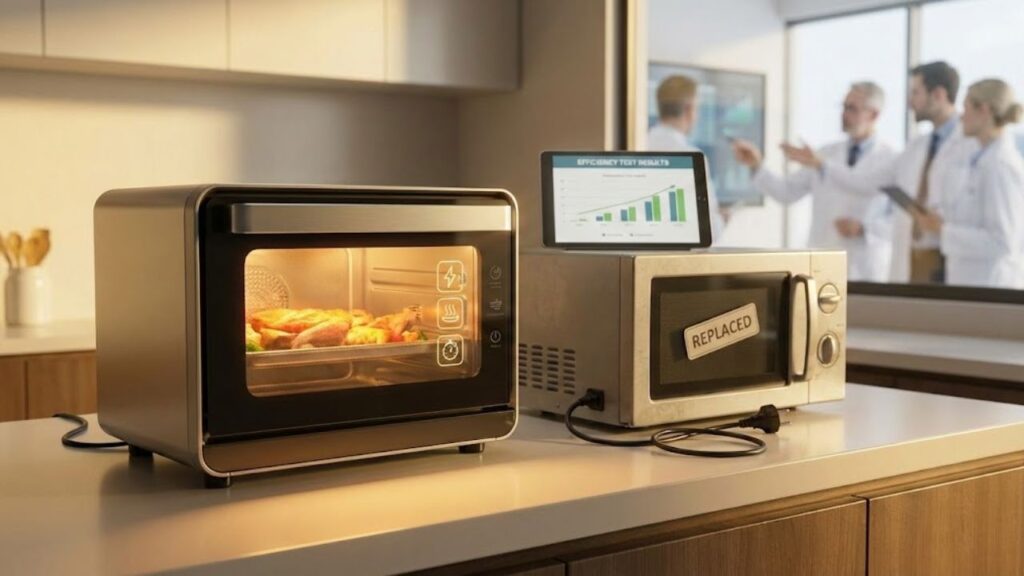
The photographer casually mentioned, “I barely use the microwave now. This does everything better.” It was that moment when I realized this device wasn’t just another appliance—it was an early indicator of a shift in how we think about quick cooking.
The New Kitchen Appliance: A Smart Convection Oven
On paper, the new kitchen appliance is simply a countertop rapid-heating oven that uses high-powered convection and smart sensors. In practice, it feels like the grown-up cousin of the air fryer—combining the speed of fast food kitchens with the intelligence of your smartphone. All you need to do is select your food type, and the device takes care of the rest.
No more guessing whether your soup is overcooked at the edges or still frozen in the middle. No more burning your fingers on a hot plate after just 40 seconds. The heat surrounds your food evenly, eliminating the unevenness that microwaves often create. What looks ordinary on camera feels like a small revolution in the kitchen, especially after a long workday when you’re tired but want a quick, satisfying meal.
How It Stacks Up: Efficiency, Quality, and Convenience
A consumer lab in Germany tested this new rapid-heating oven against traditional microwaves. The results were telling. For reheating leftovers, cooking frozen foods, and even crisping vegetables, the new appliance showed marked improvements. It took the same amount of time as a microwave, but it used up to 25% less energy. Even more impressive, food came out more evenly heated, with fewer cold spots and better browning. Vegetables like steamed broccoli stayed vibrant and green, and lasagna cooked through in one cycle without needing a second round.
What stands out is the consistency. Energy auditors conducted the same test in three homes for a month, and the new device quickly became the preferred option. People naturally started using it more often, even without being prompted. It’s a small but significant shift in kitchen habits, influenced by both energy efficiency and the quality of the food.
Why It Works: A Professional Kitchen in a Box
The key to the new device’s success lies in its technology. Unlike microwaves, which work by exciting water molecules unevenly, this appliance uses ultra-fast convection, radiant heat, and temperature sensors to maintain a stable, controlled heat. The heat surrounds the food, gently cooking it from all sides instead of blasting it from the inside out. This mimics the professional kitchen environment, where restaurants use powerful convection ovens to cook food with predictable results. Now, this experience is available in a compact form that fits comfortably on your kitchen countertop.
The Emotional Impact: Making Leftovers Better
Perhaps the biggest surprise is the emotional shift this appliance triggers. We’ve all had those moments when we reheat leftovers in the microwave and end up with a sad, rubbery mess. You eat it because you’re hungry, but it’s far from satisfying. These new ovens change that experience. Leftover pasta comes out glossy, not clumpy; bread and pastries taste like they’ve just been baked. Vegetables retain their texture, not turning limp and soggy. These small wins—food that tastes fresh even after being reheated—create a subtle yet powerful change in how we approach mealtime. You might find yourself cooking more often, eating leftovers with more joy, and relying less on takeout or delivery apps.
Why This Matters: The Future of Fast Food at Home
This device represents a shift in the way we think about “fast food” at home. It’s no longer about microwave trays, plastic film, and three beeps. Instead, it’s about real food, cooked or reheated quickly, yet still tasting like it belongs on a plate. It’s about turning leftovers into something delicious rather than something you settle for. This change doesn’t mean everyone will start slow-roasting vegetables every night, but it does mean that cooking at home becomes less of a chore and more of an achievable, enjoyable experience.
For many, this small change in how we reheat and prepare food could be the quiet line between “I can’t cook” and “I can manage a decent meal most nights.” It’s not a magic fix, but it’s a step toward making home cooking more accessible, more sustainable, and more enjoyable.
Key Benefits of the New Rapid Countertop Oven
- Crisps pizza with melted cheese—no rubbery crusts.
- Revives roasted meats and vegetables without drying them out.
- Cooks frozen snacks and fries in one go, no need for preheating the oven.
- Warms bread and pastries so they taste freshly baked.
- Handles small-batch cooking without overheating your kitchen.
| Key point | Detail | Value for the reader |
|---|---|---|
| Higher efficiency | Uses up to 25% less electricity than a microwave in lab tests for common reheating tasks | Lowers energy bills while keeping the same level of speed |
| Better food quality | Even heating, crisping, and moisture retention through rapid convection and sensors | Makes leftovers and frozen foods actually pleasant to eat |
| Flexible daily use | Presets for pizza, fries, vegetables, bread, and full meals | Reduces stress at mealtime without needing advanced cooking skills |