The frozen lasagna promised to be ready in six minutes. By minute eight, the cheese was still pale, the center icy cold, and the edges already turning rubbery. You stood there with the microwave door cracked open, hand hovering over the plate like a human thermostat, wondering how a box boasting 1,000 watts of power could fail at something so basic.
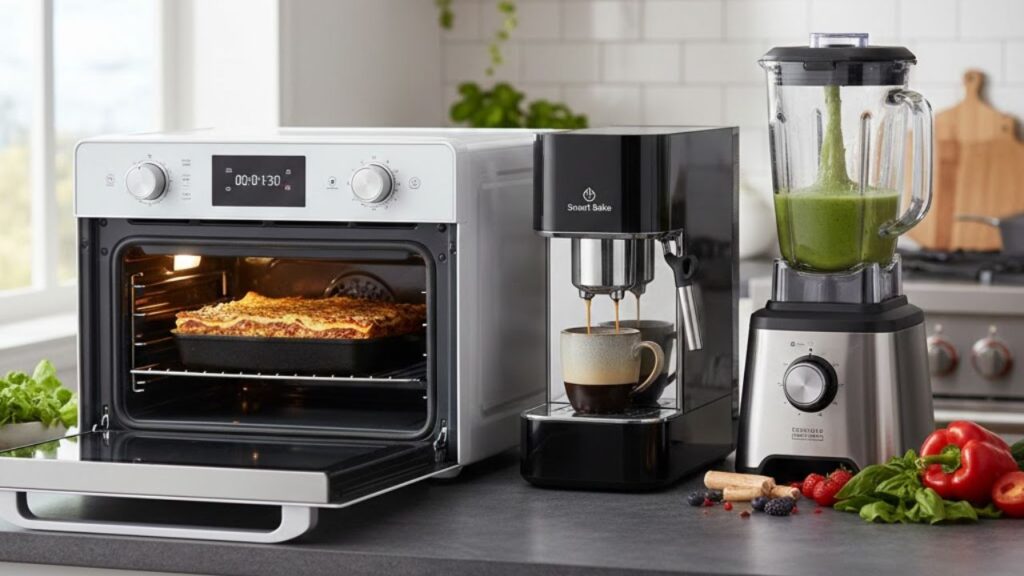
Right beside it, a compact, squat machine hummed softly. No spinning plate. No mysterious hot and cold patches. Just steady, circulating heat and a gentle “ding” that didn’t sound like your meal had surrendered. That small box is why more people are quietly unplugging their microwaves — and leaving them that way.
The quiet kitchen shift happening on your countertop
Step into almost any apartment or family kitchen today and you’ll notice the same setup. The microwave sits bulky and idle, while a compact, basket-style appliance works overtime beside it. That machine is the air fryer, and many appliance specialists believe it could finally dethrone the microwave after decades of dominance.

It doesn’t shriek with aggressive beeps or redecorate the ceiling with soup. It simply whirs, pushes hot air, and somehow turns yesterday’s limp fries into something you actually want to eat again.
 Goodbye Hair Dye for Grey Hair: The Conditioner Add-In That Gradually Restores Natural Colour
Sales data backs this up. Market researchers report that air fryer sales have climbed into the tens of millions over recent years, with several retailers seeing double-digit growth while microwave sales level off.
Talk to people who own one and the story repeats. They buy an air fryer out of curiosity, start with frozen snacks, then move on to pizza, vegetables, even cookies. Within weeks, the microwave becomes little more than a storage box with a door.
The real driver behind the hype is simple: efficiency. An air fryer is essentially a compact convection oven. Its small, insulated chamber heats quickly and uses less energy than firing up a full-size oven for a small portion.
Independent tests from energy analysts in both the UK and the US show that cooking or reheating small amounts in an air fryer can use 50–70% less energy than an electric oven, and often less than many microwaves when real-world cooking times are considered. That’s money saved and far less unwanted heat flooding your kitchen in summer.
Why specialists say air fryers outperform microwaves
For everyday meals, the air fryer solves a problem the microwave never could: texture. Microwaves work by exciting water molecules, heating food quickly from the inside but steaming everything in the process. That’s why leftover fries go limp and chicken skin turns soft and slippery.
- A 100-year-old woman rejects retirement homes, saying her daily habits prove doctors are overrated
- Eight new spacecraft images reveal the interstellar comet 3I ATLAS in unsettling detail
- An unusually strong February polar vortex disruption is rapidly approaching, experts warn
- The world’s richest king: 17,000 homes, 38 private jets, 300 cars, and 52 yachts
- A breakthrough kitchen device is being hailed as the microwave’s true replacement
- Six old-school habits people in their 60s and 70s refuse to drop — and why they’re happier
- A centenarian shares the daily routines behind her long life and independence
- Greenland declares an emergency after orcas breach dangerously close to melting ice
An air fryer relies on intense, circulating dry heat. Instead of steaming food from within, it crisps the outside while gently warming the center. The result feels far closer to restaurant cooking than a dorm-room shortcut.
Consider a simple, very real test: day-old pizza. In a microwave, the cheese turns into a molten puddle, the crust goes chewy, and one extra half-minute makes it painfully hot. In an air fryer at 180°C / 350°F for three minutes, the cheese melts evenly, the pepperoni sizzles again, and the crust regains that faint crackle it had when fresh.
Vegetables tell the same story. A microwave softens broccoli. An air fryer browns the edges just enough to make it appealing. One kitchen consultant shared that some clients quadrupled their vegetable intake simply because roasting carrots now takes ten minutes instead of half an hour.

Physics plays a role too. Microwaves are fast but uneven, bouncing waves around a box and hoping they reach every corner. That’s why rotating plates, plastic covers, and constant reminders to “stir halfway” exist.
Air fryers are built for consistent circulation. A powerful fan moves hot air around every surface, cooking evenly from all sides. The compact space reaches temperature quickly and stays stable, using less electricity per meal and wasting less food because leftovers actually taste good. In a time when groceries cost more every month, that matters.
How to actually use an air fryer every day
There’s a simple approach that turns an air fryer from a trend into a daily essential. Think in three actions: reheat, roast, and refresh. Reheat leftovers that once suffered in the microwave. Roast quick dinners you’d never preheat a full oven for. Refresh anything that’s gone soggy, from bread to fries.
Set the temperature slightly lower than you expect and allow an extra couple of minutes. That small patience trade-off is the difference between crisp and burnt. For most foods, 160–180°C (320–350°F) works best, with higher heat reserved for deeper browning.
The most common mistake is overcrowding the basket. Stacking food feels efficient, but each piece needs space for air to circulate. When food sits in a solid layer, it starts steaming again — the very outcome people are trying to avoid.
Most of us have ignored the manual, piled in too much food, and ended up with a pale, disappointing batch. The fix is simple: cook in two quick rounds or choose a slightly larger model. Even following this loosely improves results.
Energy specialists also highlight a subtle habit change: using the air fryer for small, everyday meals instead of defaulting to the microwave.
A recent European efficiency report summed it up clearly: for small portions and daily reheating, a modern air fryer can be significantly more energy-efficient than both a microwave and a full-size oven, while delivering better food quality that reduces waste.
High-impact ways people use air fryers
- Reheating leftovers: Use 160–170°C (320–340°F), check once, and shake the basket instead of stirring.
- Batch cooking: Roast vegetables or chicken once, then re-crisp single portions in 5–7 minutes.
- Energy swapping: Skip preheating the oven for anything that fits in the basket.
Will microwaves really fade out of our kitchens?
Some experts believe the microwave will lose its central role, if not disappear entirely. The shift is already visible in new homes, where microwaves are tucked into lower cabinets while the air fryer gets prime countertop space. Emotionally, the change is just as strong: the air fryer feels like a tool for real cooking, not just survival reheating.
You may still keep a microwave for reheating coffee or softening butter in seconds. But day by day, meals are moving toward a small, fan-powered box that costs less to run and produces food you’re happy to serve. The real question isn’t whether the air fryer can replace the microwave — it’s how long most people will keep pretending they need both.

Key takeaways for everyday cooking
- Higher efficiency: A smaller chamber and fast heating mean lower energy use and less waiting.
- Better food quality: Crisping and browning replace steaming and sogginess.
- Flexible daily use: Reheating, roasting, and refreshing food with fewer appliances.