
On a gray February morning, when the sky feels only half awake, an unusual alert began appearing in meteorologists’ feeds. It wasn’t a storm warning or a flood notice, but phrases that sounded almost abstract: “major sudden stratospheric warming,” “historic polar vortex disruption,” and “off-the-charts event.”
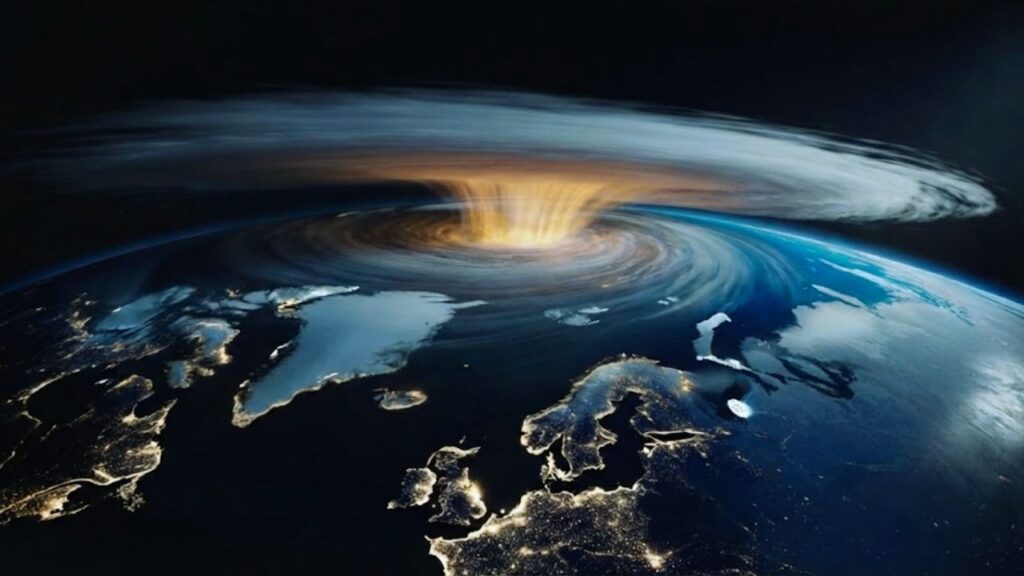
At street level, nothing looked different. People walked dogs, scraped frost from windshields, and scrolled through phones at bus stops. Yet far above, nearly 30 kilometers up, the atmosphere was starting to twist in rare and powerful ways, especially for this late in winter.
It was a silent upheaval, forming invisibly overhead.
 Beginner Friendly Retinols Are Making Skincare Easier Without Irritation or Complicated Routines
A polar vortex on the verge of breaking, not just bending
The term “polar vortex” often gets blamed whenever cold air pushes south, sometimes unfairly. Most winters, the vortex stays firmly in place, spinning over the Arctic and locking the cold away. This time, however, experts aren’t describing a minor wobble.

They’re warning of a vortex being split, stretched, and severely disrupted in a way that is almost unheard of in February. It’s not just weakened, but fundamentally altered, with potential impacts reaching North America, Europe, and Asia weeks after the initial disturbance.
Picture a massive whirl of icy air high above the pole, thousands of kilometers across. Now imagine a sudden surge of warmth crashing into it, like a blow to a spinning top. That is what defines a sudden stratospheric warming event.
In early February, temperature anomalies of 40 to 50°C were observed near 10 hPa over the Arctic, high in the stratosphere where the vortex resides. Some model projections showed the vortex distorted so badly that it nearly split into two lobes, one drifting toward Eurasia and the other toward North America. For scientists known for cautious language, terms like “rare,” “exceptional,” and “record-challenging” began appearing.
The timing makes this especially striking. While sudden stratospheric warmings occur every couple of winters on average, they usually peak in January. A disruption of this size in February means the atmosphere is rewriting late-winter expectations in real time.
When the vortex is damaged this severely, the effects tend to cascade downward. Changes appear first high above, then influence the jet stream, and eventually shape surface weather through blocking highs, stalled systems, and unusual temperature swings. It’s the upper atmosphere sending instructions to the weather we experience daily.
How upper-atmosphere drama translates to everyday weather
For daily life, a disrupted polar vortex mainly affects the jet stream, the high-altitude current that steers weather systems. A strong vortex supports a fast, relatively straight jet stream, keeping conditions predictable. When the vortex weakens, that steering mechanism starts to wobble.
Forecasts over the coming weeks suggest a slower, more meandering jet stream. This allows stubborn weather patterns to settle in, sending Arctic air into regions that had nearly left winter behind, while mild air pushes unusually far north elsewhere. Weather apps may seem erratic, but they’re reacting to genuine atmospheric instability.
Similar setups have appeared before. In early 2018, a major vortex disruption contributed to Europe’s “Beast from the East,” when severe cold spread westward. In North America, the Midwest cold outbreaks of 2014 and 2019 were also linked to distorted stratospheric patterns that allowed polar air to plunge south.
The current event rivals those years in strength, but with a crucial difference. Ocean temperatures are unusually warm, particularly in the North Atlantic and parts of the Pacific. This contrast means advancing cold air will meet a very different background, potentially creating sharp regional divides, where one area freezes while another, not far away, feels almost spring-like.
Meteorologists emphasize that a vortex disruption does not guarantee extreme cold everywhere. Instead, it tilts the odds toward blocking patterns, extended cold spells in parts of Europe or North America, and unstable transition zones where snow, ice, and rain alternate rapidly.
These events increase probability, not certainty. The atmosphere still responds to many influences, from tropical signals to sea-surface temperatures and local geography. Yet a disruption of this magnitude acts like a clear signal in a noisy system, and the weeks that follow are rarely uneventful.

Navigating turbulent weather without added stress
Living through the effects of a disrupted polar vortex is usually less dramatic than the headlines suggest, but more inconvenient. Travel disruptions, school closures, frozen pipes, and sudden temperature swings become more likely. A practical approach is to think in three- to five-day windows, rather than focusing only on tomorrow.
Instead of checking forecasts once and moving on, keep an eye on short-term trends. Watch for rapid drops from mild to freezing conditions. That’s the moment to prepare an extra blanket, adjust travel plans, or allow more commute time. A small increase in awareness goes a long way during unstable periods.
During disrupted patterns, minor temperature shifts can completely change outcomes. Rain turns to ice, drizzle becomes a dangerous glaze, and a predicted dusting can become a slippery 10 centimeters overnight. These surprises happen more often when the atmosphere is unsettled.
Few people read full forecast discussions every day, but checking alerts, radar, or trusted local meteorologists can prevent unnecessary chaos. If your region is flagged for large swings, slight over-preparation is often worthwhile.
There’s also a mental side to rapid weather changes. Quick flips from warm to cold and sun to gray can affect sleep, mood, and routines. One climate psychologist described it simply:
“People don’t just respond to weather itself. They react to the sense that the weather has stopped behaving as expected.”
Simple habits can help restore balance:
- Keeping a flexible weekly plan that works for both mild days and cold snaps
- Checking forecasts at a set time instead of constant scrolling
- Pairing winter tasks with something enjoyable, like music or a hot drink
- Talking about unusual weather without turning it into constant crisis talk
These small routines won’t steady the jet stream, but they can anchor daily life while it wobbles.
When winter no longer follows familiar rules
A February polar vortex disruption of this scale is the atmosphere signaling that it isn’t on autopilot. Research continues to explore how the stratosphere and broader climate system interact, and how a warming world might be influencing the frequency or intensity of these events.
On the ground, the experience is more personal. It’s the sharp sting of cold wind around a corner, the group chat buzzing with forecast screenshots, and the quiet unease of seeing snow fall on early blooms. Between data charts and headlines, daily life continues, adjusting layer by layer.
You may notice weather patterns lingering or flipping unexpectedly. Someone across the continent may share the opposite experience on the same day. While the polar vortex drama unfolds far overhead, its effects ripple through conversations, routines, and small moments.
The atmosphere is having a dramatic episode. Living through it is quieter, shaped by curiosity, mild frustration, and the relief of stepping indoors, closing the door on whatever the wind has chosen to bring.

Key takeaways
- Unusual February disruption: A powerful sudden stratospheric warming has severely weakened and distorted the polar vortex, making late-winter weather feel less predictable.
- Impacts unfold gradually: Atmospheric changes filter downward over weeks, reshaping jet stream behavior and surface conditions.
- Calm, practical response: Simple routines, light preparation, and reliable local information help reduce stress and turn alarming headlines into manageable actions.
