
The first time you truly notice your grout usually isn’t planned. You’re cleaning up a spill, the light hits the floor at the wrong angle, and suddenly those once-clean lines between the tiles look grey, yellow, or oddly dull. You try dish soap, then a leftover all-purpose spray, scrubbing harder each time, but nothing changes. That’s when it hits you: when did your bathroom quietly turn into a before photo? Later, a friend casually mentions over coffee that she uses three pantry items and gets brand-new looking grout in fifteen minutes. You glance at her spotless tiles, then think about your own floor, and feel slightly betrayed.
Some cleaning tips sound like pure hype until the day you actually see them work.
Why Grout Always Looks Dirty Eventually
Grout behaves like a sponge that never asked for responsibility. While tiles stay smooth and easy to wipe, grout lines slowly absorb soap residue, grease, dirt, spills, and mineral deposits. On installation day, they’re crisp and bright. Months later, they’ve quietly collected a timeline of everyday life. You don’t notice the change because it happens gradually, until one day you move a mat or bin and see a strip of almost glowing original grout beside the darkened rest. The contrast is jarring.

I saw this firsthand in a friend’s rental kitchen. She insisted the floor was simply old. Then we slid the recycling bin aside and uncovered a clean rectangle of grout untouched by footsteps or spills. Compared to that, the rest of the floor looked almost brown. She’d been mopping constantly and using a so-called deep cleaner, but none of it reached the grime embedded deep in the grout. All that effort suddenly felt pointless.

The reason is simple. Most household cleaners are designed for smooth, sealed surfaces. They scent the room, wipe clean, and evaporate, but they don’t penetrate porous grout. Even steam and heavy scrubbing struggle against oils, hardened minerals, and soap buildup. That’s why people are stunned when a basic pantry mix outperforms expensive, specialty products.
The Simple 3-Ingredient Mix People Swear By
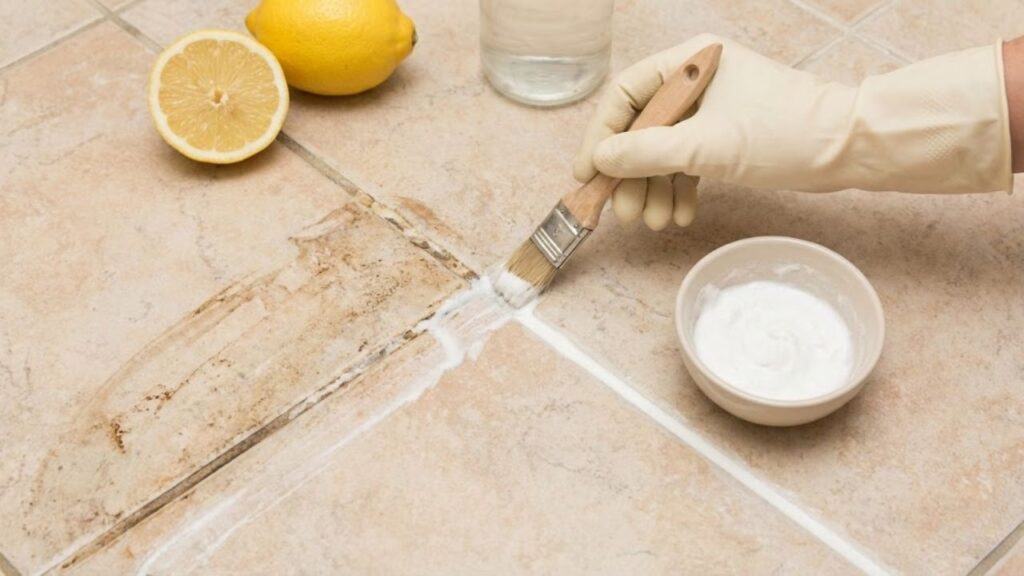
The method that keeps resurfacing online is almost laughably basic: baking soda, white vinegar, and dish soap. You sprinkle baking soda along the grout lines, add a thin drizzle of dish soap, then spray or pour diluted white vinegar on top. It foams immediately. Let it sit for about 10 to 15 minutes, scrub gently with a stiff brush or toothbrush, wipe clean, and rinse. On light grout especially, the difference can be dramatic.
Where people go wrong is either rushing or using far too much. They pile everything on, scrub aggressively, get tired, and decide it doesn’t work. The real trick is patience. Apply a thin, even layer, let the reaction happen, and walk away. The waiting feels almost lazy, but that’s exactly why it works.
A professional cleaner once joked to me that this mix feels like unfair competition. When pantry staples outperform branded cleaners, it makes you rethink what’s actually necessary in your cleaning cupboard.

- Baking soda: Gently scrubs and lifts surface grime without damaging most tiles.
- White vinegar: Breaks down mineral buildup and soap residue while activating the baking soda.
- Dish soap: Cuts through oily dirt and helps the mixture spread evenly.
What’s Really Happening During Those 15 Minutes
On the surface, you see bubbles. Underneath, each ingredient is doing a specific job. Baking soda settles into the porous grout, loosening dirt. Vinegar reacts and softens hardened residue. Dish soap binds to greasy particles so they can be rinsed away instead of sticking back as the floor dries. It’s not forceful cleaning. It’s slow, quiet chemistry working together.
This explains why results vary. Light buildup may disappear in one round. Years of staining may need repeated treatments over several days. Tackling one small area and comparing before and after in the same lighting is often what convinces people it’s worth continuing.
The Surprisingly Emotional Payoff
The reaction people have to clean grout is stronger than you’d expect. Floors look brighter. Bathrooms feel newer, even with decades-old tiles. There’s often a flash of frustration about the money spent on products that never touched the real problem. It’s that familiar realization that a simple, low-tech solution can outperform flashy promises.
How This Changes Everyday Cleaning Habits
Using this mix once feels satisfying. Using it occasionally turns into a quiet routine. One week it’s the shower, another week the hallway. Some people keep a small container of baking soda and a labeled vinegar spray under the sink so setup takes seconds. The goal isn’t perfection, but knowing you can refresh tired grout whenever it starts to look dull.
Experienced cleaners know that the most dramatic results often come from the least glamorous tools. Many now test this mix before recommending expensive services. Sometimes it’s enough. Sometimes it shows where professional equipment is truly needed. Either way, it puts control back in your hands.
There’s something grounding about it too. No harsh fumes, no complicated shopping list, just basic ingredients and time. It won’t fix cracked grout or erase every stain instantly. But it does restore a sense of ownership in a space that should feel clean and yours.

Key Takeaways at a Glance
- Simple 3-ingredient mix: Uses baking soda, white vinegar, and dish soap instead of specialty products.
- 15-minute contact time: Lets chemistry work while saving physical effort.
- Targeted use: Spot-treating areas fits real life and delivers visible results.
