
You know the moment. The one where your furniture stops feeling like “vintage character” and starts looking more like “worn and forgotten.” The oak sideboard that once felt sturdy and rich now appears dry, faded, even gray in patches, as if it has quietly surrendered. When you run your hand across the surface, the unexpected roughness tells the same story.
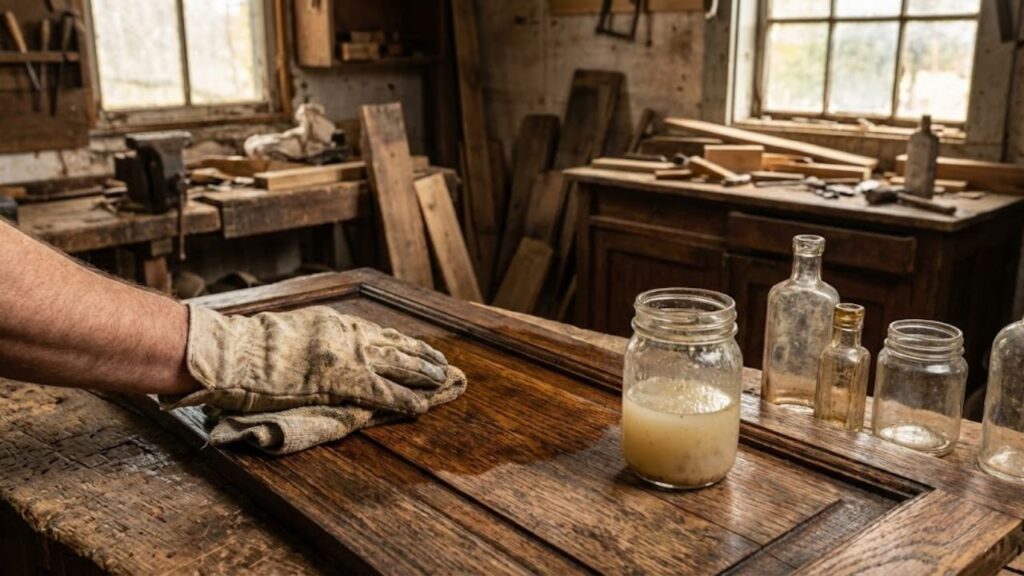
That’s usually when people open their phones, searching for costly restoration services or scrolling through new furniture listings.
But many restoration professionals offer the same calm advice: before spending any money, reach for a microfiber cloth and a simple mixture made right in your kitchen.

Sometimes, the gap between “ready to throw away” and “nearly new again” is no bigger than a bowl on your countertop.

The Basic Blend That Revives Tired Wood
Experienced restorers often strip away the mystery surrounding their craft. Many admit their first step isn’t an expensive specialty product, but a humble blend of equal parts olive oil and white vinegar, gently worked into the wood using a clean microfiber cloth. It sounds almost disappointingly simple, and that’s exactly why it works.
This is the kind of solution previous generations used quietly, long before home hacks were shared online.
The reasoning is straightforward. Olive oil nourishes the wood and deepens its tone, while white vinegar cuts through old wax, grease, and surface grime that leave furniture looking dull and lifeless. No magic, just basic chemistry doing its job.
A Real Table, A Surprising Result
A restorer in Paris once described a dining table that appeared beyond rescue. Its finish was flat and uneven, marked by pale rings left behind by hot cups and forgotten coasters. The owner was convinced sanding it down was the only solution.
Instead, the expert began with the basics.
One microfiber cloth. Half a cup of olive oil. Half a cup of white vinegar. Applied slowly, following the grain in gentle circular motions. After ten minutes on just one section, the change was dramatic. The grain reappeared. The color warmed. The rings faded into the background.
The owner didn’t gasp or cheer. They laughed, slightly embarrassed, realizing the table hadn’t needed drastic measures at all.
Why This Combination Works So Well
Vinegar is acidic enough to dissolve surface buildup, yet mild enough to leave most existing finishes intact when used sparingly. The oil slips into tiny cracks and dry areas, creating the refreshed look people expect from commercial wood conditioners.
The microfiber cloth plays an equally important role. Its fine fibers lift dust and residue instead of spreading it around, which often happens with old cotton rags.
 Goodbye Hair Dye for Grey Hair: The Conditioner Add-In That Gradually Restores Natural Colour
Used properly, this method works as a reset, not a miracle. It won’t repair deep damage or sun bleaching, but it can move furniture from “neglected” back to “well cared for.”
How to Apply the Solution Like a Professional
The process itself is calm and deliberate. Start by lightly dusting the surface with a dry microfiber cloth, removing loose debris so it doesn’t scratch the finish. Next, prepare your mixture: one part olive oil and one part white vinegar, gently combined until cloudy.
Dip a corner of a clean microfiber cloth into the solution and wring it out thoroughly. The cloth should feel damp, not wet.
Work in small sections, moving along the grain with slow, overlapping circles. Think of it as reviving the surface, not scrubbing it. Let the mixture sit for five to ten minutes, then use a second dry microfiber cloth to buff until the surface feels smooth and lightly polished.
Common Mistakes to Avoid
Many people apply too much liquid, soaking the cloth and flooding the wood. Excess moisture can seep into joints, loosen connections, or leave sticky areas that attract dust. A light touch is essential.
Another mistake is pressing hard on stubborn marks in frustration. This often spreads residue and creates uneven patches instead of fixing the problem.
If you’re unsure, always test the mixture in a hidden area first. Inside a drawer or under a chair seat works well. Let it dry fully before deciding whether to continue.
Advice From a Longtime Restorer
“Most wooden furniture doesn’t need to be stripped,” explains a London-based restorer with decades of experience. “It just needs attention. This kind of homemade mix cleans and feeds the wood without overwhelming it. People are always surprised by how effective it is.”
Best Practices for Safe Results
- Use only white vinegar: Colored or flavored varieties may stain or leave residue.
- Choose light or neutral oil: Heavy, scented oils can turn rancid over time.
- Avoid unfinished wood: Raw surfaces absorb too much liquid too quickly.
- Always buff afterward: Dry buffing creates a clean, soft sheen.
- Work slowly and step back: Check the piece in different lighting to avoid overdoing one area.
When Cleaning Becomes an Act of Care
There’s something quietly comforting about spending twenty minutes caring for a piece of furniture that has witnessed your life. A dining table marked by family meals. A dresser that moved with you from one home to another. The microfiber cloth becomes more than a tool; it feels like a small gesture of respect.
In a world where replacing is often easier than repairing, this approach reminds us that care still matters. With a simple homemade solution and a bit of patience, you can delay a purchase, appreciate what you already own, and rediscover the warmth and grain that drew you to the piece in the first place.

Key Takeaways for Readers
- Homemade solution: Equal parts olive oil and white vinegar offer an affordable way to refresh dull, finished wood.
- Gentle technique: Light application in small sections helps protect existing finishes.
- Best use cases: Ideal for tired or lightly marked furniture, not raw or heavily damaged wood.
