
The sideboard had the weary look that aged wood develops after years of use. Pale rings from long-forgotten coffee mugs, light scratches from a childhood Lego phase, and a washed-out mark where a plant once lingered too long. It was the sort of furniture you stop noticing, even though you pass it every day without fail.
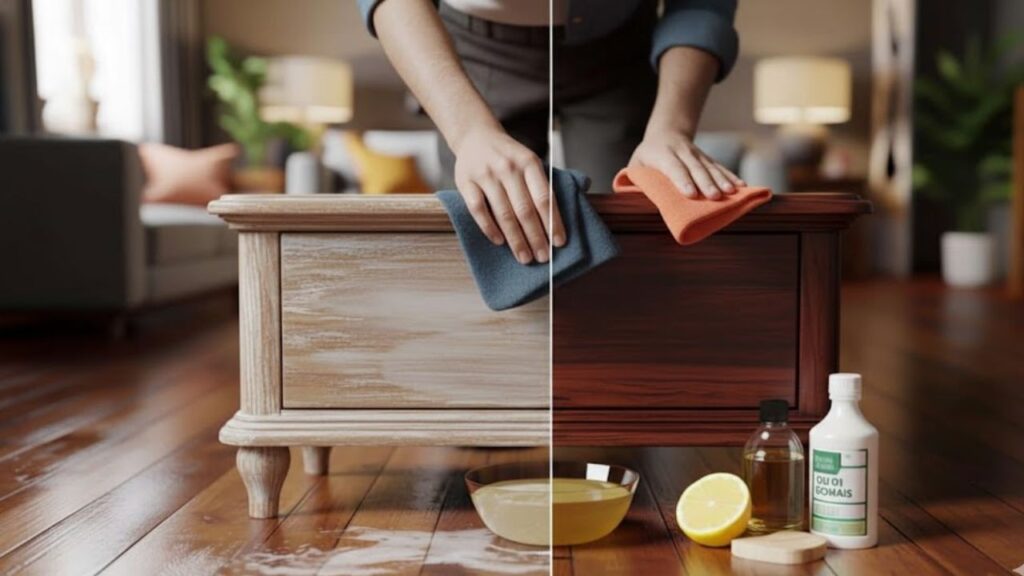
One Saturday, a friend who restores furniture pulled a folded microfiber cloth from his pocket, dipped it into a bowl of something lightly scented with citrus and beeswax, and began working in slow, careful circles.
Within ten minutes, the wood seemed to come back to life. The grain deepened, the dull surface softened, and the sideboard suddenly felt like it had stories to share instead of excuses to make. He smiled and said, “This is what I use before I ever charge someone serious money.”

The quiet reviver professionals rely on
Furniture restoration often feels mysterious, as if it depends on secret formulas and locked workshops filled with the smell of turpentine. Yet many restorers admit, if you listen closely, that their work usually starts with something very simple: a bowl, a cloth, and a few everyday ingredients.

That’s the irony of old wooden furniture. We assume it needs drastic intervention, when in many cases the wood is simply dry, dulled by layers of dust, silicone sprays, and mismatched cleaners. The structure is sound. The surface is just thirsty.
This is why restorers often begin with what they call a reviving wash. It gently removes buildup, feeds the wood, and refreshes the finish long before sanding is even considered.
A restorer in Paris once described a client who brought in her grandmother’s dark oak dresser. She expected stripping, staining, and a full overhaul. The piece looked flat and gray in places, with a tired, uneven finish.
Before preparing an expensive estimate, the restorer tested her usual mix on a hidden corner. Almost immediately, the color warmed, scratches softened, and the surface gained a soft glow. She showed the client that small before-and-after patch. The decision changed instantly. Instead of a major restoration, they spent one afternoon treating the entire dresser. Both the work and the cost were dramatically reduced.
There’s no magic here, only simple chemistry and patience. Old finishes oxidize, collect residues, and trap fine dirt in tiny pores. Dry wood scatters light poorly, which is why it appears lifeless even when it isn’t damaged.
The solution works on three levels. Mild soap loosens grease, oil nourishes the surface and softens micro-scratches, and a hint of acidity from vinegar or lemon breaks down stubborn film. Microfiber cloths, with their split fibers, lift grime instead of spreading it.
Before sending a piece to storage or resale, this quiet step can change everything. It’s less about cleaning and more about rehydrating the wood.
 Goodbye Hair Dye for Grey Hair: The Conditioner Add-In That Gradually Restores Natural Colour
The mixture: a bowl, a cloth, and familiar ingredients
While each restorer has a personal variation, the base recipe rarely changes. In a small bowl, combine one cup of warm water, one tablespoon of mild liquid soap, one tablespoon of white vinegar, and one tablespoon of natural oil such as raw linseed, walnut, or even olive oil if needed. Stir gently until the liquid turns slightly cloudy.
Dip a clean microfiber cloth into the mixture and wring it out thoroughly. The cloth should be damp, never dripping. If water runs down your wrist, it’s too wet.
Work slowly in small circles, always following the grain. There’s no need to rush. Let the solution rest briefly, then buff with a second dry microfiber cloth. Often, the transformation begins before you finish the first section.
This is where many people go wrong. Either the wood is soaked or scrubbed aggressively, both of which can damage old finishes. These surfaces respond best to gentle, patient handling. Think of it like polishing leather shoes, not scrubbing tile.
Always test first. Choose a hidden spot and apply the mixture. Let it dry completely. If the color deepens, the finish stays intact, and there’s no tacky residue, it’s safe to continue.
Restorers are realistic about frequency. Once or twice a year is enough for most furniture, unless it sits in strong sunlight or beneath a frequently watered plant.
The restorer’s mental checklist
- Check the finish: varnish, wax, oil, or sealed wood only; not raw surfaces.
- Check the history: water damage, deep cracks, or flaking finish need different care.
- Check the reaction: if a test spot turns dull or sticky, stop and use lightly soapy water only.
- Check your cloths: microfiber must be washed without fabric softener.
- Check expectations: this revives character, it doesn’t erase time.
When wood wakes up, so does the room
What surprises people most isn’t just how the furniture looks, but how it feels. A table once dismissed as “old” suddenly shows depth again. Light catches the grain. The color warms. The room feels subtly renewed, even though nothing was moved.
Many recognize the moment when they nearly discarded something that only needed care. Wood responds to attention in a way modern materials don’t. It reflects every gentle pass of the cloth, every pause to check the surface.
Some start with a single piece and soon move from room to room, bowl and cloth in hand, reconnecting with furniture they hadn’t truly seen in years.

| Key point | Detail | Value for the reader |
|---|---|---|
| Homemade solution | Warm water, mild soap, white vinegar, natural oil | Offers a low-cost, **easy-to-mix** alternative to expensive products |
| Microfiber technique | Damp, well-wrung cloth, small circular motions along the grain | Reduces risk of damage while lifting dirt and reviving finish |
| Test and observe | Always try on a hidden area, wait for it to dry, adjust if needed | Protects valuable pieces and builds **confidence** in the process |
