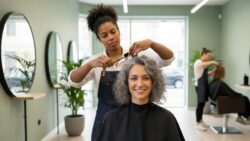
For many women, the first sign isn’t dramatic. It’s in the shower—fingers moving through wet hair that suddenly feels different. Strands snag, curls loosen, and the brush fills faster. While hot flashes get the spotlight, this quiet mourning—playing out on pillows and bathroom floors—often goes unspoken. It’s more than just dry hair. Some notice new frizz, others feel their lengths thinning or waves flattening. Products that worked for years suddenly seem ineffective and irrelevant, leaving women scanning shampoo bottles under fluorescent store lights, searching for a solution that isn’t printed anywhere.
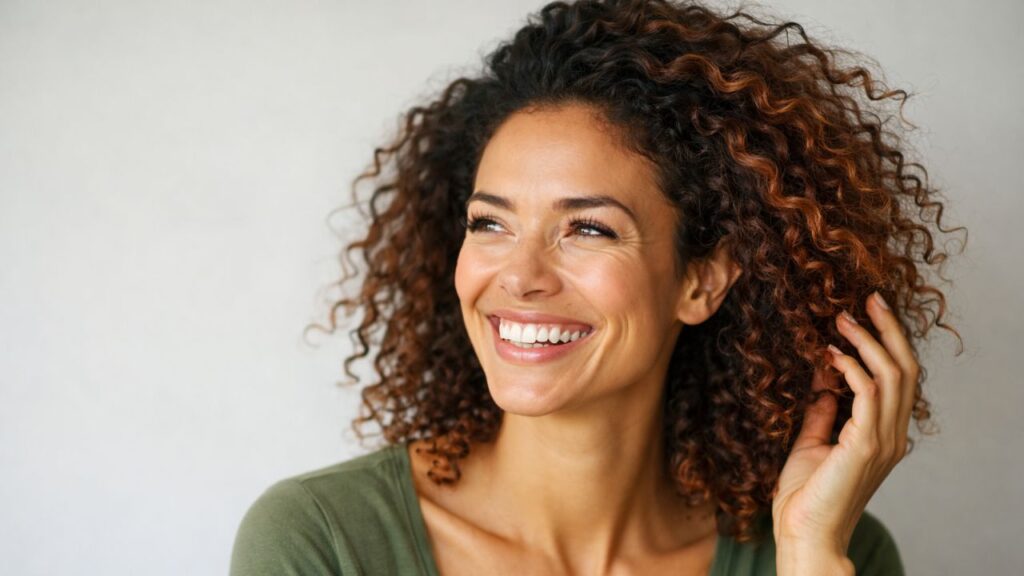
The Hormonal Shift Behind Changing Hair
Menopause doesn’t crash in—it creeps in. A broken strand during a quick bun, a fringe that won’t straighten anymore—these are signs of shifting hormones, especially the drop in estrogen and progesterone that used to silently support hair health. With less estrogen, the scalp’s oil production dips, leaving strands drier and less protected. Hair growth slows, and new strands grow finer, resulting in a mix of old dry hair and thinner new ones. Research shows that 40–60% of women notice hair texture or density changes around menopause, including lost curl definition or newfound waves. Hair’s cuticle becomes rougher, moisture retention weakens, and the scalp struggles to adjust. Estrogen once fueled sebum production and follicle nourishment. Without it, hair diameter shrinks and texture transforms. At the same time, the lipid layer thins, causing water to escape and damage to increase, especially from heat and UV. The same formulas used for decades now feel stripping and harsh on this new biology.
Why Dryness Becomes the First Warning Sign
This shift isn’t imagined. Studies reveal that postmenopausal hair has a rougher surface and holds less water. Hair becomes brittle, less elastic, and more prone to breakage. A shampoo once “refreshing” now feels like sandpaper. Estrogen once helped circulation to follicles, delivering nutrients that now arrive in smaller doses. Without that support, follicles shrink, hair becomes thinner, and the protective coating wears away. This leads to cuticle damage and increased porosity. Ingredients that once seemed harmless—like sulfates and alcohols—suddenly amplify damage. Dryness is often the first, visible clue that the system needs a reset.
Ingredients to Avoid for Menopausal Hair
If your hair feels dry post-menopause, start by reviewing your products. Harsh cleansers like Sodium Lauryl Sulfate (SLS) or Ammonium Lauryl Sulfate can be too aggressive on a sebum-reduced scalp. Opt for gentler surfactants like Sodium Cocoyl Isethionate or Coco-Betaine instead. These don’t solve everything instantly, but they reduce daily damage. When it comes to alcohol, short-chain types like Alcohol Denat. and SD Alcohol 40 quickly dry out strands, especially in sprays and mousses. Fatty alcohols (e.g., cetyl alcohol) are safe. Volume products often include drying resins and alcohols, which create crunchiness and breakage on older scalps. Silicones—such as Dimethicone or Cyclopentasiloxane—offer slip and shine, but they can block moisture and lead to dryness. On porous strands, this creates a cycle of coated but dehydrated hair. Lastly, be wary of strong fragrances and certain preservatives. While parabens are not directly linked to dryness, added scents and menthols can irritate the scalp, reduce quality sebum, and trigger low-grade inflammation, affecting how well follicles form new strands.
 This Simple Way of Tucking Hair Behind Ears Can Open the Face and Sharpen Cheekbones Instantly
Simple Strategies That Actually Help
The best fix? Less aggression, more support. Try to space out washes and use warm—not hot—water. Focus shampoo on the scalp only and let foam run over the rest. Choose formulas with mild surfactants and calming ingredients like aloe, oat extract, or glycerin. Think of your scalp like mature facial skin—it needs barrier-friendly care. Gentle massages boost blood flow to follicles. Conditioner is no longer optional—it’s a daily protector. Apply it to mid-lengths and ends where damage accumulates. Look for conditioners with lightweight oils, amino acids, and humectants like hyaluronic acid. Use cool water to rinse and flatten the cuticle. Avoid rough towels—switch to a microfiber turban or old T-shirt. These tiny changes prevent breakage and preserve softness. Resist the urge to over-style. Tight ponytails, high-alcohol sprays, and daily heat tools worsen dryness. Instead, use products that match your texture. For new waves, go with light curl creams. For fine, straight hair, choose peptide-based volumizers over alcohol mists. Treat menopausal hair not as damaged, but as new hardware needing new tools.
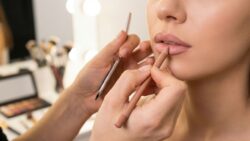 Lip Definition Trick: The Strategic Liner Placement That Enhances Fullness Without Heavy Overlining
How to Rethink Your Product Shelf
Use this checklist to simplify your routine:
- Cleansers: Avoid harsh sulfates, choose gentle, hydrating agents
- Stylers: Limit drying alcohols, prefer soft creams or light gels
- Treatments: Look for oils, ceramides, and proteins, skip overly perfumed options
A quick glance at the first five ingredients can help answer a simple question: Will this product nourish or strip? Over time—three to six months—you’ll see a transformation in how your hair feels, moves, and responds.
Living With It, Not Fighting It
Menopausal hair changes often carry emotional weight. Thinning or dryness can feel like external proof of internal changes. Some cut their hair short, others turn to extensions or headbands. Understanding the biological causes restores a sense of control. Reduced estrogen affects sebum, follicles, and cuticle layers. That means dryness isn’t a failure—it’s a new factor to work with. Talk about it. Share experiences with friends, hairdressers, or doctors. Mention if your hair feels unfamiliar, trade product tips, and embrace routines that respect this transition. Many women discover natural texture once they stop using harsh cleansers or silicones. Others find joy in softer, layered cuts that suit finer hair. Menopausal hair will continue to change—your routine can evolve with it. Each product choice becomes a small rewrite of the story your strands are telling. It starts with the next wash.

| Point clé | Détail | Intérêt pour le lecteur |
|---|---|---|
| Hormones & texture | Baisse d’estrogènes = moins de sébum, cuticule plus rugueuse, cheveux plus fins | Comprendre pourquoi les cheveux deviennent plus secs et changent de forme |
| Ingrédients à éviter | SLS, alcools desséchants, silicones lourds, parfums agressifs | Limiter la casse et la sécheresse en ciblant les bons produits |
| Routine adaptée | Nettoyants doux, soins hydratants, gestes moins agressifs, stylers plus souples | Construire un rituel concret pour retrouver souplesse et confort |