
The first thing the team noticed was the silence. No birds calling, no monkeys moving through the trees, only a heavy stillness hanging over the flooded grasslands of northern Mozambique. With knees soaked and boots sinking into dark mud, the herpetologists followed a set of unusual looping tracks slicing through the reeds, as if heavy machinery had passed overnight. One researcher paused, crouched, and pressed a hand into the mark along the bank. The track was broad. Far broader than expected.
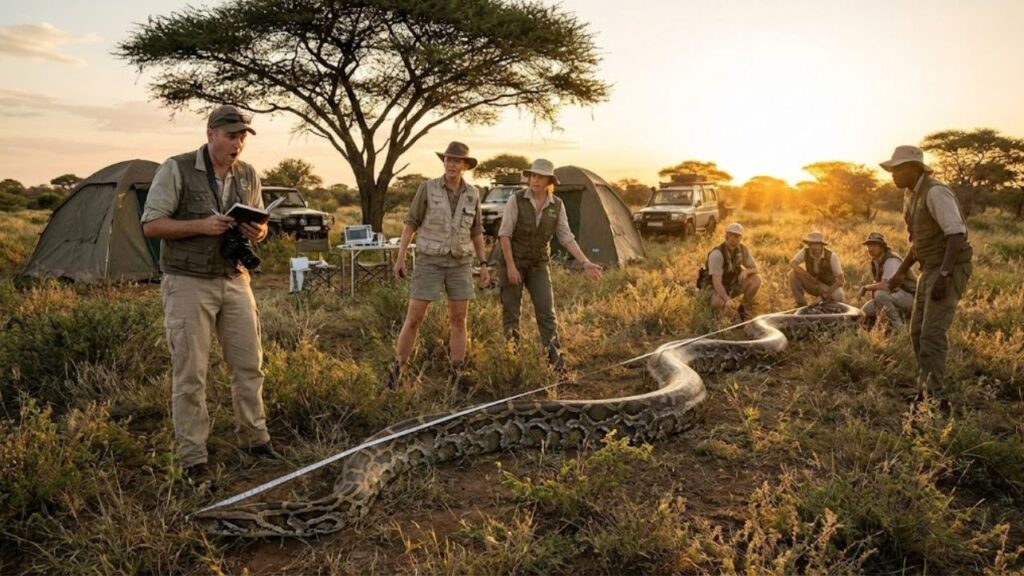
Ten minutes later, they saw her. A slow, powerful mass of muscle, as thick as a truck tire, coiled calmly around a termite mound and watching them with steady amber eyes. When the tape measure came out, it just kept extending.
An encounter that reshapes what we know about giant snakes
The animal was an African rock python, the largest snake species on the continent, yet even for experienced herpetologists, this individual felt unreal. Under the humid mid-morning light, its olive, brown, and black patterns seemed to ripple as muscles shifted beneath the skin. The certified biodiversity survey team, working alongside local rangers, approached with care and precision.
 Many people don’t realise it, but cauliflower, broccoli and cabbage are varieties of the same plant
This was not a chance encounter by passersby. The expedition was fully authorized, with permits secured, GPS devices active, and data sheets prepared. Coiled but relaxed, the python stretched longer than their aluminum boat.
 Storm as city fines gardener for feeding stray cats while neighbors applaud booming rat population
Later, beneath a tarpaulin tied between acacia trees, the formal measuring began. One researcher controlled the heavy head, another supported the midsection, while a third held the tail, alert to any sudden surge of strength. The tape ran past three meters, then four, then five. Voices grew quieter.
The final measurement landed well beyond what most field guides list as a “typical maximum.” This was no blurry roadside image. The python was measured, photographed, GPS-tagged, and weighed under strict scientific protocols. Every detail was logged, turning a legend into a verified data point.
Other stories readers are exploring right now
- Scientists observe a gradual reactivation of long-dormant geological structures
- A new kitchen device is set to replace the microwave for good
- People who push in their chair when leaving the table often share these 10 unique personality traits
- A moist and tender yogurt cake recipe reinvented by a famous French chef sparks debate online
- A simple hotel trick keeps bathrooms smelling fresh without air fresheners
- A hairdresser shares a hard truth about short hair for women over 50
- Goodbye to traditional hair dyes as a natural grey-covering trend gains attention
- A new rental law brings good news for landlords and concern for tenants
Why snake legends grow faster than snakes
Stories about giant snakes often expand with every retelling. Tales of thirty-foot monsters swallowing livestock are common, yet most verified records fall well short of those claims. In this case, however, the measurements were solid enough to excite even cautious biologists. The python sat at the extreme upper boundary of known size for its species, pressing against limits usually mentioned only in fine print.
Why this python grew so large
Early field notes point to a rare combination of factors: plentiful prey such as bushbuck and waterbirds, wetland cover ideal for large ambush predators, and limited human disturbance. When food and shelter remain stable over many years, a snake can continue growing. This female appeared to be living proof of what time and safety can produce.

How scientists accurately measure a giant python
Handling a snake of this size follows a careful routine. Researchers first observe from a distance, noting posture, breathing, and stress signals. The approach is slow, with clear roles assigned for head control and body support. There is no rushing and no raised voices.
Once restrained, smaller snakes may be placed in fabric bags or tubes, but giants like this are often measured directly on flat ground. The tape follows the spine rather than relying on rough end-to-end estimates. Every centimeter is recorded, and every photograph is time-stamped.
For the public, the same principle applies when judging viral images. Camera angles can distort scale, making snakes appear larger than they are. Nearby objects of known size, clear perspectives, and context reveal the truth.
Many people recognize the scenario: a dramatic image shared in a group chat, claiming a “50-foot python” from a nearby village. On closer inspection, shadows clash or body thickness fails to match the length. Curious scrutiny, rather than blind belief, turns such moments into learning opportunities.
How to judge giant snake claims online
- Look for verified sources such as universities, research groups, or national parks
- Check whether the length was actually measured or only estimated
- Compare body thickness with nearby objects
- Ask where and when the image was taken, and by whom
- Remember that extremely large pythons are rare, but possible
What this giant python reveals about wild Africa today
This python did not appear overnight. It grew slowly over many years in a landscape still dominated by wetlands rather than roads. For herpetologists, the animal is more than a record-holder; it is a living indicator of ecosystem health. A top ambush predator reaches such size only when prey is abundant and habitats remain largely intact.
Another quiet influence is tolerance. Local communities and rangers allowed this python to survive while sharing the same environment. That balance between fear, respect, and coexistence continues to determine which giants live long enough to be documented.

What readers can take away
- Verified giant python: Documented during a certified expedition with full data recording, separating fact from exaggeration
- Habitat conditions: Remote wetlands with high prey density and low human pressure, showing how intact ecosystems support extraordinary wildlife
- Reading wildlife news: Paying attention to scale, context, and credible sources helps evaluate viral stories
