The sound of a microwave humming away in the kitchen has become a familiar background noise for most of us. Tossing last night’s leftovers into the microwave, pressing a few buttons, and waiting for the beep to signal that your food is ready. But what if this scene was different? A year from now, you could be placing your food into a sleek, quiet device that cooks your meal perfectly every time, with no spinning plate or guesswork involved.
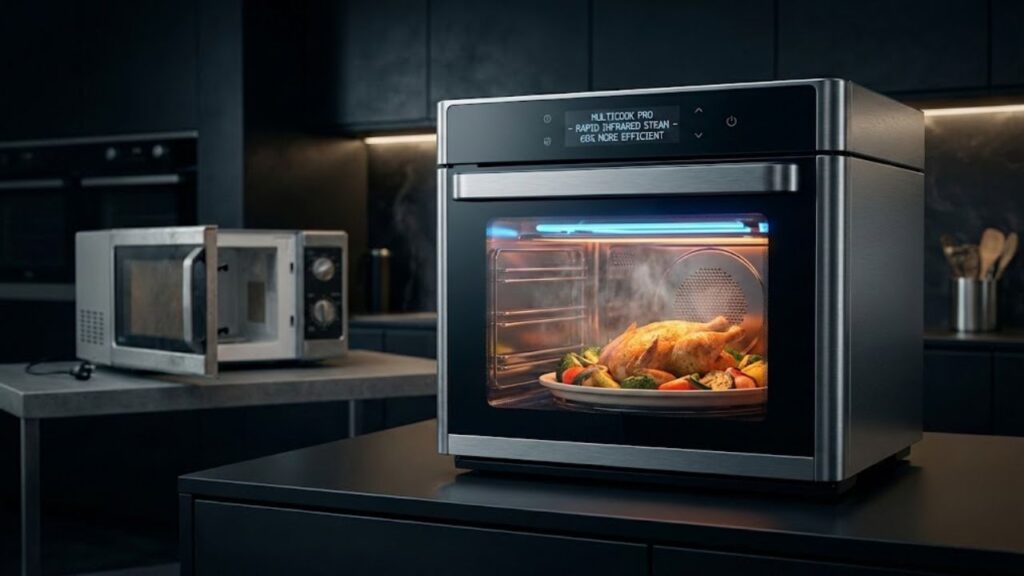
What Sets Solid-State Cookers Apart
Unlike traditional microwaves that rely on magnetrons to blast energy into food, solid-state cookers use advanced semiconductor chips to direct energy exactly where it’s needed. This allows the device to “see” your food, adjusting in real-time to ensure even heating. This technology results in faster, quieter, and more precise cooking, eliminating the need for the old guesswork associated with microwaving.
A Smarter, More Efficient Kitchen Companion
Imagine placing your dinner in a smart device that understands exactly how to reheat it, without any need for guesswork. Whether it’s reheating a roast chicken while keeping the skin crisp or warming up leftovers like pizza, these devices adapt to the food’s shape, moisture, and density. They offer modes like “Reheat roast, keep skin crisp” or “Defrost evenly,” ensuring you get a meal that’s just as delicious as the first time you cooked it.
The Benefits of Switching to Solid-State Technology
One of the biggest advantages of solid-state cooking is that it saves energy and delivers better results. Engineers claim these devices can save up to 30% energy compared to traditional microwaves. But the real appeal is in the cooking results — your food will come out with perfectly even heat, no rubbery edges or icy centers. Whether it’s a busy family meal or a quick dinner after work, the solid-state cooker makes the process easier and more reliable, offering a truly “set it and forget it” experience.
| Key point | Detail | Value for the reader |
|---|---|---|
| Targeted solid‑state heating | Multiple controllable transmitters steer energy to cold spots for even results | Hot food all the way through, fewer rubbery edges and cold centers |
| Smarter, adaptive programs | Devices sense moisture, shape, and weight, adjusting power in real time | Less guesswork, faster learning curve, better use of leftovers |
| Energy and time efficiency | Up to 20–30% energy savings on common tasks, shorter effective cook times | Lower bills, smaller footprint, more reliable weeknight cooking |