
It’s early evening, you’re tired, and you pull into your usual gas station almost on autopilot. The windscreen is dirty, the warning light is flirting with empty, and you’re already thinking about dinner. As the numbers spin on the pump, you glance up and see something new: a clear label right next to the price per liter, with extra information you’ve never seen there before.
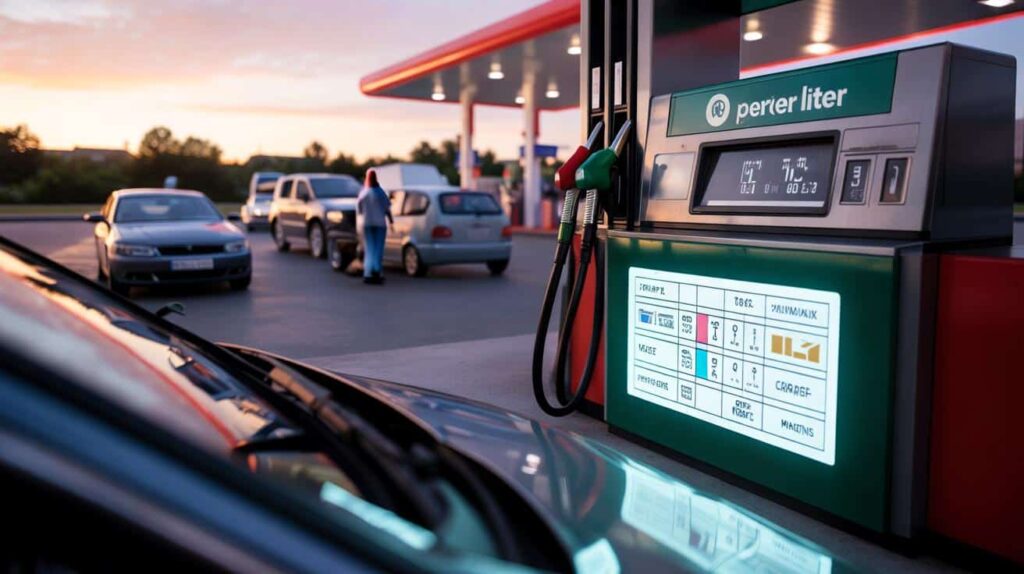
You blink, read it again, and suddenly the bill you’re about to pay feels… different. Less mysterious.
From February 12, that little rectangle of text becomes mandatory at every pump.
And it could quietly change the way you think about fuel.

What changes at the pump on February 12
From February 12, gas stations won’t just show the price per liter and the type of fuel. They will have to display new mandatory information, directly at the pump, so that drivers can finally understand what they’re really paying for.

This new label will detail elements such as taxes, margins and sometimes an estimate of the cost per 100 km, depending on the vehicle. Suddenly, the number on the screen is no longer just a cold figure, it has a story and structure behind it.
For the first time, the pump starts to talk back.
Picture a busy station on a Monday morning. A small line of cars, a parent with kids in the back, a delivery driver in a hurry, a retiree counting every euro. They all look up at the same pump, but until now, they’ve never really known what part of their bill goes where.
With the new label, the driver can see what share of the price comes from taxes, what slice is the raw product, and what belongs to distribution and margins. That single glance can change the inner monologue: from “fuel is expensive, full stop” to “ah, so that’s where the money goes”.
One small piece of information, and the feeling of being in the dark starts to fade.
This change didn’t appear out of thin air. For months, consumer groups and public authorities have been pushing for more transparency, especially as fuel prices spike and fall without warning. When people don’t understand, trust erodes fast.
By forcing stations to display clearer breakdowns at the pump, the measure aims to rebuild a minimum of confidence between drivers, brands and the state. It’s a way of saying: here is the bill, line by line, right where you’re paying.
It won’t magically lower prices, but it does give you back something just as precious: clarity.

How to read this new information and use it to your advantage
The first reflex, once the new labels appear, is simple: stop for three seconds before starting to pump. Look at the board attached to your fuel hose. You’ll usually see the fuel type, the price per liter, then a breakdown of the price, and sometimes an estimated cost over a given distance or consumption level.
Start with the biggest chunk: taxes. That’s often where the surprise lies. Then glance at the part linked to crude oil or wholesale fuel, and finally at the station’s own margin. You don’t need a calculator. Your goal is just to spot what part is moving when prices jump from one week to the next.
Those three seconds can slowly turn you into a much sharper fuel customer.
Many drivers will react instinctively: “I don’t have time for this, I just want to fill up and go.” Totally understandable. Life is already full of little screens and numbers asking for attention.
Yet this tiny new habit can save you money over the year. You might notice that one station consistently has a higher margin than another a few streets away. Or that changes in the international price of oil don’t always match what you see at the pump. *Your tank becomes less of a black box and more of a dashboard.*
Let’s be honest: nobody really reads every small sign on the forecourt, every single day.
But reading this one from time to time is enough to spot patterns.
“Before, I just grumbled when I paid,” admits Julien, 38, who drives 70 km a day to work. “Now I take a quick look at the label. One day I realized a station on my route kept a noticeably higher margin than the others. I changed station. Over the year, that’s several full tanks saved.”
- New price breakdown
Lets you see taxes, raw product and margin at a glance. - Comparison between stations
Helps you choose where to fill up based on something more concrete than habit. - Cost per distance
When displayed, gives you a real-life feel: how much your trip truly costs. - Transparency on taxes
Turns vague anger into informed opinion about public policies. - Regular quick checks
Transforms a simple errand into a quiet, long-term saving strategy.
A small sign that could change our conversations about fuel
This new mandatory information at the pump will not make your next full tank suddenly cheap. The numbers will still hurt some days. Yet they might hurt differently. Instead of a vague frustration, you’ll have concrete lines to point to, figures to compare, questions to ask.
You might start talking about it at work, with your mechanic, with the neighbor who always knows a cheaper station further out. Some will take photos of the labels, share them on social networks, highlight differences between brands or regions.
From February 12, the pump becomes a little public square, where the price of fuel is no longer just endured but observed, discussed, challenged.
And once a bill starts being clearly explained, it rarely goes back to being accepted blindly.

| Key point | Detail | Value for the reader |
|---|---|---|
| New mandatory label | Displayed at the pump from February 12 with a clearer breakdown of the price | Gives immediate transparency at the exact moment of payment |
| Price structure visible | Shows taxes, product cost and distribution/margin shares | Helps understand where your money really goes and compare stations |
| Practical use | Quick 3-second check before filling up, a few times a month | Can lead to better choices and real savings over the year |
FAQ:
- Question 1What exactly must gas stations display from February 12?
- Answer 1They must display clearer, standardized information at the pump, usually including the fuel type, the price per liter and a breakdown showing the share of taxes, the cost of the product and the station’s margin or distribution costs.
- Question 2Will this new label lower the price of fuel?
- Answer 2No, the measure does not directly change the price, but it increases transparency. This can encourage fairer competition between stations and allow consumers to choose more consciously, which may indirectly push some prices down.
- Question 3Is this information the same in all gas stations?
- Answer 3Yes, the obligation is general. All stations must follow the same rules for displaying this information at the pump, even if the design of the label may vary slightly from one brand to another.
- Question 4How can I use this information on a daily basis?
- Answer 4Take a moment to compare the breakdown in the stations you visit most often. Note which ones have higher margins, or watch how the tax and product parts evolve when prices change. Use that to choose where and when you fill up.
- Question 5Is the cost per 100 km always displayed?
- Answer 5Not always. When present, it’s based on an average consumption and serves as an indicator, not an absolute truth. It still offers a useful benchmark to translate euros per liter into the real cost of your journeys.
