
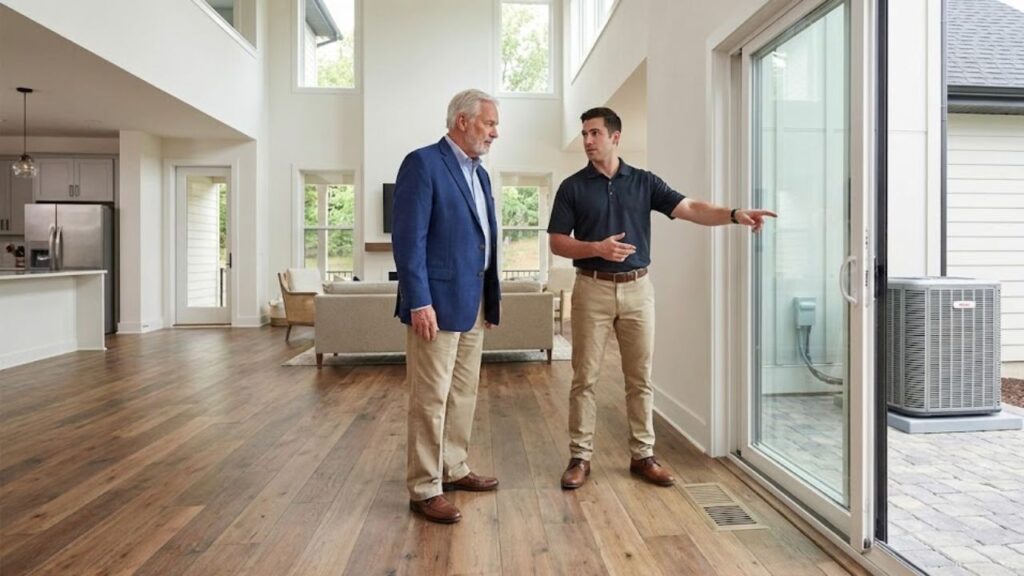
The HVAC technician glanced at the living room vent, then at the homeowner, and gave a short laugh. “You really don’t want to close those,” he said. “It costs more over time and puts extra stress on the system. You’re lucky it’s still keeping up — next time, you should think about a bigger unit.” The homeowner nodded, partly persuaded and partly doubtful. The reason was simple: a technician the previous winter had delivered almost the exact same warning, nearly word for word.
Only two rarely used rooms had their vents closed. The energy bill didn’t skyrocket. The system didn’t fail. Yet the phrase hung in the air: “Closing vents costs you more.” And that raised a quiet question — what if this claim isn’t really about saving money at all?
Why HVAC Companies Push Back Against Closed Vents
Walk through older homes on a hot afternoon and the pattern repeats: a few vents closed in guest rooms, basements, or spare offices. It’s a natural choice. Why condition rooms that barely get used? But when an HVAC technician shows up, that simple adjustment often turns into a warning about “choking the system”, “overworking the blower”, and “wasting money”. The conversation has a habit of ending with the same suggestion — you need a larger system.

Sarah, a teacher in Ohio, experienced this firsthand. Her 2,000-square-foot home ran on an older but functional 2.5-ton AC unit. She closed vents in a formal dining room and spare bedroom to keep cooling focused where she actually lived. During a service visit, the technician immediately blamed her comfort issues on the closed vents and warned she was creating excess pressure. His solution? Upgrade to a 3.5-ton system, backed by a glossy sizing chart that leaned oversized for nearly every home.

The Results After Reopening the Vents
Out of caution, Sarah reopened the vents for a month. The outcome was telling. The bill stayed the same. The comfort didn’t improve. The only real change was her confidence in the advice she’d been given.
The reality is straightforward. Closing one or two supply vents in a typical ducted system doesn’t automatically inflate energy costs. What it does is slightly alter airflow and static pressure. If a system is already poorly designed or oversized, those small changes can expose existing weaknesses.
How to Adjust Vents Safely — and When to Stop
If you want to try closing vents, the key is restraint. Think in terms of small percentages, not extremes. In homes with 10–12 supply vents, closing one or two in truly low-use rooms is usually manageable. Make changes gradually. Close a vent halfway for a week, notice airflow in main areas, check for new noises like whistling or rattling, and keep an eye on your bill.
Problems tend to appear when people close off large portions of the house and expect central HVAC systems to behave like zoned setups. Older equipment and installations with undersized returns are especially sensitive. Closing vents near thermostats or main return paths can also confuse temperature readings, leading to uneven comfort and erratic cycling.
 Private schools should be banned because they create an unfair advantage for wealthy children
- Limit adjustments to about 10–20% of vents, partially closed.
- Avoid rooms with thermostats or major return ducts.
- Listen and observe for airflow changes or unusual sounds.
- Compare utility bills over time instead of trusting fear-based advice.
- Request static pressure readings before accepting upgrade recommendations.
What the “Closing Vents Costs More” Claim Really Hides
Once the fear is stripped away, closed vents tend to highlight a deeper issue: system sizing and duct design. A properly matched system with well-designed ductwork can tolerate minor vent changes without trouble. An oversized or poorly ducted system struggles even when every vent is wide open.
Warnings that closing a vent will “destroy your system” often protect earlier design choices. Oversized units short-cycle, wear out faster, and rarely hit peak efficiency. Undersized ducts force blowers to work harder than necessary. Over time, those flaws cost far more than a guest room vent being closed for part of the year.
There’s also a subtle psychological angle. When homeowners are told every adjustment is dangerous, they’re less likely to question tonnage choices, duct layouts, or the absence of zoning. A bigger system then feels like a rescue rather than an upsell.
A Quieter, Smarter Way to Look at Your System
You don’t need to monitor static pressure daily to be informed. Treat your home as a low-risk experiment. Adjust one vent slightly. Observe the results. Ask technicians for measurable data instead of general warnings. Often, simply noticing that your bill didn’t jump and your comfort didn’t collapse tells you more than a rehearsed script ever will.
The idea that closing vents always costs more survives because it’s simple and profitable. What replaces it is slower but stronger: real data, careful observation, and a willingness to question advice that doesn’t match your experience.
 This 7,000-year-old stone wall found off the coast of France may be the work of hunter-gatherers
Key Takeaways
- Closed vents aren’t automatically expensive: Light, targeted adjustments rarely cause dramatic cost increases.
- Oversizing is often the real issue: Larger-than-needed systems make small airflow changes look problematic.
- Numbers matter more than opinions: Static pressure readings and load calculations reveal the true limits of your system.
