By late afternoon, the sky had already shifted into that dense, chalky gray that signals serious snow ahead. Along Main Street, people moved faster, collars pulled high, eyes darting between the clouds above and the buzzing alerts on their phones. A notice from the transportation department. A breaking update from a local news app. An HR email marked “weather emergency”, the kind no one enjoys opening on a Sunday night.
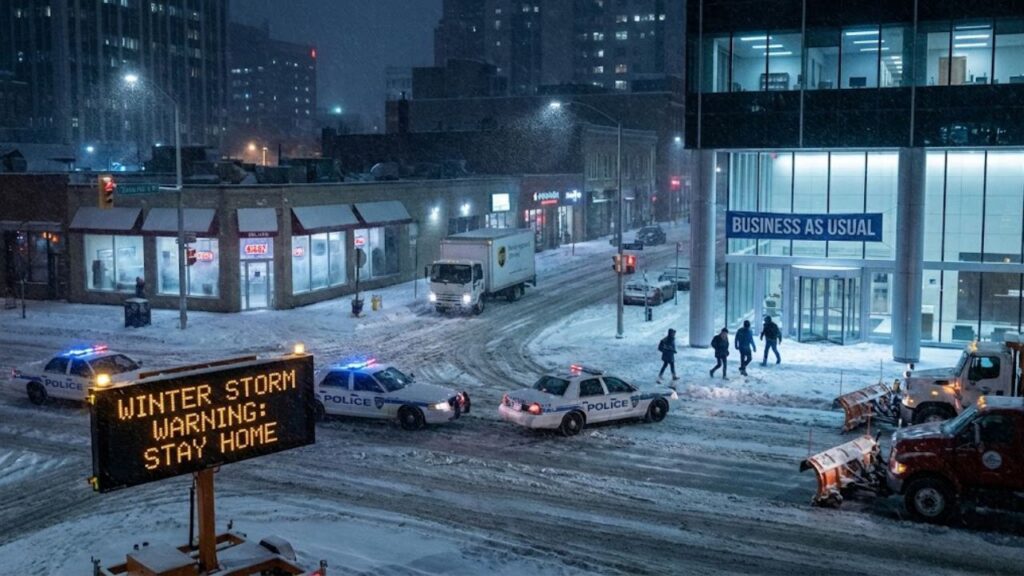
Outside the grocery store, carts clattered through slush as shoppers rushed to grab bread, batteries, and last-minute supplies. Nearby, a delivery driver stacked another load of parcels, glancing up at the sky with the weary expression of someone who knows his shift will stretch well past midnight.
Up above, two messages were colliding in that gray sky. And only one of them could truly take control.
 Neither boiled nor raw : the best way to cook broccoli to preserve maximum antioxidant vitamins
Snowstorm Alerts Versus the Pressure to Carry On
By early evening, light flakes were expected to turn into heavy snowfall, the kind that wipes road markings away in minutes. Local authorities were already active online, urging residents to stay home, avoid non-essential travel, and leave space for plows and emergency crews. The routine was familiar: firm wording, capital letters, and maps shaded in ominous blues and purples.
 The one winter fruit that keeps robins coming back to your garden, according to birdwatchers
At nearly the same time, a very different tone appeared in inboxes. Company emails reminded staff that “operations will continue as scheduled” and that employees were expected to report on time, “where safe to do so.” That final phrase quietly pushed the risk assessment onto individual workers staring out at snow-covered driveways.
For 38-year-old warehouse worker Luis Ortega, this mixed messaging isn’t theoretical. During a similar storm last January, he left home at 5:30 a.m., inching his aging sedan along icy back roads to avoid being marked late. Just three miles from work, a pickup spun out ahead of him, sending his car sliding into a ditch. A shoulder injury kept him off the job for weeks.
He still remembers sitting in the ambulance as a push alert flashed on his cracked phone: “Authorities urge drivers to stay home.” Then came the memory of his supervisor’s message from the night before: “We’ll be open as usual, we really need all hands.” Between those two lines, he felt as though he had slipped through a crack in the system.
This tension isn’t limited to one storm or one commute. It exposes a deeper clash between public safety and economic momentum. Local governments are measured by how well they protect residents during extreme weather. Businesses are judged on productivity, delivery schedules, and quarterly goals.
When heavy snow is forecast, those priorities collide directly on the road. Workers are left to resolve that conflict in real time, asking themselves whether to follow a public warning or a private expectation. There’s no tidy answer waiting in the driveway, only a very human calculation made in the dark at 6 a.m.
How to Judge Whether Driving Is Worth the Risk
When a snow warning lights up your phone tonight, the smartest first move isn’t panic or grabbing your keys. It’s to pause. Just two minutes of careful checking can shape the rest of your night. Open a live traffic map instead of relying only on the forecast; crashes and closures reveal far more than snowfall numbers alone.
Next, focus on your exact route, not just your neighborhood. A cleared main road can hide a slick, untouched side street right before your destination. Review your employer’s wording carefully as well. Any mention of flexibility, remote work, or excused delays is leverage you can use.
Many people feel guilty even thinking about staying home, especially in roles where pushing through is the norm. That quiet pressure leads to risky decisions, like heading out before plows arrive or driving on worn tires because “it’s not far.” We’ve all experienced that moment halfway down an unplowed hill thinking, “This was a mistake.”

One practical step is to message a nearby co-worker and ask what conditions look like where they are. Real-time, local insight often beats vague corporate language. If you’re uneasy, say so. You’re rarely the only one hesitating; you’re just the only one hearing your own pulse.
“Let’s be honest, nobody checks safety policies until they’re already sliding,” says Tara Chen, a shift supervisor who now urges her team to speak up earlier. “The message is always ‘safety first,’ but unless someone actually pauses things, the system keeps rolling.”
- Contact your manager early if conditions look worse than predicted, before schedules are locked in.
- Photograph your street or driveway if it’s clearly unsafe; visuals often change the discussion.
- Ask directly about remote work, unpaid leave, or using vacation time instead of waiting for options to appear.
- Note names and decisions of anyone who approves, denies, or alters your request.
- Keep a simple storm log with times, conditions, and messages; it can protect you later if issues arise.
Between Staying Safe and Keeping Things Running
This storm won’t be the last time safety warnings collide with business-as-usual demands. Each person stands somewhere in that gap, balancing bills, job security, and the basic desire to make it home safely. Some will park the car and wait out the storm indoors. Others will shovel early, grip the wheel, and inch through the dark because that’s what their work, or conscience, requires.
Both choices come with consequences, and that’s the uncomfortable reality missing from polished alerts and carefully worded memos.
The real conversation happens in neighborhoods, break rooms, and family chats. Parents cautioning teenagers not to drive. Nurses swapping rides for night shifts. Small business owners hoping the snow holds off just long enough for the last customer to leave. Storms compress reality, revealing how much daily life depends on people who cannot simply work from home.
As snow builds on windshields and rooftops, one question hangs heavily in the air: whose definition of “essential” decides who goes out into the storm?
Key Takeaways to Keep in Mind
Conflicting messages: Authorities urge staying home while many workplaces push normal operations, explaining why alerts feel out of sync.
Personal risk assessment: Reviewing live road data, specific routes, and employer flexibility helps you decide whether travel is worth it.
Worker leverage: Documenting conditions, reaching out early, and using policy language can protect both your safety and your position.